The Road not Taken

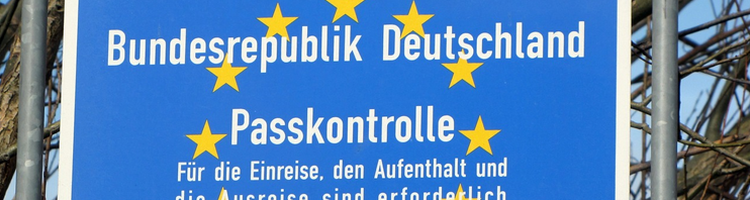
the sign at the entrance of the DHM in Berlin

I went to an exhibition at the Deutscher Historisches Museum, called the Road not Taken. It examines seven turning points in German history and asks what might have happened if they’d turned out differently.

They say, “It brings actual turning points face to face with what might have happened if it if it were not for various factors – prevented by accidents, averted by misfires or other kinds of shortcomings -are explored: it is what is known in the philosophy of history as contingency. The course of these events begins in 1989 with the peaceful revolution in the German Democratic Republic and ends in the year 1848, when Germany first tried to attempt to democratic awakening. The exhibition takes up such topics as “Ost Politik”, the building of the wall, the Cold War, the “Stalin note”, the assumption of power by the National Socialists as well as revolution and democratisation at decisive points – and illustrates that history, by no means had to end as it actually happened.” 

See below for a video of an agamograph, contrasting the Chinese government’s violent repression of their student led protests, with the outcome of the mainly peaceful demonstrations against the government of the GDR leading to the fall of the wall.  

The GDR had sent an embassy of solidarity to the Chinese government after Tiananmen Square. This is supplemented by exhibits detailing the GDR military code and law prohibiting acting against the citizens of the GDR and others detailing the problem of all civil wars, that the police and army need to arrest or repress their families.

The first three rooms, 1989, 1970 and 1952 were very thought provoking bring to the forefront the issues of democracy, freedom and oppression. The exhibits about the law and reticence of the GDR police/military have massive relevance to today in both parts of Europe but also the USA.

The exhibition also includes a room on the Staufenberg plot, where a plaque includes the inscription,

The liberation by getting rid of Hitler came so close for a moment and then failed in the end. But then I thought, it’s alright like that. The officers who had planned the assassination had never held it against Hitler that he had started the war; now they just held it against him that he lost it. … Germany should be completely defeated.

Marie Jalowicz Simon

The museum also examines the invasion of the Rhineland, the fall of the Mueller government marking the end of the Weimar republic, the revolutions of 1916/18 where there were attempts to retain the Kaiser, and they argue the fatal flaw of poorly defined presidential power was adopted,  the Seven Week war that led to the expulsion of Austria from the German federation and finishing with the revolutions of 1848.

It closes on the 22 March 2026, people that share my interests might like to go to Berlin to see this. …

Single market, customs union and a poison pill.

Single market, customs union and a poison pill.

In an article, Starmer prepares for parliamentary battles over imminent EU ‘reset’ bill, jessicaelgot suggested that there is movement on the “red lines”. It is clearer on reading that this is an attempt to accelerate UK agreement to the currently on-going trade negotiations by increasing the powers of the relevant ministers.

The article uses the phrase swiss-style agreement which is highly unlikely to succeed and at the best is tone deaf as to the EU’s needs and wants.  

UK in a changing Europe, document what they see as the timetable and goals of the current reset negotiations.I see them as optimistic, and everyone seems to forget that the EU’s starting point is full implementation of the withdrawal agreement and Windsor framework; there remain, even 18 months after the general election, eight infringement proceedings unresolved.

It’s sort of interesting that they think they need new language, but to me, they have not yet changed their mind.

I also see this as a means by which the Government deflects the internal Labour Party pressure towards joining the Customs Union by posing, parts of, the single market as an alternative. It is disappointing to see so many seeing the Customs Union as sufficient advance, but the UK economy and people need and want membership of both, including, reciprocal, free movement of  people.

Labour should join the customs union and single market now and promise to rejoin the EU in its next election manifesto.

Various news sources, including the Brussels Times, report that EU is demanding a “poison pill” clause in further agreements, to make the cost of revoking the new treaties exorbitant. This should have been proposed by the UK side, and without it negotiations would stop.

I predict they won’t until they abandon the strategy of triangulating against reform and that will take significant personnel changes in the Government.


Image: from PIxabay, their licence …
Starmer, Labour and the Redlines

Sir Keir Starmer at the Rivoli

Starmer on an interview on the BBC, reported in the Guardian, said he wanted closer alignment with the EU and its single market but no return to freedom of movement nor the customs union. In fact the reports suggest that he is presenting a new language for the current policy to try and stop the momentum towards the customs union. I don’t think this is an advance although he may change his mind; he often does, usually after some poor front bencher has just defended the policy. It’s all very, “The thick of it”.

This story was also reported in the FT, BBC & Independent. The BBC report is much clearer that there has been no change to the “Red Lines”.

 …

On public debt, yields and its affordability

On public debt, yields and its affordability

The government and Labour MPs seem fascinated by bond yields. They present the fact that UK yields are high is seen as a short cut to arguing that the Government can’t afford the interest rates on bonds and arguing that the last word on the deficit has to be held by the markets.

This article looks at what the ‘yield’ actually is, argues it is the outcome of policy decisions, that rising yields have no effect or at least very little effect on public finances. It also argues that quantitative tightening makes the affordability of the deficit worse and that alternative debt management operations would ease the situation. It also suggests that the credit default swap price is a better indicator of the market assessment of the viability of public finances. …