Sometimes one’s feeds actually throw up some golden nuggets. I came across this facebook video reel from Andi Shehu. It’s not very long, but packs a lot in. He argues that much of the support for the Brexit vote was based upon nostalgia for an empire that had already been dismantled and one that today’s voters cannot possibly remember and that that this political nostalgia is fuelled by outdated Victorian traditions at the core of British government, maybe even from pre-Victorian times and that true improvement requires democratic reform. The reel led me to look at some earlier theorists who first articulated these ideas and suggesting that the British state never adopted democracy and remained the instrument of old wealth based on land.
In many ways what came after 1945 was much better and much more democratic and served the mass of the population better than its predecessor. The UK built houses, formed the NHS and developed its manufacturing capability to provide jobs wealth and income to the bulk of the population. People’s memory of the poverty of the Great Depression led them to build a comprehensive welfare state guaranteeing social security and a limited freedom from poverty. This was dismantled by reactionary conservative movements, and the engine of the economy moved back towards finance and the City of London, institutions that have no patriotism and yield no investment in the wellbeing of the British people. These changes were not the fault of Brussels, but the project designers needed a scapegoat as the factories, steel works & mines were closed, and relative poverty, ably illustrated by the work of P. Danny Dorling, ensued.
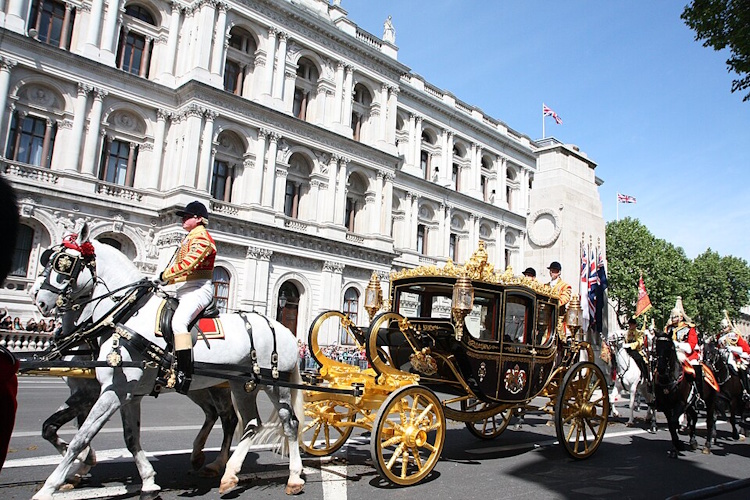
Shehu then argues that much of the nostalgia is focused on the pomp and ideology of the British State. He quotes Tom Nairn’s ideas about the “glamour of backwardness” where the “mother of parliaments” & the pomp of the monarchy become to be seen as desirable and sources of pride. There are many recent examples of this constitutional exceptionalism, but one egregious example was Andrea Leadsom’s criticism of the European Union as having five presidents that no one could name; at least they’re not hereditary monarchs and the European Parliament is wholly elected by proportional representation. The conclusion is that the British state is no longer fit to run a 21st century society and that it remains a tool of control of the economy and its people in the interests of an economic elite, which in the UK . looks very much like the old, 18th century one.
I recommend you look at the Facebook reel as he is much more economic in words than I am.
However, watching the video reminded me of the conclusions, or maybe the premise of “Capitalism divided?” by Stuart Ingram who sought to examine why the British state did not act as “the executive committee of the bourgeoisie”; I found the book fascinating, and I’ve promised myself to review it on this blog.
At the centre of his argument, is the proposition that the funding of the original industrial revolution was based upon the wealth of the landed aristocracy. The British economy became a commercial economy and the centre of world trade finance; the British state was optimised to defend the power of landed wealth and gave birth to the development of a mercantile economy not a manufacturing one and so it never served the capitalist class. It’s for these reasons that the post 45 reforms were required and the victory of the People’s War gave the working class the confidence to build a “land fit for heroes”.
My two takeaways from the video and my brief limited reading since then, is that democratic reform is a critical part or attempting to build a society free of poverty where people can fulfil themselves in the world of work and avoid alienation and appropriation. Proportional representation, devolution and subsidiarity and the abolition of the monarchy are not side issues to economic fairness. The second takeaway reinforces the idea that the British economy’s continued reliance on global finance is a weakness in delivering for the mass of people in the UK.
See also
- The reel author, Andi Shehu has a substack blog.
- Shehu mentions Tom Nairn, here is an anthology page at the London review of books.
- The two key works from Nairn are, Breaking-up Britain and a review of The Enchanted Glass: Britain and its Monarchy.