A short note on FX & UK Trade

A short note on FX & UK Trade

Like many, I am considering the macro drivers of the cost of living crisis and I listened to the AEIP podcast with Gary Stevenson. He has an interesting view and argues that the QE funded furlough scheme was in fact a subsidy to the rich and that the fundamental imbalance in the country is the shift of wealth from poor to rich. It’s a version of the argument that the problem is insufficient demand being caused by the continued pressure on medium and low incomes.

He also argues that the massive QE efforts are an effective devaluation which given the relative stickiness of prices with wages being the slowest to change and everything that wages need to buy increasing will exacerbate the squeeze on spending. He also argues that given the choice between working and starving, people will work. The use of the word devaluation led me to look at the following charts
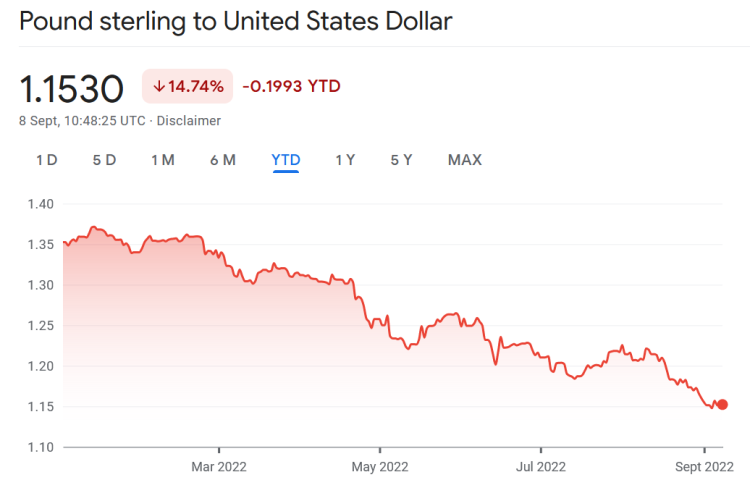
GBP:USD FX from Google Finance

The pound has been falling against the dollar all year, this makes imports, particularly of Oil, but also of Gas and food more expensive.
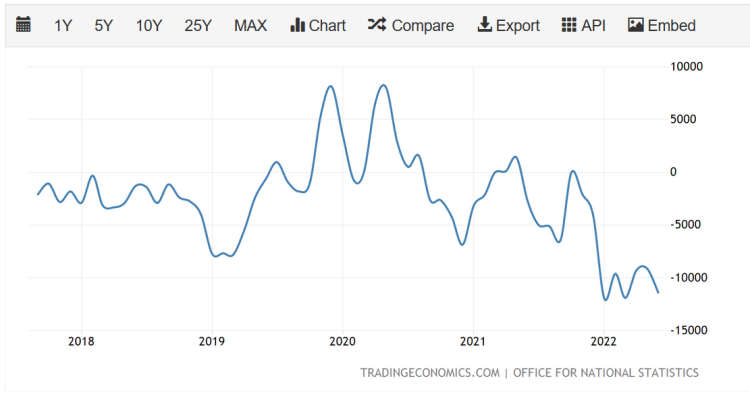
Balance of Trade: GBP millions

Here we see the balance of trade figures, a more traditional cause of devaluations. With the exception of two months, the UK has been in deficit for the last five years. There are those who contest the the balance of trade causes currency price movements and Sterling in particular is impacted by speculative currency flows. The key drivers of speculation are expected rate of return, which for fixed income assets is driven by the bank rate, and animal spirits about which I think it best not to comment.  …

Britain’s aircraft carriers, bought but not paid for yet

The Prince of Wales, the newer of the two aircraft carriers costing £3.5bn has broken down in the Solent. I had planned and still plan to write a piece about the 2020-21 Defence Reviews and have already written about it briefly on this blog.  

HMS Prince of Wales R09
HMS Prince of Wales, in Portsmouth, CC Rab Lawrence 2019 BY from flickr

These aircraft carriers, at 64,000 tons are three times bigger than their predecessors which were used to provide air combat capability during the Falklands War. I cannot see a need for such vessels, and it is my view they were authorised to create jobs in the Scottish dockyards that built them albeit under massive US pressure. They are calculated to cost about £3½ bn and the inconvenient truth is they are estimated to have £½m running costs/day!  That makes a fifteen year life time cost of £2.7bn and a full lifetime cost over 50 years of £9.1bn for each aircraft carrier. Over 70% of the whole lifetime cost of the aircraft carriers is running costs and yet to be incurred.

We should sell them, although who would want a ¾ size fleet carrier? Maybe we could sell one each to India and Pakistan, or maybe the Argentines would like one. …

What does ‘system update required’ say about Labour’s IT?

What does ‘system update required’ say about Labour’s IT?

As part of the ‘drains up’ undertaken after the 2019 General Election, a coalition calling itself Labour Together undertook a review of what went wrong and as part of that review commissioned an organisation called the "common knowledge co-op" to look at Labour’s IT and its management. They produced a report called “System update required”. (original | mirror ) What did it say? I think this is important, but like so many learning opportunities that challenge power and the bad behaviour of the powerful it seems to me to be dramatically under-valued.

When I first read it, I was outraged. I hoped to summarise it in a sensationalist fashion to see if I could interest someone who might pick it and make things better. What I have written is not that exciting and I suspect little will change because the Party doesn’t have the knowledge and experience and today is led by people who care more about their control and position within the Party than they do in winning an election and becoming a government. I mean they’d be happy to be in Government but it’s more important to them that they control the Party.

In summary, the report says, portfolio management was unacceptably poor and not accountable to the highest levels of management although they too didn’t have clue. There weren’t enough IT staff and the more numerous IT management layer wasn’t good enough. The report makes no mention of ‘requirements management’, nor of any benefits analysis tools to allow an understanding the effectiveness of the software applications provided. Labour’s voter ID/GOTV software is no longer the best. Local adoption of the IT tools is low, partly because of poor commitment to training, partly due to a high turnover of local activists and partly because the Labour machine didn’t care.

In the rest of the article, overleaf, these failings are explored in more detail. ...

On Labour’s disciplinary rules

On Labour’s disciplinary rules

As part of the ‘drains up’ undertaken after the 2019 General Election, a coalition calling itself Labour Together undertook a review of what went wrong and as part of that review commissioned an organisation called the "common knowledge co-op" to look at Labour’s IT and its management. They produced a report called “System update required”. (original | mirror ) What did it say? I think this is important, but like so many learning opportunities that challenge power and the bad behaviour of the powerful it seems to me to be dramatically under-valued.

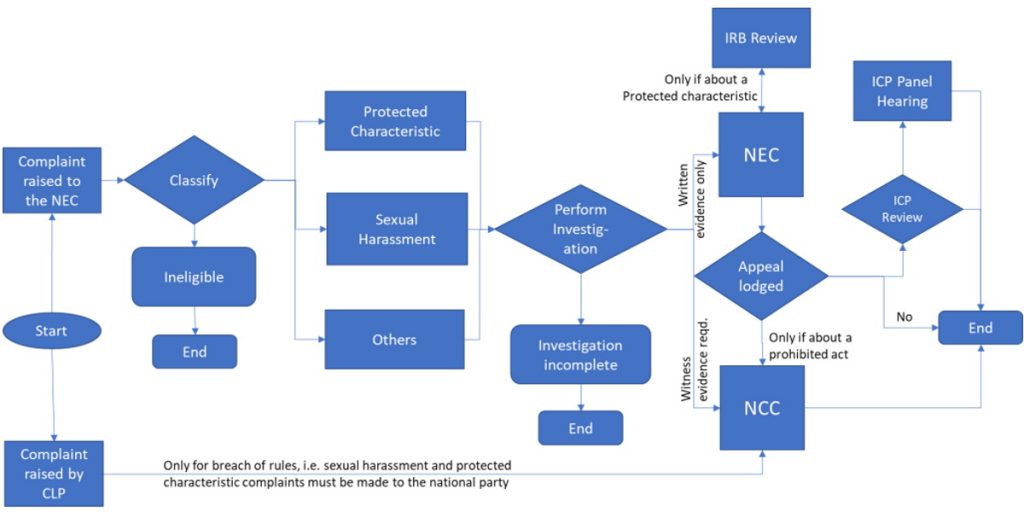
Flow Chart of the LP Complaints process

For more, see overleaf ...

Crime and Punishment (in the Labour Party)

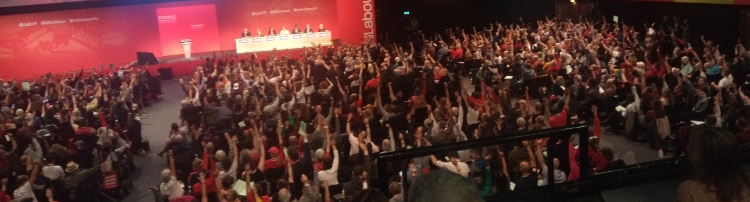
Labour Conference 2019 from the balcony

I have not studied all the new rules as passed at 2021 conference, but this is a note on proscribed acts and prohibited acts and how they are dealt with. It notes the powers of the NEC to define prohibited acts in the support of proscribed organisations. It notes the remaining role of the NCC and concludes with a quote from the Forde report expressing concern of the use of admin suspension and the concern that expulsions may be used for factional purposes. For more, use the 'read more' button ...

Labour’s macro-economics, “Back to the Future”

Labour’s macro-economics, “Back to the Future”

Starmer made another speech on economics on Monday 25th July. It is reported in the Guardian.

Starmer has been trying to pitch Labour as the party of fiscal prudence and will say: “With me and with Rachel Reeves [the shadow chancellor], you will always get sound finances; careful spending; strong, secure and fair growth. There will be no magic-money-tree economics with us.”

From the Guardian,

This article looks at growth and debt, Starmer and Reeves flirtation with Osbornomics and Reeves' rejection of nationalisation on the grounds of cost, I note countervailing views from Murray and Long Bailey and note that Reeves places herself in the sad queue of shadow chancellors undermining Labour's election chances by 'telling the truth'. There's more overleaf ...

More consequences of Labour’s cyberbreach

More consequences of Labour’s cyberbreach

The Labour Party can’t issue the ballots for their internal elections; they claim it’s a consequence of the cyber-breach last October.

The Party seems to have attempted to create a replacement membership database by updating its mail manager system and presumably adjusting the feeds although much of the functionality previously offered is no longer available and the feed from the financial system is now days or weeks out of date. We should note that the membership self administration tool is also now not available. The mail manager is obviously from observation slowly dying. It is known to be inaccurate; there are errors in terms of who it considers to be a member, their addresses, and their payment status.

The Party plans to replace this recovered system with an off the shelf package[1] from Microsoft. At the moment we are advised that it is unlikely that local party role holders will get access to this until next year.

Until then we have to use a known to be inaccurate database. From observing, presumably NEC authorised actions, it seems to be considered accurate enough to select councillor candidates and run trigger ballots. Procedure Secretaries have been told that they may not override the membership system even when variances are well known and provable. I question that this is legal in it breaches the duty to be accurate and not to automatically profile people.

What seems to be forgotten that is data protection rests on seven principles, Lawfulness, fairness and transparency · Purpose limitation · Data minimisation · Accuracy · Storage limitation · Integrity and confidentiality. Often too much or too little attention is paid to integrity and confidentiality and issues such as lawfulness, fairness, transparency and accuracy are forgotten.

They are running selections and triggers on data known to be inaccurate. This isn’t right.

This has taken 9 months to get here. While culpability for the breach may be questionable, not having a recovery plan and or not funding it is the fault of the Labour Party and thus its NEC. CEO’s have been fired for less.

Why was there no recovery plan? Did they do vendor due diligence on the member centre hosting provider, did they keep it up to date? Is there a risk register? Has the NEC or the risk committee approved the mitigations? In fact, what is the NEC doing about IT Risk? Is there a DPIA on reusing the mail system? Is there a DPIA on reusing the SAR Tool? Is there a DPIA on using the social media scanners they use? When will we get a data protection capability that protects members data from bad actors rather than from themselves?

Nine months failing to recover is shameful and unprofessional. NEC members should be asking why it has come to this and determine if they, through their inaction, are in fact culpable.


[1] This I consider to be wise, although they will need additional software modules to support Labour’s unique processes, such as donation monitoring. Although it seems they plan to customise the UI 🙁 …

A noble individual

Sir Keir Starmer at the Rivoli

Over the last 24 hours, possibly longer after I actually publish this piece, Sean Jones QC, has published two longish twitter threads on Labour and Brexit. He was inspired or provoked by an interview on Cambell & Stewart’s “The Rest is Politics” of Kier Starmer.

Jones’s 1st thread asks how ‘leaning into’ the Tories Hard Brexit can possibly be a policy success when it’s clear that it’s failed and asks how it can be an electoral success given that so many Remainers have not changed their mind. There are few, if any words wasted in the thread, so have a look yourself, but I am particularly taken with this tweet,

The 2nd thread, addresses the pro-Starmer argument that this is a long game. Jones argues that Starmer’s Brexit line is a foolish thing to say because it fails to differentiate him and Labour from the Tories, Starmer’s assuming that remainers/rejoiners who seem to be growing in number will put up with it. Starmer’s policy needs to be effective politically before the election and the basis for effective policy after. The first proposition is questionable, and the second wrong.

I’ll finish with a quote from Rory Stewart from the podcast, they were talking about the loss of trust that people have with politicians, and Stewart argues, that it’s not about virtue.

Overleaf, I include some quotes from the thread and the show and examine Starmer's record as such a man of virtue.