There’s redundancies coming! I wrote a short piece on our Union branch web site, emphasising the need for speed; the consultation period is only 45 days now. I briefly touch on the issue of economic viability; for redundancies to be legal and fair, the work must have gone or about to go. It will be harder to argue that jobs under threat are viable while CV19 is looking over the economy like a black rain cloud. I also discuss the need for transparency and fairness in selecting people for redundancy in cases where judgement is required. (Some business units may be reducing in size and so there remains the opportunity stay in employment for some, in these cases the decision must be fair, impersonal and transparent. …
Employee self-defence

I have been meaning to write an “employee self defence” manual for a while now, and something came across my desk today to remind me of this ambition. Here’s mine off the top of my head.
- Always reply to management in writing and in good time.
- Know where your contract is, make a good .pdf copy of it and keep a copy of any variations particularly if you work for a business unit that has been subject to a TUPE agreement, you’d be surprised how careless some managements can be in keeping good records. If you opt out of the working time directive or refuse to, keep a record. If seconded, or asked to cover other duties get the instruction in writing together with the commitment to end the change in duties.
- While contracts can be varied unilaterally i.e. imposed, it depends on the wording of the original contract, if you object to the changes, let management know in writing, it can’t stop it but it may be relevant for future grievances or disciplinary processes.
- Keep a contemporaneous diary and keep it off your employer’s IT; they can deny it to you when you need it or worse, amend the record.
- See your Doctor when needed and take their advice, don’t make them look a fool. If signed off sick, make sure your appropriate management know and they have the appropriate documentation.
- Tell your management if you are disabled or chronically sick, they won’t make reasonable adjustments unless they do.
- If you want flexible working arrangements, you have a legal right for this to be considered, understand the management process, they may mandate a specific form and make sure your application and their reply is in writing.
- Know your grievance and whistle blowing policy so you know who to talk to when you need it.
- If you think it’s a grievance, lodge it, the least that will happen is that your case is in writing, actually shit managements might retaliate but your case is in writing and if they’re bad, it’ll only get worse anyway.
- Wrongfully deducting money from your wages is a crime. Proving it may require significant documentation; be prepared.
- Know the IT use and record management policy of your employer; don’t break them and complain if others try and get you to do so too, by for instance, using personal phones or emails and whatsapp or twitter to discuss work matters. If an employee, don’t use your own phone for any work business; they have a duty to provide one if you need it for work.
That’s it for the moment but I know there’s more. …
A bookmark on the leadership
I published an article today on who nominated who in Labour’s Spring Elections but back dated it to the date I made the mirror copies.
…
Compromise?
Parliament is putting itself in isolation by not meeting for another month and so yesterday was Jeremy Corbyn’s last PMQs in the House of Commons. He spoke about the corona virus and it started up a spat on twitter which led me to think about Wilson, the Referendum on the EEC (1977) and how he managed the Party. He put the issue to bed in the Party for 39 years.
Was it because the SDP, whose politics on this issue had won left the Labour Party or that the Left in the Party granted loser’s consent? Also on the Left, many of those that could not compromise with the Party consensus left and joined the extra Parliamentary left.
However the divisive nature of referendums and the idea that MPs could campaign against the Party on referendum issues bedded down and was shown by Labour’s divisions over the Alternative Vote Referendum in 2011.
But Corbyn will be remembered as an almost man; he saw off two Tory Prime Ministers, but we failed to jump the 2017 hurdle. The 2016 coup against his leadership will be seen as an act of treachery against the Party on the same scale as the SDP split and there are some who will see the mismanagement of Labour’s 2017 campaign as an act of sabotage; in my view it’s a charge to be answered.
Meanwhile, Corbyn’s legacy will be a programme that seeks to create an economy that works in the interests of the majority and not just a plutocratic minority and their servile minions, rejecting Britain’s imperial legacy and its role as America’s Gurkhas will take a little longer. …
Who’s in charge?
On adjourning parliament … they should have left the House of Commons Liaison Committee which consists of the Select Committee Chairs, in place, possibly adding the Party Leaders to ensure a real time accountability channel. …
The multiple data protection laws in the UK
A note at Linkedin on the law and legislation applying to data protection and privacy in the UK, now i.e. after brexit and at the end of transition period. Obviously considers the GDPR and the Privacy Shield. The GDPR is now forked. 😋 …
Moving to Mars

I went to this exhibition, amazingly there are projects in place that are thinking about this despite the horrendous difficulties this would entail. Getting there might not be the problem, but there is no oxygen and very limited water. It’d have to be taken with and recyled well. There are four exhibits that caught my eye. A film from the Curiosity rover showing the Martian landscape, an exhibit/poster showing the world’s investment in space flight, in which the UK does not appear, an exhibit on what human houses might look like and an exhibit on a multi ten thousand year terraforming project using plants.
The Martian landscape is bleak and subject to, for humans, lethal dust storms. People and their homes would need to be protected from these, once the problems of oxygen and water, there is none, were solved.
Once the brexit transition period is complete, we’ll be out of the European Space Agency, so much for a high-tech, high wage economy. One of the exhibits on the geo-politics of space travel included a panel with Interkosmos suit patches from the Soviet Union, India, Sri Lanka, Vietnam, Cuba and others, a reminder that space travel does not belong to the USA.
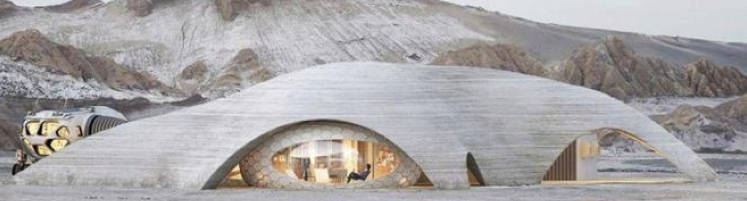
They seem to be suggesting that people will live in kevlar tents, buried underground by robot builders. …
Blair’s Shadow

We in the Labour Party need to get to grips with Blair’s legacy. His shadow and that of his government still hangs over even this leadership election and it seems I am not the only one to thinks so. Andrew Fisher wrote something similar to this in the Independent. Coming to a consensus and coming to terms with its legacy will be difficult. I feel that it’s best viewed by considering the two full parliamentary terms as separate entities but for many of course the decision to go to war in Iraq will over shadow everything else he did. I have thought this about its record for a while but at least one speech by Zarah Sultana MP, and the adverse reaction to it and Jeremy Gilbert at Open Democracy who wrote Labour should have argued against the last 40 years of economic policy, not just the last ten have made me revisit New Labour’s record. This article reflects my views on the New Labour governments, together with my view that we i.e. Labour have been losing votes for 30 years and that 2017 was the anomaly. In the rest of this article, see below/overleaf, I look at the positive achievements of the first term, the evolution of the 2001 manifesto and the privatisations and war decisions of the second term. I look at the destruction of the Party’s checks and balances, the areas of failure (Trade Union law reform and housing), the power of Government and the seemingly inexorable loss of votes since 1997 aided by doomed and flawed New Labour’s electoral strategy of assuming the working class had nowhere else to go. … …
Courts & Code
I needed to make a picture for one of my linkedin blogs, here it is ….
 …
…
Oracle OpenWorld London
I went over to the Excel Centre to meet some friends at Oracle Openworld London. An interesting day, ending with a tincture.
I browsed around the stands and attended a couple of sessions, I was fascinated to see a raspberry pi grid.

…