Triangulation and abuse

Triangulation and abuse

It is clear that Labour’s leadership are executing the New Labour playbook with a touch of 20th century triangulation by pandering exclusively to communities that don’t vote for them and adding the practice of trolling those that do. On issues from foreign policy, public sector pay, fiscal policy and the EU, we can see this to be so.

In James Surowiecki’s book the Wisdom of Crowds, he examines the behavioural economics game of “Ultimatum”, which shows that you can’t take people for granted, if people don’t like the rules they won’t play the game.

In Ultimatum, players are divided into groups of two, and one is the proposer, who proposes how to split $10,000, the second player can accept or reject. If rejected, neither gets anything. Economic rationalism suggests that the second player will always accept any offer; however, reality tells a different story. The second player on the whole rejected lowball offers that they think to be unfair. Interestingly, in a second round, both players were told that the proposers had got high scores in a test, and in those circumstances the average at which proposals were rejected fell; if people thought the proposer’s deserved the privilege of proposing, then offers the accepters might once have considered unacceptable became acceptable.

In politics, as in life, you can’t take people for granted! You’d have thought that Labour had learnt this truth.  …

Science & Brexit

Science & Brexit

I wrote something more on immigration and Horizon, based on the report that the UK has had three applications for its super highly skilled visa scheme. I argue that the focus on prize winners is foolish, we need the next generation of prize winners, and that being out of Horizon Europe makes UK based innovators less attractive collaborators. I make a cheap crack about how this shows the emptiness of Sunak’s ambition to be a science super power. The article is on Linkedin and Medium, entitled, “Science, the UK and Horizon Europe, again”. It was followed up in the Independent.  …

Ralph Miliband on Labour’s last year in opposition

But that was in 1963, sixty years ago. Due to some personal reappraisals of my politics, I have been looking at the writing of Ralph Miliband and was pointed at an article he wrote in the run up to the 1964 election, called “If Labour wins”, republished in the New Left Review. I found it worth reading to observe the parallels between then and now. Wilson’s Labour were leading in the polls, the Tories had suffered the setbacks of Suez, and the Profumo affair and replaced a popular and powerful leader with a patrician land owner who was not even an MP arguable a stalemate choice between the then two leading Tory candidates.

This article contains a number of quotes from the article, as they speak for themselves, although of course I can’t help but comment. I have collected the quotes and comments into pieces on culture and comedy, economics, foreign affairs, corruption, campaigning and hope and the Labour left. … …

Tony Blair on today’s politics

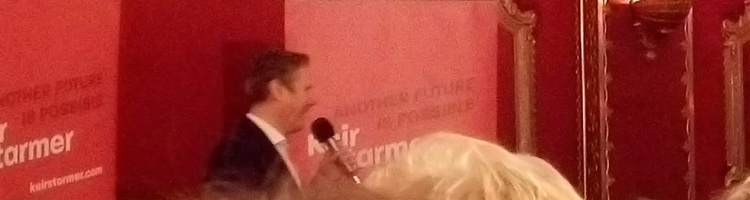
Sir Keir Starmer at the Rivoli

Tony Blair hosted an interview at a “Tony Blair institute” event with Keir Starmer. Some have announced this as his anointment of Sir Keir. Of much interest, has been the companion interview, published (£)  in the New Statesman, in which Tony Blair talks of the UK rejoining EU. The Independent reflect on this article and are joined by several youtubers, and John Crace, again in the Guardian.

In the New Statesman article, which is signed by Andrew Marr, it says, ‘Does he see any realistic prospect of going back into the EU, or even the customs union or single market? “Well, I believe at some point a future generation will take Britain back into Europe, and, you know, you just have to look at what’s happened.”’

To me, a future generation is 20 years away, optimistically, from 2016, and I wonder if the UK’s democracy and economy can wait that long. The conference and interview coincided with the first time polls report that a majority of the UK want to rejoin the EU and not just its single market. This point is made in the Independent article. The reason is two fold, some communities that believed the lies of the Leave campaigns, such as fishing and farming, have now experienced the impact of those lies in less jobs and higher prices and weaker export markets. The second reason is that as young people grow older and get the vote and older mainly leave voters die, again the majority opinion changes.

Of course, the usual Brexit cheerleaders interpret Blair’s comments as in contradiction to Starmer’s but the clue is in the phrase, a future generation.  

Labour’s leadership claim that it’s settled, I say, it’s not. Starmer’s terms for “Fixing Brexit” are a variation of cakeism, he only proposes what he thinks benefits the UK: student exchange, creative workers tours and professional services.  To them it remains solely about money, a continuation of our reputation as a nation of shop keepers.  It’s not good enough!

In later articles, Blair suggests that the UK can trade non-competent issue co-operation for part membership of the single market. I doubt this will fly, no co-operation on the criminal justice system without the Charter of Fundamental Rights and the Court. …

A good day for justice

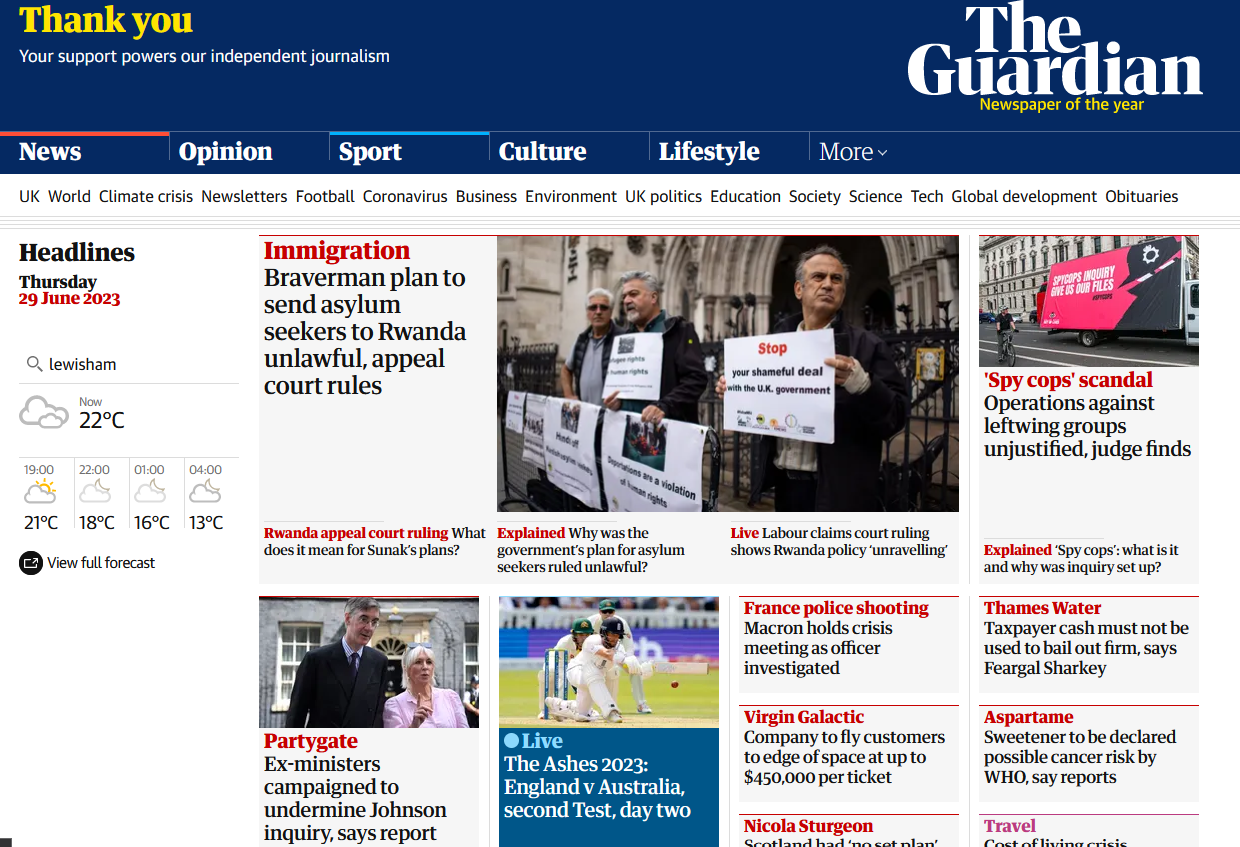
Have the judiciary, & MPs found some back bone; here is the front page of today’s Guardian.

Good news for progressives. The Rwanda exile scheme is illegal, those Boris fans in the House who expressed a contempt for the standards committee inquiry may be ‘pursued’ and the inquiry into MI5/Special Branch covert surveillance of various left wing groups in the 80’s has declared the operations to an overeach. A good day for justice.  …

Mercantilist acquiescence is not enough

Prof Jacob Oberg writes, “Psychologically and legally, we have to accept we have no special way back in. But with realism and political will, it’s not impossible.”

There are two takes on this; the first is that he presents a catalogue of process to be overcome, the other is that he is criticising so-called rejoiners because we over estimate how easy it will be because we think we are re-joining, not applying to join. I say, this is semantics.

The opt-outs are gone, and recognising this is part of proving ourselves suitable candidates, to show we’ve learned. It is unlikely that they will ask us to amend our constitution, mores the pity but since we have only just left, meeting the market economy rules of the Copenhagen Criteria is simple, and meeting the rule of law criteria is equally simple although this time there can be no opt-outs from the Charter of Fundamental Rights nor the justice pillar of the Lisbon Treaty.

The task of rejoiners is to build a sustainable majority for rejoin which recognises that the EU is political project.

Mercantilist acquiescence is not enough and demands for extrawürst only prove we are not ready.

Apart from showing ourselves to be suitable & better partners for the future, there is nothing we can do to change the EU’s process and the views of the member states and so worrying about it is pointless. …

Fringes and solidarity

I enjoyed the fringes that I attended; all the ones I chose were activist led. Learning from such activism was reinforced by giving activists time at the rostrum, most importantly probably speakers from Amazon; the video stream starts here.

The fringe meeting I attended were the Apple solidarity fringe where I met the leadership of the recognition campaign; they’re impressive people. I hope we can bring similar success to London and also the fringe meeting hosted by the Migrant Democracy Project and the session was chaired by Lara Parizotto, who used to be in our branch. The speakers were from the voice of domestic workers, and the Bureau of investigative journalism. It also heard from Marcela Benedetti from migrants for labour, who spoke about the difficulties that Latinas had in making a home in the UK. The highlight for me was Emiliano Mellino from the Bureau of investigative journalism who presented, on his investigative project on the state of the living conditions of migrant workers working British farms, and finally I went to the Justice for Columbia campaign fringe. It was good to be reminded of the fact that in Columbia they have elected a left wing president, and established a peace agreement to bring the guerrilla movement into politics. They also announced their campaign of solidarity with ex-fighters; they are collecting money for a farm truck.

I say more overleaf ...

Digital Transformation in Europe

Digital Transformation in Europe

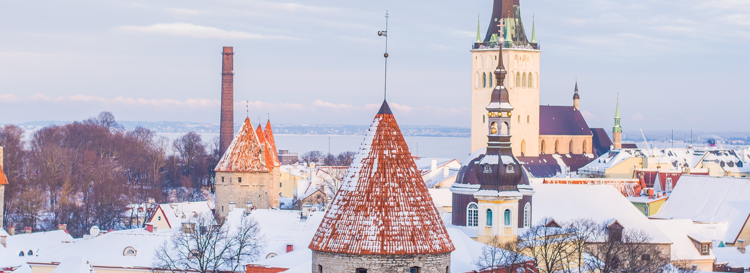
I attended a conference, on the Digital Transition chapter of the CoFoE final report. This was hosted by the Estonian Human Rights centre and held in Tallinn. This article contains my notes and views of what happened. The conference invited two keynote speakers but otherwise looked at the four objectives from the COFOE final report, Chapter 6 on Digitisation, which I précised on my blog [or on Medium], in working groups.  The conference came to together in plenary to share its findings on the CoFoE proposals. My key takeaway may be that the Eastern European citizen’s legitimate fear of a censorious and surveillance state, will lead to a failure to regulate private sector players who are driven by profit, wealth and exploitation.

The article continues, overleaf. Please use the read more button if necessary ...

Horizon Europe

As the UK government sorts out the argument with EU over the border between Eire & Great Britain, rejoining Horizon Europe becomes a possibility although it seems that Rishi Sunak is not so keen. In an article on Linkedin, called “Horizon Europe, more than just cost”. I note that in the final year of Horizon the UK rresearch entities were granted €5bn. The most important point made by my article was that the value of Horizon is as much the contribution of the other partners, some of whom must be from a 2nd country. The value of Horizon to researchers is the leverage of the domestic investment as much as the grants. …

Virtual Worlds, Day 3.

On day three of the EU’s citizen’s assembly on Virtual Worlds, after a short meeting in groups, we reassembled in the plenary hall. We were introduced to a speaker panel, which they referred to as a knowledge committee which included three Belgian improv artists. The whole session is available at for review on the Commission’s streaming platform. In my article overleaf, I catalogue the EU’s definition of people’s rights and principles, briefly look at the regulatory aquis, and briefly introduce the key members of the panel of experts. I criticise the lack of emphasis on privacy & anti-fake news, and the absence of any talk of investment policies. I end by asking how the topic was chosen and if it is in fact of real relevance for tomorrow? to read the full article, please use the "Read More" button ...