Untimely Atlanticism, a note on the UK-US Tech Prosperity Deal

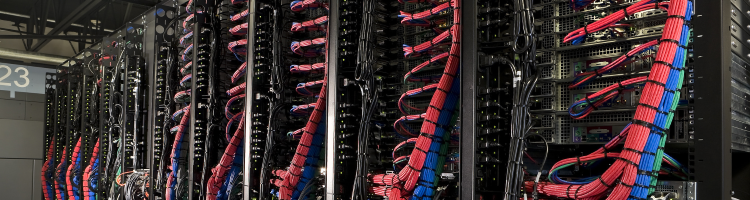
an aisle in a computer hall

I wrote a response to the US/UK Technology deal which was eventually published in the Chartist Magazine. They entitled it, “Untimely Atlanticism” with a sub title, “US AI data centres drain power and offer little for UK jobs while in Europe opportunities call “. In the Chartist article I say,

One of the few substantial outcomes from Donald Trump’s second visit to the UK is the announcement of a UK-US Tech deal, also named the UK-US Tech Prosperity Deal. TechUK states that the key areas for co-operation are Artificial Intelligence, civil nuclear technology, quantum technologies and network technology & cyber-security.

The most eye-catching proposals are to enable the US Big Tech companies to build some very large data centres to host nodes in their AI configurations. The Government press release argues that this will help research significant bioscience advances.

The scale of some of these data centre builds is enormous. The proposed Microsoft/Nscale data centre is planned to be 50 megawatts with a burst capability of 90 megawatts; these metrics do not include the power draw necessary to run the cooling systems. Google Gemini reports that 50 megawatts could be expected to power 30,000 homes.

AI systems and their Data Centres aren’t a public good; the rules-bases, i.e. the knowledge is owned by the software company, and the data centres compete with people for power, water, land, and capital. The US corporate domination of the sector also acts as a talent sink.

It is suggested that the deal is worth £31bn of inward investment, but the core IT assets are US-owned and supplied. So these UK-based data centres will be stuffed full of US-manufactured computers. I wonder what the net financial flow is in reality.

While they claim that over 5000 jobs will be created and nominate the North East as a location for the new data centres, it doesn’t take very many people to run a data centre and much of the expertise in designing and building them is located abroad.

A final worry is that, in reality, AI has no value. It’s being used to create memes and low-value artefacts. It’s also important to understand what makes it an AI solution, as opposed to just more distributed computing complexes. AI would seem to be the layering of heuristic neural networks on top of big data storage and processing systems. The industry has been using these IT architectures, doing this for a decade or so without calling it AI. It has also been doing complex modelling of weather and physics on supercomputers for even longer.

Furthermore, given that the outputs of AI systems are based on the captured knowledge, which is current (and popular) today, it remains unclear how AI will innovate. Their protagonists suggest that they can replace labour in white collar work, but this is questionable, and if they do, how will invention occur?

More and more people are suggesting the lack of value means that this is a bubble which Is consuming capital and denying it to other, more potentially worthwhile initiatives. The big-tech monopolies are polluting the necessary creative destruction.

At the end of the day, this looks like yet another of Trump’s shakedowns; much of the investment will be spent in the USA, and most of the profits will also be repatriated there.  

Another option alluded to in the CNBC article is greater European co-operation. The UK has rejoined the European High Performance Computing Joint Undertaking, and coincidentally reversed Reeves’ 2024 cuts in the supercomputing programme. The EU is now talking about an EU IT stack with which the UK could easily cooperate, and both would increase the UK’s cyber-sovereignty.

In IT, as in defence, the UK’s future is becoming a choice between the USA and the European Union; this treaty is just another piece of untimely Atlanticism, just as is the decision to buy more US fighter planes and their tactical nuclear payload. …

Looking back about Data Centre location

Looking back about Data Centre location

I just came across some writing I did while working at Sun Microsystems; they/we were considering building a cloud platform in Europe and I was part of the team evaluating the potential location. (This would have been 2008/2009.

The key driver for locations was thought to be firstly the IT infrastructure i.e. networks and power, an EU compliant data protection regime, and political stability, with skills supply coming a 4th.

We argued for London or Amsterdam, which is quite funny 10 years later as London looks to leave the EU and there are growing doubts about its GDPR compliance.

I argued that Sun needed to avoid dis-intermediation and retain brand loyalty; this may have been impossible as part of a Cloud offering but it had the world’s leading software superstructure products at the time. I argued that IaaS was not enough to make it work for Sun and thus initiatives like Project Kenai (a predecessor to GitHub) were important indicators of what we should do, although the font in which I did it was quite small. I didn’t see that this was crucial, but when Sun announced its cancellation, I knew that this was part of the end and a decision taken by those that fetishised hardware. Interestingly Oracle reversed this decsion, and it staggered on for another eight years. It was one of a huge number of destructive decisions taken by a management who won by luck until it ran out.

Interesting to see where I was right and where I was wrong and just how much has changed in 10 years. …

Data Centre Economies of Scale

Data Centre Economies of Scale

At the Waters:Power09, last week, Bob Giffords argued there are three ‘gravitational’ forces leading to the mega data centres and cloud computing.

  • There’s too much data to move, it needs to stay where its created.
  • Intra system & total latency is still a problem, and hence systems are best co-located with the data.
  • He argues that energy management is a gravitational issue.
 …

The SuperNAP

I was invited to visit Switch Communication’s Supernap facility. This must be the best datacentere in the world. It is purpose built, and designed to host new age high density computing. They set out to build a 35Kw/Rack data centre and every decision they took was to enable this goal.  …

Talking about Cloud Computing

The current technical state of systems, storage and networking and specifically the cost of broad band networking has created a tipping point. Over the last 10 years, organisations and people have been learning to build new distributed computing server complexes. It may be too late to copy the leaders, but certain design criteria and the regulatory constraints may mean that there is a slower commercial adoption cycle. Other factors are making the adoption of cloud compelling and this blog article looks at some of them.  …

Project Blackbox, it’s real you know

Yesterday, Sun’s Project Blackbox Tour visited the Thames Valley at Sun’s UK HQ Campus and today we have taken it to the National Army Museum so prospective customers, journalists and analysts can inspect it and ‘kick the tyres’, and I am one of the engineers answering the mediumly hard questions. The really difficult ones have been handled by Joe Carvalho, one of the designers. …

Sun’s Connected Customers

Steve Wilson led a presentation about the changing nature of Sun’s connected customer response and where the provisioning and image maintenance tools now sit. This means that he’s responsible for network support, subscription services and what’s left of our N1 management suite. …

blackbox is a video star!

Jonathan announced Project Black Box at the end of last month. Its a Data Centre in a shipping container and expanded on its unique value in his blog article “A picture’s worth…. Jonathan said that customer reaction has varied with equal measures of a) nervous laughter, b) incredulity, c) profound curiosity …

More about the Green Data Centre

What I wrote the other week goes to prove that old adage “its easier to write a long article than it is a short one”, but I have just a few follow-ups, having slept on it for a few days. Sun’s stall as eco-friendly Americans seems quite brave given the trans-oceanic debates on responsible environmental macro-economic behaviour that took place towards the end of the week. It should go down well and I know that Sun UK is talking to its customer contacts about the brand value to them of “Green” behaviour in the data centre. …

Throughput Computing

In February 2016, I undertook an exercise to copy as many as made sense, of my original blog articles across from the oracle site to my/this wordpress blog. This article represents the highlights of the original record of my day.  The Oracle blog has now gone, as have the all the pointers to Sun resources, including the presentations. I rescued and rehosted Andy Ingram’s, Workload based Systems Design 2005 which I have rescued and reposted because it was important then and remains so today, well maybe, maybe not in 2019.

Sun finally launched it’s chip multi-threading systems, promising a revolution in throughput and cheaper MIPS/Watt. This was done at a synchronous event in New York & London with a webcast for those who couldn’t make it in person.  Jonathan Schwarz travelled to London to speak to his European customers, as did  I. I recorded this on my sun oracle blog in several articles.  …