GMB’s finance report 2026

I have always attended the finance department fringes if attending Congress as a delegate but this article reflects on the debate on Congress floor, dealing with rep expenses, subscriptions and the annual accounts.
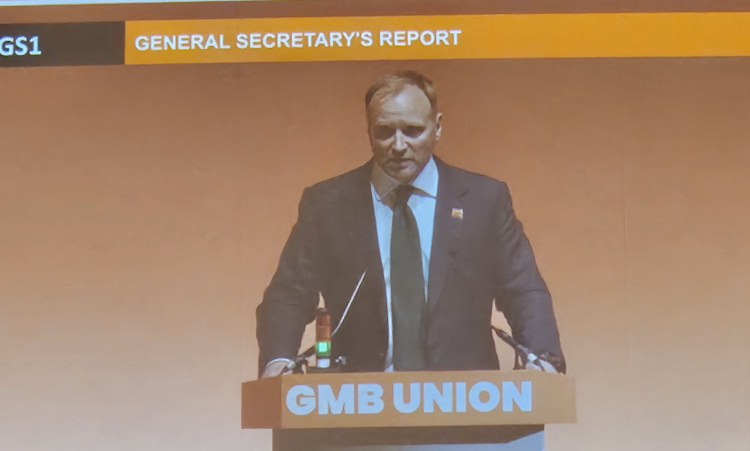
The GS addresses GMB Congress 26

This year the income and expenditure statement shows a small surplus, but I was pointed to the growth in net assets, in particular cash balances. I need to read the report more thoroughly.

The debate consisted of a series of motions, including two “Emergency Motions”, both of which were on rep. expenses. The ordinary motions were on access to digital tools (M43), the funding of GMB presence at the Tolpuddle festival (M44) and on legal support and roles M45. These are on pp49-50 of the Final Agenda. The motions on expenses, EM10 & EM11 were not available to me at the time of writing, despite being nearly three months after the event. They were both about increasing the rates of subsistence and pay for reps.

The debate on the financial proposals and Gary Smith’s introduction to the accounts is also on video.

On the state of the Union’s finances, the real operating surplus was £401k, which represents a slight drop in value on £74½ m turnover, itself up by £5m.

The cash held figure is up by £4.1m, with total net assets up to £133m by £17m. It is these numbers rather than the operating surplus which allow the leadership to claim such a rude health. This positive report is caused by ending the special pension fund payments of £10m p.a. They also claim that the fund is now very healthy, so I hope for a reduction in employer contributions next year. On the positive side, the Union has been earning through the resolution of legally managed equal pay disputes, but they may also need to reserve against a Unionline fraud which Is being investigated by the police.

The CEC recommend a member’s subscription freeze.

During the debate, one of the speakers called for the restoration of the branch remittance to 10%. Branch expense is up, but down from 2021 when it was £6½m. It would seem that the cut in branch remittance has not saved what they expected.

After the Congress ended, I was pointed at the Union’s AR21, which showed that the GS salary has increased, from £166k to £176k. CEC honouraria expense, excluding the President and Vice President, has fallen, 19 of 55 ordinary executive members of the GMB CEC were paid a sum total of £144k ranging from £1,000 to £16K.  I must remember to look at the AR21, if available, before Congress next year. Only the AR21 reports on the leadership costs. …

The finance debate

The finance debate

One of the key debates, at least as far as the platform was concerned was the debate on whether to freeze the subscriptions again. The CEC had made their task harder by deciding to reduce the branch capitation payments. Until earlier this year, branches by rule, retained 10% of the membership fees paid by their members. The CEC implemented a 25% cut to these payments. They proposed a special report confirming their actions and amending the rule to permit this to occur. The initial agenda had 19 motions critical either of the adjustment, or of the way it had been done and one in favour; it had seven motions calling for alternative subscription fee structures. By the time of the debate, the only survivors were the motion supporting the CEC, one removing regional committee discretion, one postponing it to later in the year and one criticising the way in which the CEC had behaved.

The article overleaf is quite long; the conclusions are that the CEC got their way but to my mind didn't tell the whole story, which they may come to regret.

New problems, new architectures

I originally wrote a piece on my sun/oracle blog called “Are “Quants” suitable for grid infrastructure?” I used a finance dictionary to create a dichotomy between Quants & Chartists and suggested that new IT architectures were needed to deal with trends and forecasting, especially if applied to portfolios and baskets. I reproduce the words here, as I was clearly struggling towards a forecast about big data and new application’s and implementation architectures. The original is not tagged “big data” as it wasn’t a current term at that time. …

Real Options & Flexible Planning

Kieron Bradley, one of my colleagues at Sun, during a piece of client consulting recently had reason to use financial option theory & language to justify why CPU’s in Sun’s large systems are more expensive to buy than those in the smaller ones. He and the customer had examined all the TCOO factors they thought were relevant and the fact remained that if one wanted to take a utility view of CPU supply, it was cheaper to buy and run smaller systems rather than larger ones. (This particular analysis did not perform a variable utilisation analysis. It was assumed, (or defined as policy) that all CPUs would run at a given % utilisation. Contradicting this assumption, it is a fact that large (and flexibly partitioned) systems are easier to keep busy.) …