The struggle is more than one person, the goal is a better world.
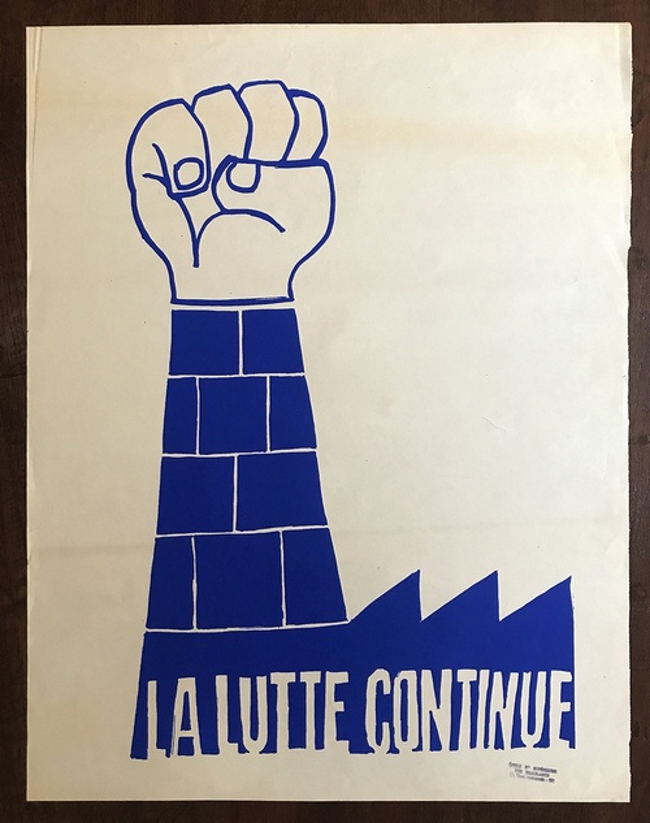
The struggle is more than one person, the goal is a better world.
Where’s Starmer? I didn’t think that “responsible opposition to the Tories” meant serial abstention. It’s not opposition! Labour has abstained on the Overseas Operations Bill and the Covert Human Intelligence Sources Bill; they also abstained on a LibDem resolution in the Lords to block evictions as the lockdown provisions expired. I should also add that Starmer’s “No ifs, no buts, get them back to school” is likely to haunt him and us. At least he should have added, when you’ve made it safe. The PLP have been absent on Brexit too. Abstention is not opposition.

Yesterday Rishi Sunak announced the next stage of support for the economy to see us through a coronavirus winter and mitigate some of the job destruction inherent within Brexit. It seems to be a short term working subsidy. It is described in the Guardian in an article entitled, “Covid scheme: UK government to cover 22% of worker pay for six months”. It requires employers to pay workers 55% wages for 33% hours. Below/overleaf, I also look at Richard Seymour and Rebecca Long Bailey's comments. ... ...

51.5% of Labour MP’s are women and 20% of Labour MP’s are BAME.
But what about the class background of MP’s?
29% of MP’s went to private school (7% of the population did), 14% of Labour MP’s went to private school.
25% of MP’s went to Oxbridge (0.5% of the population did)
50% of MP’s went to the Russell Group of Universities, 24 ‘top’ universities (11% of the population did).
In 1979, 15% of MP’s came from ‘blue-collar’ backgrounds. In 2019, 3% did!
…

Starmer’s firing of Rebecca Long Bailey for sharing an interview with Maxine Peake containing an alleged antisemitic comment is both arbitrary and disproportionate. …
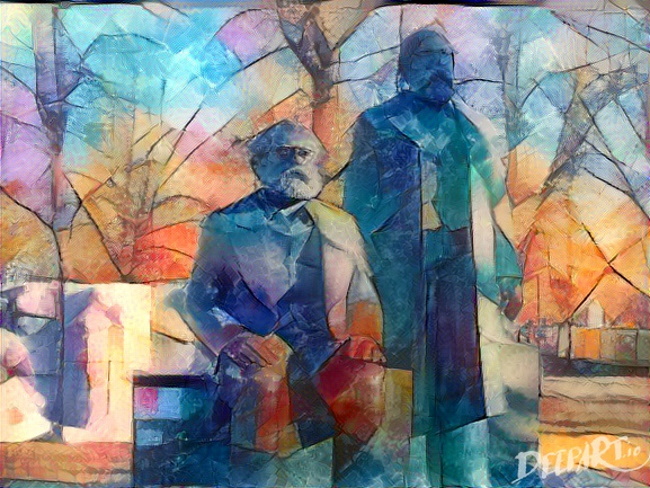
While transferring stuff from my old computer, I cam across deepart.io again. I made a couple of pictures from my collection. Here they are, from my collection, one from Alresford station, one from Berlin.

and the Karl Max forum, Alexanderplatz in Berlin
 …
…

Sadly I have been looking to see what’s being said about Corruption and Anti-Corruption. I made a wiki post which includes some links on management strategy, which includes an article from McKinsey’s Journal which offers a brief taxonomy of corrupt practices, this is augmented by Transparency International’s tool kit, to which I link. TI also note that, “The UK Bribery Act, which was passed in 2010, introduces an offence of corporate failure to prevent bribery.”. There are also some specific action plans inc. current advice from the MoJ. Interestingly, to me, the action plans share many ideas from risk management practices and IT Security controls that I have been working with for many years, and that having a robust programme of controls is the only defence against the aforementioned corporate crime.
Construct a taxonomy, develop controls, measure the effectiveness of the controls and fix those that are broken.
This costs money and time, and companies may lose business because of it. No-one says it’s easy.
I have now made a post on my linkedin blog, which while repeating some of that I say here, looks at the MOJ Guidance and their six principles and offers some important definitions of pertaining to bribery. I highlight the concept of ‘improper behaviour’ from within the legislation. …
I didn’t know, anyway Happy Birthday Karl
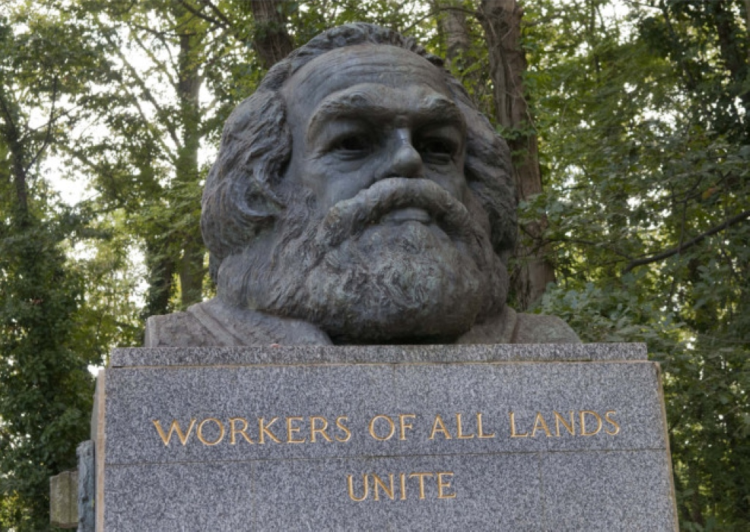
This is his grave in Highgate Cemetery, it can’t be visited at all times, and is shut due to lockdown at the moment. Once it’s lifted, then we can celebrate his life by doing this pub crawl, or visiting the Edmund Halley, if it reopens, which celebrates his alleged residence in Lee Green in Lewisham. …
This article is a review of Anatomy of the Micro-Sect, by Hal Draper, dated 1973. It thus refers to political sectarianism. I was particularly taken by this quote,
What characterizes the classic sect was best defined by Marx himself: it counterposes its sect criterion of programmatic points against the real movement of the workers in the class struggle, which may not measure up to its high demands. The touchstone of support (the “point d’honneur,” in Marx’s words) is conformity with the sect’s current shibboleths – whatever they may be, including programmatic points good in themselves. The approach pointed by Marx was different: without giving up or concealing one’s own programmatic politics in the slightest degree, the real Marxist looks to the lines of struggle calculated to move decisive sectors of the class into action – into movement against the established powers of the system (state and bourgeoisie and their agents, including their labor lieutenants inside the workers’ movement). And for Marx, it is this reality of social (class) collision which will work to elevate the class’s consciousness to the level of the socialist movement’s program.
There’s more below/overleaf, including a commentary on the featured image. … …

I read Richard Barbrook’s “Class Wargames” having played his referendum game. I was unprepared for two chapters on the history of the Situationist International. The book has been inspired by Guy Debord’s Game of War; I had assumed that Richard was fascinated by games for the same reason that managements are, that one learns quicker by doing than by listening but his enthusim and praxis comes from the tactics of the Situationist Intentional. He categorises the tactics as provocation, détournement, urbanism & participatory creativity and while it’s a bit difficult to see how war games is a tactic of urbanism, it’s clear to me how the others fit in by challenging the states monopoly of military knowledge and strategy, the revisiting of military history and the liberation effects of personal participation. Anyway everyone, or nearly everyone enjoys a good board or table top game.
The “Game of War” is simple, some might argue overly so and would seem a bit too like chess although Debord argued that it was good enough, or better than that. …