Yesterday, Ursula van der Lyon delivered the annual state of the union speech from the Commission to the European Parliament.
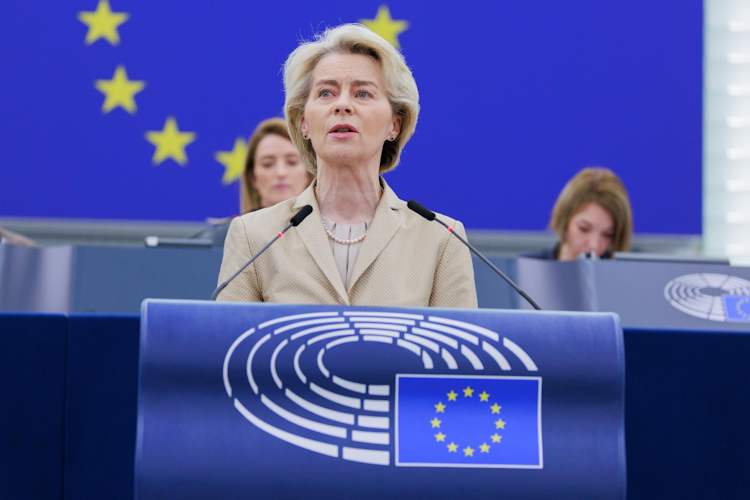
The headline reporting by much of the press and the pro rejoin commentariat it’s that she offered Canada access to an associate membership status with the European Union.She said a lot more than that and I may write a summary of that in other blog. This article looks at the offer to Canada, and the UK’s needed response to the current state of play within the EU.
This is a massive indication of Canada’s determination to avoid annexation by the United States. Formally, on the EU’s side, this would require treaty change, which is highly unlikely to occur; what will probably happen is an augmentation of the terms of CETA although even that treaty has not been fully ratified. Subsequent press comment highlights the possibility of reciprocal visa free travel between the European Union member states and Canada.
Some in the UK say that if there’s an associate membership status the UK should also apply for it. It is unlikely that this offer will be made to the UK, as reported in Politico’s article, “Brussels will not offer Associate Membership to Brexit Britain”. They say that,
One senior EU official told POLITICO that von der Leyen’s offer to Canada is about cutting a deal for a country normally ineligible to join the EU. It isn’t for European countries with commitment issues.
The Politico article does however quote Bell Ribero-Addy and Clive Lewis, arguing for a closer relationship as a step towards rejoining, and opposing the hyper-atlanticism of the Starmer government.
In my mind, the choices are fixing the “reset”, which requires agreement on Erasmus and “Youth Mobility” neither of which seem to be forthcoming, joining the European Economic Area or rejoining the European Union. The EEA can only be a transitional stage for an economy and society consisting of 70m people. It is reported in the Guardian that the HMG want to expand the agenda of the reset to discuss inclusion in the EU’s coming Industrial Accelerator Act, often known as the “Made in Europe” Act. Why not? Bu holding the reset agreement up in order to expand the agenda is not really in our interests and fails to recognise the agreement actually made in May 2025.
It also seems that Burnham’s government have forgotten that the EU’s negotiators can read in English and access the British press. The language used by HMG spokespersons is dripping with exceptionalism and the fact that the UK’s commitments under the withdrawal agreement, TCA and Windsor framework remain unfinished is equally ignored. Again the simplest way to make progress is to complete the reset agenda and then ask to join the EEA as a step towards full membership again. The Guardian article demonstrates arrogance and a failure to understand firstly what’s at stake and secondly the appetite for the European Union to deal with the UK.
The UK was mentioned twice in the speech and each time it is on a list of potential allies, once for AI regulation and investment and the other in the context of defence; in both cases it was linked with Canada. Another illustration of the priorities of the Union is what Von der Leyen says about enlargement, where she talks more of Moldova, Ukraine and Georgia rather than the western Balkans.
The EU requires the UK to put more on the table; unfortunately, the transition from Starmer to Burnham means the last two years of exceptionally slow learning seems to have been undone. I had some hope that the HMG was learning and would be more flexible and ambitious; it seems not, but Associate Membership is unreal, and again will not available to the UK. …