Last year at #Lab25, the reference backs submitted were not put to Conference. Here are the rules and procedural guidance that says they should. It would seem that the CAC seeks to avoid votes and moving speeches.
#lab26 – conference floor (c) 2026
The Delegates Briefing promises that the CAC will publish the relevant reference backs in the daily report. CAC2 does not contain these references and I understand that no reference backs were called this a.m.
If someone wants to make a point of order, then these rules below or overleaf apply, …
I am just writing something for CLPD’s yellow pages, and need to reference Labour’s rules on membership rights.
There follows an extract of rule C2.2.8.
Members have the right to dignity and respect, and to be treated fairly by the Labour Party. Party officers at every level shall exercise their powers in good faith and use their best endeavours to ensure procedural fairness for members.
I’d suggest that this is not a rule well observed. …
On the 20th Sept, two Länder in Germany voted for their State Parliaments. In both Berlin and Vorpommern-Mecklenburg, the CDU vote collapsed. In both cases the SPD also lost ground, but the more serious threat for democrats is the ceding of voters from the CDU to the AfD. See Deutsche Welle’s comment on the results.
The current and previous national governments in Germany have been SPD/CDU coalitions. The current government is led by the CDU, the previous one by the SPD. It is easy to say that, despite a change in Prime Ministers, and the leading Party that the policies had not changed, but this is not true. The SPD were exceptionally timid when leading the government but by pursuing monetarist debt fetishism they failed to renew the economy and gave no hope to he country’s youth who are learning to vote for Die Linke and the ultra right AfD. The CDU led government have tried even harder to bear down on public spending.
Die Linke in Berlin, as did Mamdani in NYC, made reducing housing costs their key policy promise.
Across Europe, there has been a tendency for centrist parties to triangulate with the hard right with zero evidence that is electorally successful.
In Germany, there are two competing traditions within their political memory. The first is the hyperinflation of the 1930s, and the second of course, is the rise of fascism. The former fuels the hegemony of quantitative monetary theory and the second reminds the German pro capitalist parties of the history of the 1930s and they have resolved never to work with the successors of the Nazi party.
The CDU’s growing failure maybe a temptation to continue to pander to the AfD’s politics although the fact that the Berlin slate of Die Linke is led by the child of Turkish refugees gives some hope that Germany’s younger generations have learned different lessons.
The SPD need to rediscover their social democratic roots and the CDU need to maintain the cordon sanitaire. The CDU also need to ensure that they maintain the cordon sanitaire within the European Parliament as well as in German politics. They only have to look at the electoral prospects of their sister parties in France Italy and the UK to realise the pandering to and triangulation with the far-right will not work.
These lessons are equally applicable within the UK; the Labour Party needs to discover its own social democratic roots, learn to work with the Greens and the left nationalists and stop pandering and triangulating with Reform UK.
The only way to “fight reform” is to do the right things; fight poverty, oppose racism, and act with decency on human rights. …
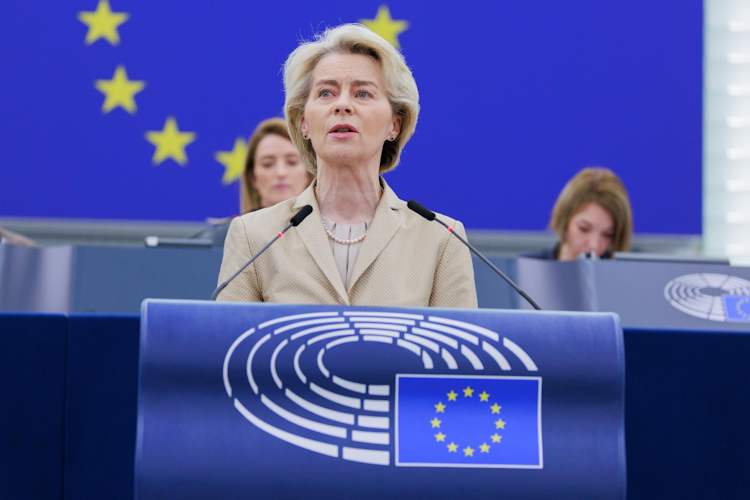
The headline reporting by much of the press and the pro rejoin commentariat it’s that she offered Canada access to an associate membership status with the European Union.She said a lot more than that and I may write a summary of that in other blog. This article looks at the offer to Canada, and the UK’s needed response to the current state of play within the EU.
This is a massive indication of Canada’s determination to avoid annexation by the United States. Formally, on the EU’s side, this would require treaty change, which is highly unlikely to occur; what will probably happen is an augmentation of the terms of CETA although even that treaty has not been fully ratified. Subsequent press comment highlights the possibility of reciprocal visa free travel between the European Union member states and Canada.
Some in the UK say that if there’s an associate membership status the UK should also apply for it. It is unlikely that this offer will be made to the UK, as reported in Politico’s article, “Brussels will not offer Associate Membership to Brexit Britain”. They say that,
One senior EU official told POLITICO that von der Leyen’s offer to Canada is about cutting a deal for a country normally ineligible to join the EU. It isn’t for European countries with commitment issues.
The Politico article does however quote Bell Ribero-Addy and Clive Lewis, arguing for a closer relationship as a step towards rejoining, and opposing the hyper-atlanticism of the Starmer government.
In my mind, the choices are fixing the “reset”, which requires agreement on Erasmus and “Youth Mobility” neither of which seem to be forthcoming, joining the European Economic Area or rejoining the European Union. The EEA can only be a transitional stage for an economy and society consisting of 70m people. It is reported in the Guardian that the HMG want to expand the agenda of the reset to discuss inclusion in the EU’s coming Industrial Accelerator Act, often known as the “Made in Europe” Act. Why not? Bu holding the reset agreement up in order to expand the agenda is not really in our interests and fails to recognise the agreement actually made in May 2025.
It also seems that Burnham’s government have forgotten that the EU’s negotiators can read in English and access the British press. The language used by HMG spokespersons is dripping with exceptionalism and the fact that the UK’s commitments under the withdrawal agreement, TCA and Windsor framework remain unfinished is equally ignored. Again the simplest way to make progress is to complete the reset agenda and then ask to join the EEA as a step towards full membership again. The Guardian article demonstrates arrogance and a failure to understand firstly what’s at stake and secondly the appetite for the European Union to deal with the UK.
The UK was mentioned twice in the speech and each time it is on a list of potential allies, once for AI regulation and investment and the other in the context of defence; in both cases it was linked with Canada. Another illustration of the priorities of the Union is what Von der Leyen says about enlargement, where she talks more of Moldova, Ukraine and Georgia rather than the western Balkans.
The EU requires the UK to put more on the table; unfortunately, the transition from Starmer to Burnham means the last two years of exceptionally slow learning seems to have been undone. I had some hope that the HMG was learning and would be more flexible and ambitious; it seems not, but Associate Membership is unreal, and again will not available to the UK. …
This website uses cookies to improve your experience. We'll assume you're ok with this, but you can opt-out if you wish.AcceptRead More
Privacy & Cookies Policy
Privacy Overview
This website uses cookies to improve your experience while you navigate through the website. Out of these, the cookies that are categorized as necessary are stored on your browser as they are essential for the working of basic functionalities of the website. We also use third-party cookies that help us analyze and understand how you use this website. These cookies will be stored in your browser only with your consent. You also have the option to opt-out of these cookies. But opting out of some of these cookies may affect your browsing experience.
Necessary cookies are absolutely essential for the website to function properly. This category only includes cookies that ensures basic functionalities and security features of the website. These cookies do not store any personal information.
Any cookies that may not be particularly necessary for the website to function and is used specifically to collect user personal data via analytics, ads, other embedded contents are termed as non-necessary cookies. It is mandatory to procure user consent prior to running these cookies on your website.