From the House of Commons on Rejoin EU

From the House of Commons on Rejoin EU

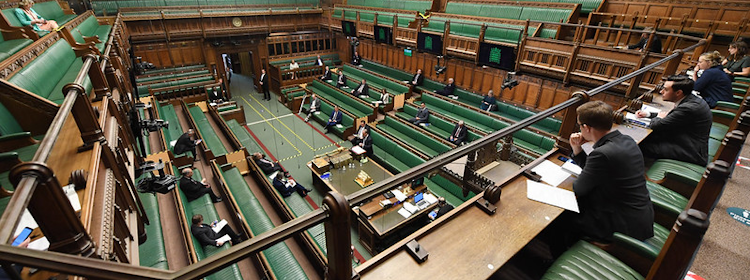
On Monday 12th, there was a debate in the House of Commons on rejoining the European Union. This happened due to the success of a parliamentary petition. You can view the debate via its video feed, or track what was said via Hansard. This followed the Prime Minister’s statement in the Commons, [video/ or text @ gov.uk]. The video contains questions from the chamber inc. those from Kemi Badenoch, the Leader of the Opposition.

In Westminster Hall, there were some good and less good speeches but one has to understand or consider or ask, just how far MPs have moved since Burnham’s conference speech. One can argue that it has given Labour’s pro-EU MPs a freedom to speak their minds but while some including Stella Creasy, are now arguing for the government to drop its red lines, a number of them still fundamentally only believe in developing the “reset”; their target, if that thought out, is a Swiss style deal.

Creasy in her speech, emphasised that rejoining will take some humility and that European politicians can read the British press and know what people are saying.

I would argue the Burnham by posing the options has in fact dropped the red lines and when examining the options of the status quo, customs union/single market and full membership, it is clear that for an economy and population of the United Kingdom only full membership makes sense. Full membership will also give access to social and financial solidarity programmes.

Bernard Jenkins and Danny Kruger, Tory & Reform MPs, made well-argued speeches stating that the UK economy had outperformed that of Europe [DL1] and certainly that of the European G7 countries, that finance had prospered and that AI was becoming the innovation centre of growth within the UK. They argue that innovation & deregulation and not trade are the key drivers for growth.  They also don’t mention income distribution and affordability. They are in danger falling into Joe Biden’s trap while reading the statistics and mistaking them for people’s perceptions of what’s happening. People are feeling poor[DL2] , and blame Brexit and Tory (& Starmer’s) austerity.

I would add that the UK shouldn’t want an economy based solely on finance and AI. Together they carry a massive risk that AI is a bubble, that its productive capacity is very limited and that when the bubble bursts both banks and pension funds will be in jeopardy. The lack of productivity suggests that there is little reason to adopt these technologies and their social cost is enormous. The coupling of these industries reinforces the risk of a crash; if AI goes, then some banks may go too. It’s not possible to build a national economy “for all postcodes” while only concentrating on these two industries.  When commenting on Burnham’s innovation speech, I said,

“It’s a really good speech, not in my mind, one that Starmer or Reeves would have made: touching devolution of industrial planning, innovation in all industries, inclusive of Universities and life science research, and ambitious.”

Both the SNP MP speeches were pro-rejoin but linked to independence and airing the grievance that Scotland had voted to remain.

Several speakers raised the issue of the creative industries and the restrictions on touring caused by the exit from the freedom of movement.

Many speakers, inc the Lib Dems prioritised a European Defence Security Council, but no-one mentions that in order to re-establish counter terrorism & immigration co-operation the UK will need to sign up to the Charter of Fundamental Rights.

Mike Woods, the Shadow (Tory) spokesperson, although not the only one, started with the argument that the referendum is the only democratic mandate that counts. There have been three general elections, and seven administrations since the referendum and the referendum did not confirm the withdrawal terms. The referendum’s mandate is dead. The electorate have a right to change their mind if they see fit.

Woods pointed out that the accession process may be difficult and that the poll leadership is softer if the opt-outs are not available. He also spoke of the cost of re-entry which he put at £30bn. Interestingly, he argued that “dynamic alignment” which he claimed was the policy of the Labour Government was the worst of all worlds; it restricts trade policy and product regulation while having no say in the rules of trade.  He concludes that we should stay out; I disagree.

Having opened the door to rejoin, we need to go through it.

Mike Ferguson summing up for the government. The Prime Minister had made a statement  earlier in the day and Ferguson was careful not to exceed that policy statement.

He spoke of the impact of Brexit on exports, where he quantified the cost, and the cost of red tape overheads, in terms of cash and company withdrawal from the export market and reminded us that it impacts trade with Northern Ireland too.

He previewed the conclusion expected now in November and the success of the “reset”, although not on energy. He stated that,

“What is planned is the floor, not the ceiling, of our ambition.”

And quoted the PM,

“Sticking with the status quo is not good enough for Britain.”

Rachel Maskell intervened ask if the government could ensure

“ …  that we have a proper deliberative process so that everyone in our communities can be engaged in shaping the future of Europe, to ensure that the people can co-create it with Government. Will the Minister support such a methodology?”

The suggestion was politely received.

Toby Vaughan who moved the motion, had the last word and summed up. He replied on the economics, “He needs to engage with the weight of the evidence, not the selective examples that those who oppose a closer relationship with Europe ultimately rely on.” And concluded, “I hope that, as the Prime Minister said, these conversations will lead to progress on a matter that is at the heart of how to build a prosperous nation for the future.”


 [DL1]This is not true, Europe has grown more quickly; the larger and more mature economies have not. This is why the export path is so important. 

 [DL2]The UK’s Gini co-efficient is low compared with Europe.

The featured image is from the House of Commons flickr account CC BY-NC 2020.  …

More on untimely atlanticism & trade

In, Untimely Atlanticism, a note on the UK-US Tech Prosperity Deal, I outlined the inadequacy of the proposed agreement. I fear the development of an AI/Finance based economy due to its fragility, its low job creation potential, its innovation destruction capability and lack of utility to consumers. Who needs more cat memes?

by deepai.org CC0 based on a prompt by davelevy

In writing my response to Burnham’s Conference 26 speech, I checked out what had happened since its signing. I asked Google, “are the projects announced with the UK-US trade prosperity deal still in place” and it replied,

The major UK-US prosperity deals face partial pauses, delays, and ongoing re-negotiation rather than smooth, full implementation: [1, 2, 3]

Technology Prosperity Deal: Pledged £31 billion to £150 billion in US tech investments, this deal was paused by Washington in December 2025 due to disputes over the UK’s Digital Services Tax, agricultural food standards, and the Online Safety Act. Both sides cautiously restarted preliminary talks focused on civil nuclear and fusion projects in early 2026. [2, 4, 5, 6, 7]

Economic Prosperity Deal: Reached in May 2025 to provide partial tariff relief in sectors like aerospace, autos, and beef, it remains an unfinished framework. Key issues like steel quotas, digital trade rules, and non-tariff barriers are still stalled or subject to ongoing friction. [1, 8]

Pharmaceutical Arrangement: Agreed to in December 2025, this deal exempted UK pharmaceuticals from steeper US tariffs in exchange for commitments expected to increase NHS medicine spending, though some private firms have paused or redirected domestic investments due to rising business costs. [1, 4, 9]

[1] https://publications.parliament.uk

[2] https://www.reuters.com

[3] https://www.reddit.com

[4] https://www.bbc.co.uk

[5] https://www.techuk.org

[6] https://bisi.org.uk

[7] https://www.theguardian.com

[8] https://publications.parliament.uk

[9] https://tjm.org.uk

Google also suggested looking at “One year on, the Tech Prosperity Deal has left UK more exposed to US pressure” from the Trade Justice Movement which looks at the Economic, Technology, and Pharmaceutical deals. It ends with a paragraph entitled, “Ending ‘forever negotiations’ with Trump”. They say,

“One year after the UK and US announced their Technology Prosperity Deal, “One year after the UK and US announced their Technology Prosperity Deal, our new briefing finds that the UK’s approach to negotiating with Donald Trump has delivered little certainty while leaving key areas of public policy increasingly vulnerable to US pressure.”

Taken together, they, [the three deals], show an ongoing pattern of negotiations conducted under US economic pressure …

This is part of a bigger pattern. The UK keeps negotiating in search of stability, but the stability never arrives. As soon as one negotiation ends, another demand appears. …

… the briefing calls on the new government to end the policy of “forever negotiations” and take a different approach, with clear red lines and greater democratic accountability.

This is not particularly original, there’s a lot of quotes but I first wrote about the trade deal on this blog and so have posted this follow up here too. I like to quote people who substantiate my polemics. The bottom line is that the UK-US Tech Prosperity Deal was in my mind never going to deliver much to the UK, and time has proved me right.

I finished last year’s article, with the phrase,

In IT, as in defence, the UK’s future is becoming a choice between the USA and the European Union; this treaty is just another piece of untimely Atlanticism, …

 …

What’s happening to Labour with respect to the EU?

What happened at Labour Party conference and what will happen next on the subject of relations with the European Union?

Burnham’s speech to Labour Conference has changed the debate in the country and the Party.  

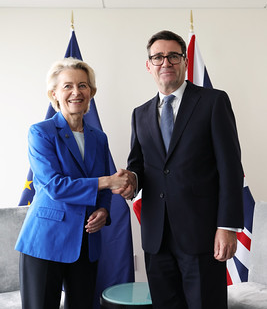
At the UN GA , via flickr No10, CC 2026 BY-NC-ND

The quote on the topic of the EU, is,

We will not give Britain the clear path we need into the rest of the century until we decide on a long-term relationship with what is still our largest market. I cannot say to you truthfully that where we are is good enough.

Brexit has done more harm than good.

We need to restore a higher level of growth and prosperity for Britain.

So, I will take the opportunity around the summit to lay out to you, to lay out to the country, what I believe the different options are for Britain’s long-term relationship with our European partners.

He goes on to specify the options as the status quo, customs union, single market and full membership.

We will need  to wait and see exactly what he says at the next EU-UK summit, although he seems to be asking for opinions from think tanks, but not it seems Labour Party conference.

Clarifying the choices and showing an inclination is positive.

Only one option, that of full membership makes sense;  the single market is indivisible and being a rule taker is inappropriate for an economy and population of the size of the UK. While negotiations may occur, the opt-outs have gone and we’ll need to show good faith in the negotiations and the more difficult we are, the more difficult the EU and the member states will be. It still needs a unanimous vote of member states.  Full membership would also allow he UK to join the EU’s Cohesion programme and the European Green Deal programme both allowing the pursuit of Burnham’s “good growth in every postcode” promise.

I am of the view that his timetable is to give him time to persuade elements of the PLP that this needs to be done. We can see various commentators raising a shopping list of demands on the EU, on financial services regulation, the Euro, Schengen and some even suggesting we need to be outside the EU’s digital market rules. These are designed to slow or disrupt any progress and must be opposed.

The reaction of some of think tanks has been positive with Best for Britain finally calling to rejoin, Galsworthy of the EM correctly sees it as dropping Starmer’s red lines, and even the UKCIE and Anan Menon supporting the move.

Bu underlining all this, is he disparity of size between the UK and the EU, Finland took two years to enter the EU, others have been failing for over a decade. The UK needs to show that we’ have learnt; the EU is a union of people, not just a trade club. …

Finally, on GMB Congress 26

I have just finished my write up of GMB Congress 26, held in Blackpool and you can find the long form report on my blog, tagged GMB26.

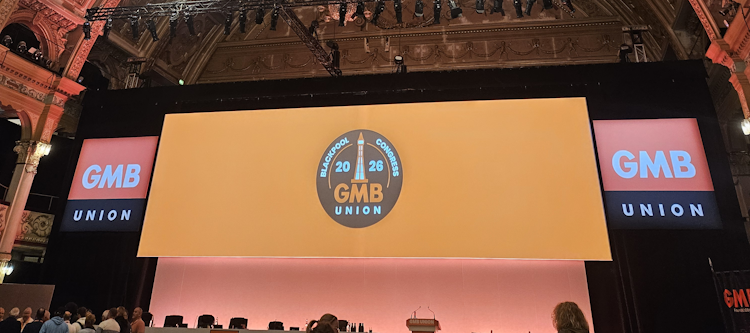
the platform at gmb26 in the blackpool wintergardens

Please note that this report has taken far too long to produce, for which I apologise and I have backdated the articles to near the date of occurrence. The first article in the series, points at the GMB’s congress document file folder, which will help follow the report …