Disloyalty

Boris has written in the Telegraph about the state of the Brexit negotiations, and this is commented in at the FT. The FT leads with the timing, as Mrs. May is planning a big speech in Florence on the EU shortly. Many Tories are also drawn into commenting on loyalty and timing.

On the issue of substance, Boris repeats his usual drivel including contradicting Government policy and re-committing to the £350m/week on the NHS from saved fees. It worries me that the Tories are still looking at avoiding payment of our outstanding fees.

Of the three issues that EU insist are initially dealt with, citizenship rights, outstanding dues and the border with Eire. It’s the money that’s the easiest to comprise on. I believe that short of single market/customs union membership there is no good answer to the border question, but if the Tories want a deal, then they’ll have to compromise on the money even if only to get some room to be awful on citizenship. …

whatsapp

I have just been using Whatsapp for a medium sized chatroom for a month or so.

I’d summarise my views in the table below.

Pro Con
Encrypted on the wire
Real-time
Multi-device
Distributed Admin
No threading, no pinning, no tagging
No rules based archiving/deletion
Tight integration with user’s address book.
High storage usage if using calls, video and images

The good is that it’s encrypted on the wire but not one the device. It’s real time, so better than SMS. You can use a laptop with it’s superior cut & paste to use whatsapp. I’d add as a comment than its user interface can be a bit idiosyncratic. Chatrooms can have multiple admins, which can be good, but can also be misused. (Is this the same as Facebook, which can lead to groups being hijacked.)

The lack of threading, pinning, and tagging, makes conversations hard to follow. (I suppose we could create our own tags and then search on them as text strings, but messages can’t be tagged this way be the recipients, although they can be “starred”.) This can make threads very difficult to track as there will be often a couple of threads concurrent at any one time and once rooms get big the conversations become a bit unmanageable.

The inability to delete messages on the basis of time periods would be useful. I tried Snapchat and found that deletion on reading was a bit too aggressive for my needs.

Your correspondents need to be in your address book, which is reasonable in a 121 conversation, but in a multi-admin chatroom it’s harder to manage and everyone has to do it; it’s a high admin. cost.

Whatsapp stores its messages received on the phone, this includes any real-time voice messages, store and forward voice messages, videos and images, It’s why URLs may be better; I am not sure if the thumbnails are stored locally. People with old phones, large picture and/or music stores may find access to storage constrained. (It reminds me of the old usenet netiquette rules about respecting bandwidth and other people’s devices and costs.

I wonder if slack or google groups are better although Google Groups uses SMTP which is v.hard to encrypt in any usable fashion. …
Deliberation

Here's a little diary on last nights Labour Party General Committee for Lewisham Deptford, its main purpose was to prepare for Conference by submitting a "Contemporary Motion"and hopefully to begin to clear the motions backlog. There were seven motions waiting to be debated, some having being proposed last year. (It's one of the contentions between the current CLP leadership and its opposition that their poor management of time is deliberate and designed to frustrate members making and developing policy. There hasn't been a single ordinary motion debated this year ) . ...

Passwords

I was pointed at an article in the Washington Post on password security. It’s quite long and so I summarise:

  1. Length is better than complexity (More than 12 bytes)
  2. Simple transformations are no help (Don’t use 1st letter Caps and last character as 1 or !, mutt5nut5 is considered very easy.)
  3. Don’t reuse passwords for accounts that you care about! (A corollary is to delete the accounts on services you no longer use.)
  4. Write the passwords down in a secure place if you have too many, or use a password manager. (They are in favour, I am not so sure.)
  5. Don’t use personal facts about yourself (Bdays, Place of Birth, Pet’s names)

They have conducted some volume research by cracking and survey which they reference in the article and built a password checker based on these lessons but using it breaches one or maybe two of the rules I set myself in my Linkedin blog article “Password Vaults”. It’s on the internet, and we can’t read the code; that’s not to say it’s not a useful training tool. …

Search Prominence in Politics

Search Prominence in Politics

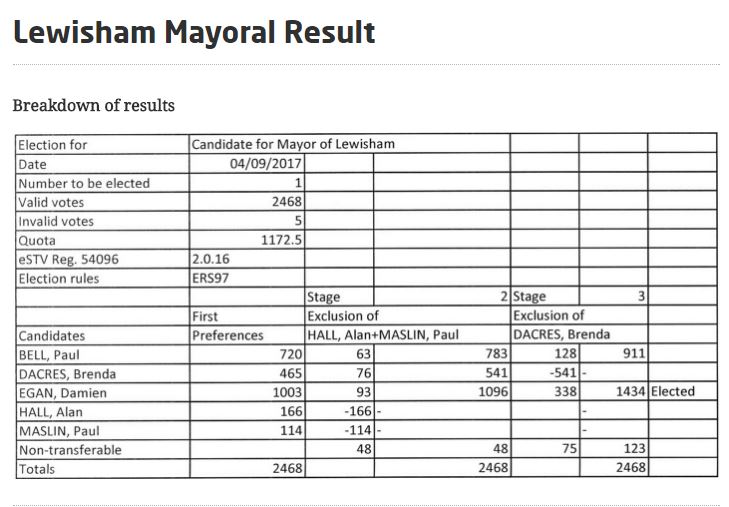
In 2011, Andrew Rhodes wrote a paper entitled, Can Prominence Matter Even in an Almost Frictionless Market? He models consumer behaviour in frictionless markets and the role of search engines and their paid placement on the search results page. I have had a look at the article because I am the target of one of Lewisham Labour’s candidates for Mayor’s google ad-campaign. I look at what Rhodes did, and ask a couple of questions about how applicable his model and assumptions are. …

Best Universities

A friend pointed me the THES world’s best Universities scores for 2018, and the fact that Oxford & Cambridge are now considered 1st & 2nd. Last time I looked at this, David Blanchflower criticised the report and its results. Ranking institutions would seem to be hard and the methodologies remain controversial.

What’s interesting apart from the UK taking places one & two is that Harvard & Princeton have been overtaken by CalTech and Stanford, representing a move from East to West Coast and with the addition of MIT at 5th, a switch to science (if not IT) dominated institutions. Also It remains the case that this with the exception of 11th place Zurich, the top 10 (sic) are all English language institutions.

I researched University ranking in 2009; for a full list of my blog articles on University Ranking see here…. …

Closing the Waldron

At the Momentum meeting last night, it was pointed out the local NHS Clinical Commissioning Group are consulting on closing the Waldron Centre, the Deptford/New Cross located NHS medical walk-in centre. It would seem that they propose that walk-ins are dealt with at Lewisham Hospital A&E or at local GP surgeries; it’s just as well we managed to keep the hospital open really, although this could be seen as the accountant’s revenge.

The consultation document justifying the proposal, and the online survey are at this page.

http://www.lewishamccg.nhs.uk/get-involved/Pages/Have-your-say-Walk-in-Centre,-New-Cross.aspx

The consultation document characterises the centre’s users by nature of complaint, reason for use of the walk-in centre, and likely alternatives to be pursued. (A not so popular alternative is to look for another walk-in centre; there are none in South London.)

It documents the fact that 43% of its visitors do not have Lewisham GPs and that 23% have no GPs at all. It puts these statistics in the context of cost. Lewisham CCG do not get a capitation fee for these visitors and despite the service orientated arguments, it is likely to the real motivation.

It argues that walk-in centres are not good for treatments, in particular for mental health treatment and then show that the top six complaints are highly physical with the top one being wound care.

No figures are presented about waiting time for GP appointments.

This is a cut in service, you might like to read the document and complete the survey.

A short URL has been created at http://bit.ly/WaldronFuture …

Trade Unionists speak

The local Trades Council asked those seeking to be  Labour’s Candidate for Mayor to answer a short set of questions; they present the replies in this document, “Judge for yourselves who will be the Mayor we need!”. They asked questions on Cuts, Education, the Living Wage (in the Town Hall and procurement portfolio), employment rights, housing, training and council/union relations.

Richard Abendorff, a member of the Trades Council and the Labour Party, writes,

There are clear dividing lines, Paul Bell opposes cuts, opposes privatisation, promises to in-source services, opposes privatisation via academies, supports Union rights, will prohibit zero contracts, he will re-establish the town hall trade union negotiating structures and put the Chair of the Trade Union side on the Cabinet.

He also plans to abolish the Mayoralty. His plans are based on concrete promises, not based on aspiration. If not a first choice for Trade Unionists, he must be a second choice.

 …