Kezia Dugdale resigns as Leader of Scottish Labour; the Skwawkbox notes that she loses her seat on the NEC and that Corbyn wins a one vote majority because her replacement is of the Left. …
Fair Votes

The Electoral Reform Society (ERS) has produced a report on the general election. It’s subtitled, “Volatile Voting, random results.” First Past the Post (FPTP) claims to be designed to deliver Governmental stability, but in the last three elections, it has failed to do this twice. Furthermore it exaggerates local & regional differences, e.g. Scotland, Wales and the SE, where the leading parties margin of victory in terms of seats is higher than it’s vote warrants and the losers are under-represented. In this article, I have summarised what I see as the main themes and illustrated what ERS believe to be the impact of implementing a fairer voting system. I also make the point that different systems will cause different behaviour and I finish with a look at Germany’s PR system and a call for smaller constituencies in the belief that it will lead to a better relationship between MPs and their electors. …
Transition
Kier Starmer, Labour’s spokesman on Brexit, announces that Labour supports a transitional deal, on Single Market terms [Guardian]. [Labour List]. Given the time the Tories have wasted, there’s no time but to have a transitional agreement and the only options are the so called off-the-shelf agreements of which the EEA (which includes most of the single market) is the only one that might apply. I would suggest that this is a recognition of the weight of views in both the Labour Party in the country at large and in the PLP. They must have heard of the July meeting of the New Cross Labour Branch where left and right united around a motion supporting remaining in the single market.
We are not out of the woods yet since the terms will be negotiated by the Tories and I am still of the view that any transitional agreement, must by law be approved by a referendum. (It would seem I am in a minority of one).
The Labour List article, makes it clear that Starmer is talking about the nature of a transitional deal; if the Tories cave in (due to pressure from their Bremainers) and agree to an EEA transition, this may ensure Labour led by Corbyn will support the deal, and fail to vote to withdraw the Article 50 notice.
…
Revolution
I went to the British Library’s exhibition on the Russian Revolution yesterday. Whatever your politics, there are important lessons for everyone in the Revolution and the experiment of the Soviet State. I learned two new things.
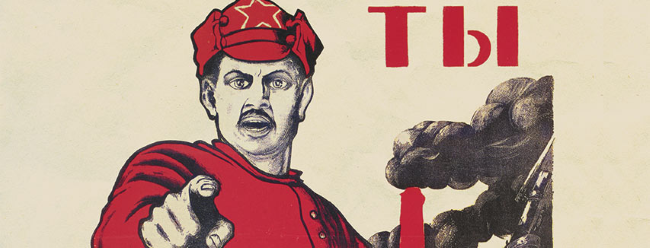
The Constituent Assembly was elected using the, at the time, world’s most democratic mandate consisting of all men & women, even those with no property qualification above the age of 18. The electoral commission that wrote the law were executed, allegedly by agents of the Cheka the day before the assembly met.
There was a typewritten letter from the British Ambassador in St. Petersburg, which he wrote after speaking to Will Thorne, a leading left activist and MP. The letter advised the Government not to give Sanctuary to the deposed Tsar and his family for fear of Bolshevik revolutionary activity in the United Kingdom. (They don’t teach that in school, and I’d often wondered why the Royal Family refused to allow them to come to Britain). …
Schrödinger’s membership
We can’t claim that the Labour Party is the political hegemon of the working class, criticising leftists who won’t work inside it, and then stop them joining. …
Sunset
The nature of Executive Mayoralties continues to exercise me. Wikipedia documents the fact that there are two authorities that have changed their mind and re-established council control after trialling an Executive Mayoralty. These are Stoke and Hartlepool.
Both offices were originally won by independents, with Stuart Drummond, originally standing as H’Angus the Monkey winning three terms in Hartlepool before the office was abolished by referendum. In Stoke, the independent was defeated on his attempt to win a second term. Phil Burton-Cartledge, a blogger that I follow and resident of Stoke documented the Mayoralty’s sunset on his blog.
Stoke, uniquely, adopted the Mayor & Manager model, and their first Mayor only served for two years and was defeated by the Labour Party at the end of his short 1st term. The Labour Mayor pursued the same dented shield policies on cuts i.e. cuts and council tax rises as the previous incumbent. The council and more importantly the Labour group were split with some Labour councillors taking their opposition into the chamber i.e. they voted against the Mayor’s budget, however it takes a ⅔ majority to overturn a Mayor’s budget and the Labour dissidents were disciplined by the West Midland Regional Labour Party. It should be added that some members of the factional majority were also unhappy with the system; one factor of course may be the lack of Cabinet, its roles, influence and expenses. It seems that the Government abolished the Stoke model and that a choice had to be made between a Leader & Executive Mayor. I cannot discover if the referendum was called by Council Resolution or by petition; 9300 signatures would have been required. The people of Stoke, after a what Phil reports as a desultory campaign in the referendum voted to return to a more democratic structure based on a collective leadership, with a Leader & Cabinet.
I think this is an interesting story offering evidence or insight on points 3, 5, 7 & 9 in my anti-mayor manifesto. …
Corbyn’s Choice
Labour’s choice, now, is between a Tory Brexit and “Remain”! Stop pretending that we/you have an option to negotiate better terms than the Government. …
CAC & Women’s CAC
And now there’s another election in the Labour Party. The Conference Arrangements Committee ballot is still open, but this article also talks about two women, Teresa Clark & Jean Crocker seeking election to the Women’s Conference Arrangements Committee. The ballot for Labour’s Conference arrangements committee have not yet closed, emails with unique passwords were sent earlier this month and paper ballots sent out a week or two ago. There are two slates, one supporting the current Leadership, and one representing New Labour continuity. I have voted for Seema Chandwani & Billy Hayes. I suggest you do too. …
Labour & Millwall
Paul Bell, one of Lewisham Labour’s candidates for Mayor talks about the way in which New Bermondsey Development a.k.a. as the Millwall CPO started here …. He opposed it in 2011, whereas three of the other candidates, Alan Hall, Damien Egan and Paul Maslin voted for it, twice! This is substantiated by Paul Maslin here …. Paul Bell opposed the scheme because it wasn’t good enough for Lewisham, there were insufficient social houses. Paul’s promises in his housing manifesto. are based on the same values. He promises never to CPO land for private developers. It’s important to keep football in Lewisham so it’s good that Labour Council came to its senses, however we need a people’s housing policy that provides homes for the people of Lewisham. #backbell …
Hate Speech
One further fallout from Charlotteville, especially for my American friends and correspondents is the debate around “Free Speech” & “No Platform”. Even in America, free speech does not allow you to incite others to hate. The world consensus is that within the rule of law, hate (discriminatory) speech must be suppressed. Such laws must be for a legitimate purpose, and necessary to promote that legitimate purpose but for those who argue that they should be debated, or that we diminish ourselves by suppressing their right to free speech; you’re wrong! We cannot build a decent society without eliminating abuse, intimidation and discrimination. Our duty to build a decent society is as great or greater than our duty to permit fascists to speak!
Here’s what happens when you let them speak!
…