Slogans aren’t bullets

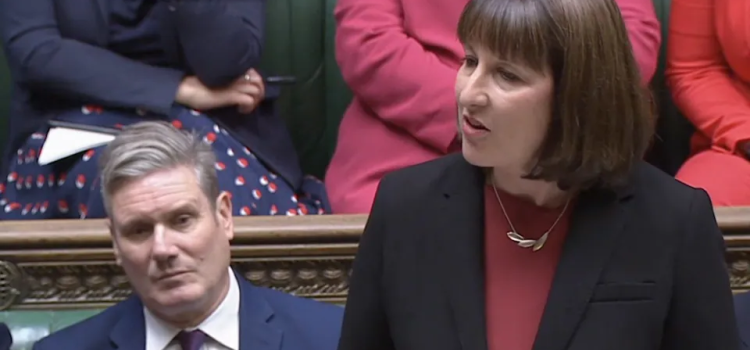
Sir Keir Starmer at the Rivoli

Last week, Keir Starmer visited BEA systems at Barrow in Furness, the dockyard that builds and maintains the UK nuclear submarine fleet. He promised that a Labour Government’s support for strategic nuclear weapons was absolute and total. Here are the FT and the NWE Mail, the latter being the local news paper for the area. He said,

“My commitment to NATO and the UK’s nuclear deterrent — maintained on behalf of NATO allies — is unshakeable. Absolute. Total. The changed Labour party that I lead knows that our national security always comes first.”

Sir Keir Starmer

Some right-wing commentators have suggested that this is just cynical electioneering, and the FT article links the proposal to increase spending on defence to 2.5% GDP, to recent statements of admiration by Reeves and Starmer of Margaret Thatcher. The NWE article quotes  Labour’s PPC for the seat  but it  finishes with quotes from Greg Hands, the current Tory defence secretary, showing no matter what a Labour leader says, the Tories will never concede any rhetorical grounds on the issue of defence, despite their appalling record.

The Tory record is indeed appalling and while Labour’s front bench is busy trolling its left wing on the issue of nukes, it is ignoring the massively degraded land forces capability, the army’s recruitment crisis and the very real threats to NATO & the EU from both Russia and a possible Trump led [or even influenced] USA. The Tories record, having cut both budgets, personnel and wages, and inclinations, the endemic Russophile sentiments, make them inappropriate guides to solving these problems. Even for those who think that Margaret Thatcher was robust on defence have forgotten that one of the reasons the Argentines invaded the Falklands was due to perceived hints from the defence cuts announced by her government.

Starmer was criticised by elements of the left arguing that it was morally wrong for a Labour leader to spend more on a nuclear deterrent while refusing to consider lifting the benefit cap placed by the Tories on large families, those with more than two children. To these critics who think it is a choice, I say the problem is austerity and Reeves’s “golden fiscal rules”. i.e. it needn’t be a choice and arguing it is, just allows yourself to be painted as unpatriotic, a fool or a pacifist.

This country needs an effective defence policy, as well as being able to offer everyone a decent standard of living. An effective defence policy requires an understanding of an effective military capability; while security of supply is important, possibly critical, jobs and wages in the arms industry are not a key success indicator. Neither is the expenditure level, which simply becomes a slogan.

Despite Sweden and Finland feeling provoked into joining NATO, it is an organisation on the cusp of crisis. It was designed to defend Western Europe albeit against the Soviet Union and was and is overly reliant on US military force. Today we have to ask whether America’s will is there. Starmer’s eulogies in favour of NATO are designed to embarrass elements of the Labour left. We can see the EU’s response as it crawls towards common European defence strategies, a direction mildly echoed in Labour’s alternative European Union cooperation prospectus.

Paul Mason has been writing on his most recent blog site on the need to refactor the defence policy to increase the capability of the Army, in his article, Land: the MOD’s “burning platform”, he quotes Sir Patrick Sanders, from his controversial IAVC speech in January, as saying,

“Modernisation is non-discretionary, and it is urgent – a burning platform. Its absence is felt in our recruitment numbers. The army’s size always generates headlines, but the real story is about capability and modernisation.”

Sir Patrick Sanders
from flickr “defence images” BY-SA 2016

Mason makes a more deeply evidenced argument in ”You only need tanks if you want to win”, in which he argues that it is necessary to rebalance the military defence capability to restore the British Army’s capability, increase the wages of the Army,  plug the budget shortfall for current plans, and increase British aid to Ukraine. He also, rightly in my opinion, hints that the ambition of 1½ expeditionary divisions is insufficient for today’s security threats. The budget gap has been caused by overspends on the nuclear deterrent. An axiom of defence and security policy should be that, a reduction in conventional capability makes nuclear escalation more likely, and as in the case in the Falklands, deterrent is not always the nuclear threat.

But this is not just an argument about iron and treasure, Britain’s reputation as a military nation has been deeply damaged by the isolation that Brexit has brought, and the failings of its Army in Afghanistan most obviously demonstrated by the final evacuation from Kabul and Dominic Raab’s failure to return from holiday, although the Army had been failing there for several years.

In brutal summary, if Labour wants an effective defence policy; don’t start in Barrow, you need to start in Aldershot! …
No jokes Mr Mandelson!

No jokes Mr Mandelson!

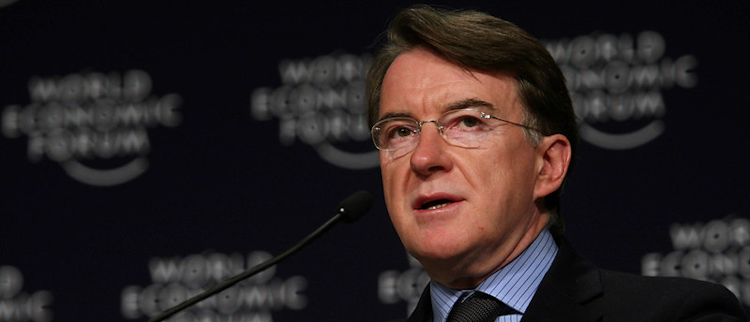
This article in the guardian, entitled, “‘You’ve got to be joking’: Mandelson dismisses prospect of UK rejoining EU” reports a speech by Peter Mandelson to the BCC in which he reinforces the labour leadership’s argument that the UK will not rejoin the European Union. He states the British people would not want to go through another referendum and there is little appetite in in Europe to renegotiate a new accession.

I just ask how hard is it to say “yes”! The problem with Mandelson’s argument, although shared by others is they do not understand, firstly the damage that Brexit has done to our economy and standard of living and thus dismiss or at best trivialise the benefits that joining will realise and secondly all the opt outs from the European Union have gone. The only terms on which we might rejoin are full compliance with the treaties. It will not be a hard negotiation. What would be hard is negotiating piecemeal variations of the FCTA, which is what Labour claim to want.

This means no opt outs from the justice pillar which should never have been negotiated , compliance with the stability and growth pact and Euro membership, full payment of dues i.e no rebate, and if the the Irish agree,  membership of Schengen.

As for the pain of a referendum, it seems he’s changed his mind, or was his support for a people’s vote just a tactic to thwart a Corbyn led Labour Party. I also remind him, we don’t need a referendum, although it might be best; the EU needs confidence that the decision is the popular will of the masses, and the Brexiteers need to know they’ve lost and get over it.


  1. There are problems with the EU’s SGP but since Reeves’ Rules are even tougher than the SGP’s, they shouldn’t be hard for Labour to agree.
  2. We need to agree with the Republic of Ireland because of the Anglo-Irish common travel area; if the UK joins then so must Ireland.

Image Credit: The picture is CC World Economic Forum 2008 BY-NC-SA; this blog is non commercial.  …

Are blogs still useful?

Are blogs still useful?

In August 2009, I wrote an article questioning if blogs were losing their influence. In conversations over the last two weeks, I had reason to go back to it because I thought they were important things I’d said then which I need to check if they were still valid. If so, I thought they were worth repeating. I found the old article quite hard to read. I tried to simplify it, and clarify my proposed architecture. I have also tried to update it given the developments in the internet service provider space, both technically and commercially. It’s much harder to build a personal content graph these days; one needs to make it easy for people to find what you say! The revised article is on linkedin and medium.  …

Starmer’s politburo?

Starmer’s politburo?

The Institute for Government (IfG) produced a report recently in which they analyse the power, influence, and success of the machinery supporting prime ministers. They came up with a number of recommendations. Amongst constitutional law geeks there has been some excitement although I wonder whether this is warranted or not. One campaigning ally of mine described it as the road to Stalinism, but I think not. The Times takes a more measured approach, although the Times’ language suggests that it was fed by a Labour source.  The IfG report was produced by a commission consisting of the great and the good, and a number of ex-Civil Servants. This article looks at the report and concludes it's not a route to the gulags. For more, read overleaf ...

PR in Wales

PR in Wales

I wrote, nearly two years ago, welcoming the change on the composition and size of the Welsh Senedd, [or on Medium] and was pointed today at what they’ve become. While using the d’Hondt method  i.e. the generally preferred counting method for PR for the new and much larger constituencies, they propose that there are no top up members. The mathematical purpose of the top-up members is to ensure proportionality and the higher the proportion of top up members, the closer to proportionality one gets. It is usual for the top up members to be elected based on a party vote.

The Welsh system proposes to have 16 constituencies each electing six members of the Senedd, meaning a quota and thus a wasted vote of 14.29% and a requirement that the constituencies are of equal size.  I wonder what the impact of abolishing the top-up members will be. Perhaps I’ll build a model.  …

Keep the red flag flying (on workers rights)

Keep the red flag flying (on workers rights)

In an article entitled, “Keir Starmer seeks to reassure business over Labour’s worker rights pledges”, the FT reports on the pressures being put on Keir Starmer to weaken Labour’s promises made in “A new deal for working people.”

It should be noted that this is what happened to the Blair opposition, which caved on Trade Union rights but held the line on the minimum wage. Sadly the value of the minimum wage became an internal political football within the Labour Party and at the moment the promise in “A new deal …” has been eroded to the point that it is less than the current law (for adults).

Labour summarises its plans as legislating for decent, safe, secure and fair work, critically, re- introducing day one rights for tribunal access, and the abolition of zero hour contracts and fire and rehire. They also plan to update trade union legislation so it’s fit for the modern economy, repealing some of the Tories petty and vicious legislation, strengthening Union’s rights of access to workplaces and workers, and establish a single enforcement body to enforce workers’ rights, which will include national minimum wage violations. Labour also plan to legislate for a structure of fair pay agreements negotiated with the Unions across industry.  

What are employers afraid of?

In order for the economy to be internationally competitive, goods and services need to be better than or cheaper than the alternatives. It’s not possible to have a high wage economy while being cheaper than others, so let’s choose being better. In most companies and public sector organisations value is created by employees. Successful companies need to attract and retain talent. Staff are the collective memory of the organisation. I have met and worked for some shocking managements; day one rights of access to tribunals should be a right, everyone should have access to the law, only bullies need fear this and for equality cases, day one access exists today. The only organisations that would fear this all those who as a matter of policy abuse their staff.

This is only one prerequisite for international competitiveness, the UK needs an immigration policy nice and compassion decency indignity and one that recognises the great talent may be born elsewhere. Another requirement is to minimise barriers to trade;  the simplest way of doing that is to rejoin the EU’s single market.

My experience is primarily in what are considered to be high knowledge industries i.e. Information technology and banking, but it is clear to me, that all organisations require commitment and talent. All organisations should welcome a legislative backing for a floor on decency. Those that want to behave well, if only to attract and retain workers will no longer need to fear being undercut by those that don’t.

The business lobbyists should lay off and welcome “A new deal …” …

On Referenda

On Referenda

I attended UKiCE’s webinar on referendums. It is available on You Tube, or at sli.do and they said in publicising the event, “The tumult that followed 2016 led many politicians and commentators to conclude referendums and UK politics don't mix. The 2019 Conservative manifesto explicitly pledged not to waste time on more 'acrimonious referendums'. But are they really off the agenda? Debates in Scotland and Northern Ireland would suggest otherwise. Contention continues to surround state-wide and national votes, whether on Scottish Independence or Net Zero, this panel discusses whether there is still space for referendums and direct democracy in the UK.” This blog article, highlights some contributions and adds some of my thoughts; they'll be please to know I shall be having a think. Read more overleaf ...

Good news for Labour

Good news for Labour

A short comment on Thursday’s by-elections. Labour won them both, with huge swings from the Tories. In both cases, obtained a plurality of votes. Everyone is quite excited about what that means and watching the Tories fight like weasels in a sack will be fun if we didn’t need the ultra-rightists to be defeated.

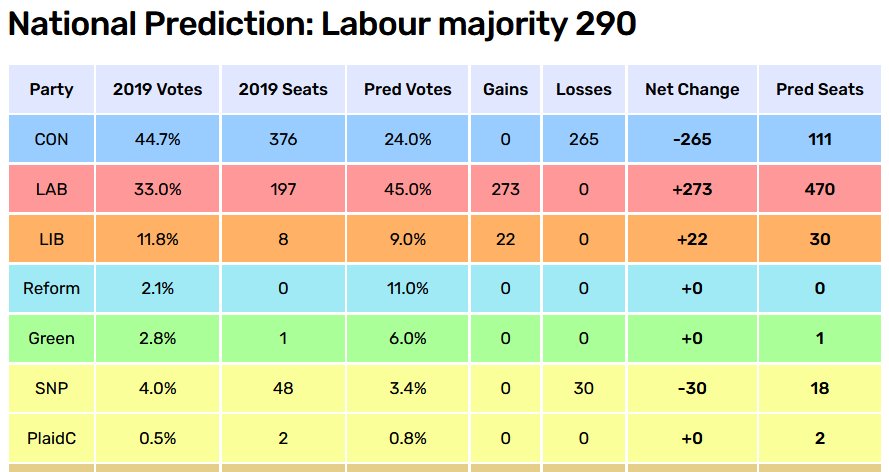
Here is Professor John Curtice commenting, and for interest, I took the poll results from today’s politico.eu who run a poll tracker and plugged the results into electoral calculus. They predict the results as follows, a Labour Majority of 290, (I have not reproduced the Northern Ireland line, where 18 MPs will be returned with none being members of the British parties).

And here is the Map, check out where you live, if you make one yourself, the map is interactive, and we can see that there are only six Tories from the big cities,

 …

Data-driven campaigning: how and why do political parties do it?

Data-driven campaigning: how and why do political parties do it?

I attended a lecture last week, it was advertised by its conveners on twitter. The lecture was videoed and I am expecting the video to be posted on Youtube. I’ve made some notes, some about what the lecturers said and some about the thoughts they provoked.  I try to offer some value on this blog, however much of this article is reporting the views of the three lecturers;

The lectures argue there's little to worry about; I disagree and quote the ICO and the DCMS select committee to back up my thoughts. They suggest that Gen-AI is not yet in use and suggest that Fake News does not have much effect. i suggest that Fake News reinforces prejudice and drives out reasoned policy analysis. I conclude that there are common practices that need better regulation. Regulation's weakness is based on powers and accountability in the case of the Electoral Commission, a lack of will in the case of the ICO and a lack of resources and independence in the case of ONS. I hope there’s enough of what I say to be worth the read. Please use the 'Read More' button to view the complete article which is about four pages long ...

National Service, really?

There has been a buzz in the press about the potential need for the UK to reintroduce national service due to the increased threats to UK security on the continent of Europe. Wow this will excite certain trotskyists i.e. those who support workers militias, but this is unlikely to happen for two reasons.

It seems that commentators have forgotten the reason the UK abolished national service is that the army no longer wanted the responsibility and cost of turning unwilling volunteers into effective soldiers and this is an even bigger problem in the Air Force and Navy.

still from “Carry on Sergant”, no copyright assertion found using tineye

Second reason is that this is a problem caused by governments, specifically Tory governments. Cameron’s defence review in 2010 cut all three forces and delayed numerous procurement/re-equipment programmes. We note that Cameron’s 2010 review was so bad, that he had to do another one in 2015. I commented mainly on the nuclear deterrent, but in this article, I argued [and on Medium] that a weak conventional defence makes nuclear escalation more likely and identified significant failings in all three wings of the armed services.

Johnson’s review of 2021 was an attempt to reposition the UK armed forces so better support Johnson’s vison of a post-Brexit global Britain. In shorthand, the Navy won the review with a promise to double the number of non-carrier surface warships over the coming decade. To pay for this the British Army is now the smallest it’s been since Napoleonic time;  beyond the manpower statistics this has been shown as its  ammunition stores are insufficient to enable the UK to be a constant ally to Ukraine.

For the British Army the last thing it needs is the additional work in training unwilling and often ill-educated recruits.

 …