The single market

a greek market, on a back street in the sun

The number of senior labour movement figures have argued over the Christmas break that the UK should seek to rejoin the European Union’s customs union. They leave out a call to rejoin the single market.

The customs union relates to tariffs, the single market governs common non tariff import barriers on goods & services. The single market also deals with freedom of movement of capital and labour.

I question whether joining the customs union is sufficient to deliver the increased growth that is proponents and the country seems to want.

Obviously, the single market opens the issues of free movement of people and trade sovereignty (as does the customs union). Now that it’s understood, British people seemed to want to return to the free movement and there is no national sovereignty in international trade.

I believe that the UK should join the customs union and single market now, and that Labour should put a rejoin promise in the next manifesto.

The near-fetishist concentration on in trade and economics suggests that most of our parliamentarians are not yet ready to be good citizens within the European Union. It is necessary that they change their minds, and Labour must play its part bringing this about.

The UK was and will be a better place to live within the European Union. …

A breeze in Downing Street

A breeze in Downing Street

Are we moving closer to joining the EU? It's been quite an eventful month, culminating in Wes Streeting’s call for the UK to join the EU’s Customs Union. This article looks at the current state of thinking of HMG on negotiations with the EU, comments on the velocity and direction of travel, contrasting the red lines vs the numerous programme adoptions, recent polling evidence that a majority of people in the UK now want to rejoin, the House of Commons vote on rejoining the customs union, and the announcement of the UK’s rejoining Erasmus+, the EU’s student exchange scheme. It concludes looking at a Guardian EB piece questioning if British Politics is fit to survive the current challenges and the Labour Party’s abysmal response. The full article, is overleaf, use the "Read More" to see it ...

Untimely Atlanticism, a note on the UK-US Tech Prosperity Deal

an aisle in a computer hall

I wrote a response to the US/UK Technology deal which was eventually published in the Chartist Magazine. They entitled it, “Untimely Atlanticism” with a sub title, “US AI data centres drain power and offer little for UK jobs while in Europe opportunities call “. The rest of the article, is overleaf, behind the "Read More" button. I talk about the new data centres, their immense scale, the digital colonialism, the import implications of the deal, and question the short term and long term economic benefits of AI. I finish by oitin g out the European co-operation might be more beneficial. ...

On the autumn statement 2026

Rachel Reeves in front of No 10/1 with a red box

A quick note on the budget, remembering I wasn’t as critical of last year’s as some, at least not on macro-economic grounds. I was obviously against the failure to abolish the two child cap, but also against the failure to properly fund universities, students, and local government.

So this budget is, to me, a bit meh and I agree with Fisher, why wait for a year? Still nothing on HE or Local Government finance, and the wealth taxation is very weak and poorly focused. No capital gains tax equalisation, no financial transaction tax.

The freezing of tax free allowance amounts is probably more damaging to those on the margin of the upper rate tax band but as I read it, it’s a piece of accounting magic. There were no plans to change it for the next two tax years anyway, and they can change their minds, although some of the impact will occur after the next election.

Also the FT reports that leading business people consider it insufficiently stimulating of growth, which in their case is probably not code for, “We need to rejoin the single market and customs union.”, although there are many, including me and Liz Webster, that are saying so; our macro-economic arguments recently augmented by a report from the US non-partisan National Bureau of Economic Research and by Ryan Bourne’s recanting of his pro-Brexit position.


Image Credit: from freemalaysiatoday cc 2024 by …

Digital Justice in the EU

Image Sign in front of the CJEU's Palais de la Cour de Justice

The Commission of the European Union has issued a report proposing what they call the digitalization of justice. At the moment, this is mainly about best practise, although it seems they plan to improve digital access to the European court’s case law. A commentary has been made by the EU’s agency for fundamental rights cautiously welcoming the report but highlighting both the risks to privacy and the threat that such schemes will fail to improve justice for citizens, or worse. A further commentary can be found at the EU Observer, taking an equally cautions approach.  …

The EU Hokey Cokey

dancers in a european square

I watched the first day of the EU UK parliamentary partnership assembly. The first session was on general issues & trade and the second on defence. I made some notes which you can read overleaf. Following the agenda of the meeting, I talk of Trade and Defence in two parts. Throughout, I question the UK's half hearted commitment. Use the read more button to see the whole article. ...

Parties need pluralism

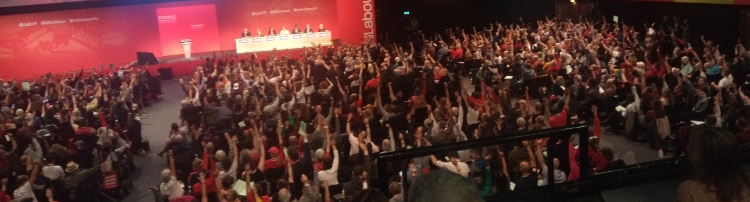
Ed Miliband at #lab14

I was writing about something else, and wrote this on party management. It’s coherent, but doesn’t belong in what I am writing, and so I thought I’d share it now,

“Your Party” is planning a Sortition based founding conference. It has probably chosen this for reasons of control but, “Your Party”’s problems occur in many parties, and I am reminded of the white paper “The (Unintended) Consequences of New Labour: Party Leadership vs Party Management in the British Labour Party…, a white paper to the PSA” by Emanuelle Averil on New Labour, which examines its managerialism and the destruction of its activist commitment and influence.

The paper was published in 2015 before the General Election. I read it in 2017 and strangely ended up sitting next to her at Conference ’19. I posted my comments in a blog, A note on Emanuelle Averil’s “the unintended consequences of New Labour” and in that article I selected some quotes. While being 20 years old, these comments seem equally relevant today, particularly about the Labour Party. I quote her on how suppressing the activist layer was mistaken and led to a failure to connect to the electorate, how factionalism suppresses plurality which made renewal impossible, how triangulation led to voter alienation and its control freakery led to a toxification of its image.

We might debate about the noughties, but it’s clearly true today. …