Meyer’s Cultural Map

Meyer’s Cultural Map

I have just finished the Culture Map by Erin Meyer. It’s taken me longer to read than it should, but that’s not her fault. She argues, building on the work of, her predecessors, including Geerte Hofstede,  that there are eight dimensions of business communication, these are communicating, evaluating (feedback), leading, deciding, trusting, disagreeing, scheduling and persuading. She argues that cultures share positions on these dimensions as people’s comfort and natural style is based on their education systems and often deep seated cultural and historical factors. She argues that differences are relative i.e. you might be mediumly robust in offering direct feedback, but if you come across someone more so, you will find them rude, and need to recognise that if delivering such feed back to some one from a more robust culture, they may fail to understand. She uses charts to illustrate cultural differences across the dimensions and I reproduce one. I also offer an Anglo-Dutch phrase translator. I finish by wondering how useful this is for 121s. The blog article says much more, ...

On Cyber-security

On Cyber-security

I posted a note on cyber security on my linkedin blog. I post some pointers on the standards and controls needed to defend against a cyberattack and implement “adequate technical and organisational” protection. It looks and links at the NIST cyber-security framework and lists some of the necesary controls to implement a reasonable defence and prove “adequate technical and organisational” controls. If you do what I suggest badly, you might get away with it, if you do it well, you might stop and or recover from attacks.  …

An arithmetic concept

I am considering again, the role of Presidents of presidential republcs. Democracy means that the voice of the governed is heard, and is ideally final, that programmes are accountable to the people and the rights of the minority respected. Presidents, Leaders. or General Secretaries with weak mandates have the power and inclination to ignore the majority of their demos. Trump’s presidency among others proves that the argument, “that’s how it works” leads to crisis. Democracy is more than an arithmetic concept.  …

Arrogance and Bullying

a red rose

At Labour's conference, the Left won policy, the right won the card votes, famously in the case of re-writing the Leadership election rules, by getting Unison to break its mandate; it’s not the first time, a Union has broken its mandate at Conference; see Unite in 2018, MSF in 1993 , and the AEUW in 1968, the first and last being to sink open selection and mandatory reselection, same thing, different names. The article talks about the Sunday Afternoon rules debate and its atmosphere, which included the adoption of new disciplinary rules inc. changing the MP selection trigger ballots. I also comment on some press reaction. To see the article in its full glory, ... read more, ...

Fix the Tory Brexit, I don’t think so!

Fix the Tory Brexit, I don’t think so!

Up until now, the Labour Front bench has been promising to “Fix the Tory Brexit”, a statement echoed by Rachel Reeves in her speech to Conference, but the plaster seems to be cracking. David Lammy, in an interview with the BBC suggested that getting it right will involve renegotiating Boris’s deals, a move from Starmer’s position in January. Why this is controversial, I have no idea, if Labour don’t get their first, the Tories will. I should add that there is a growing support for rejoining the Customs Union and Single Market as solutions to the Northern Irish problems and the UK wide shortages and inflation. …

A new disciplinary process (for Labour)

A new disciplinary process (for Labour)

This is the speech I would have made on the rule changes implementing an independent disciplinary system.

The EHRC said we needed an independent disciplinary process, independent of the Leader & NEC. As a Party we should expect that we would develop a process conformant with the standards of natural justice and Article 6 of the European Convention on Human Rights.

People are entitled to “a fair and public hearing within a reasonable time by an independent and impartial tribunal”, article 6 also enumerates criteria of fairness, inc. innocent until proven guilty and the right to present a defence and chose an advocate. It also guarantees a free defence for those that can’t afford it.

Such a scheme would require that the investigation and decision to prosecute should be under the direction of lawyers with an ethical commitment to their peers i.e. other lawyers, and that guilt and sanctions if required, is determined by a jury of our peers, advised by legal advice independent of that of the ‘prosecution’. Let us note that the EHRC also called out Labour for not offering the NCC independent legal advice.

These proposals are the wrong way round and will not protect the party from allegations of a factional use of its disciplinary system, not least because of the central role of the General Secretary, who does not and has not previously held a professional qualification guaranteeing a commitment to a standard of ethics. This is not to say that I consider the current incumbent to be unethical, but the fact is he is a paid officer of the party accountable to the NEC and is thus not independent of it.

We have also been told we have to pass these rules, that not to do so would be crime against the EHRC’s remediation plan and our compliance agreement. This is not so. The NEC could and should have proposed a truly independent disciplinary process; this isn’t. We can do better.

To finish, I am pleased to hear the assertions and promises that these rules will prove we’ve turned a corner, and that this shame will end.

There's some comments overleaf ....

Labour’s Programme

Labour’s Programme

Sadly, I know the rules well and was asked about how to get policy into the manifesto or create binding policy on the Party’s leadership. Labour’s Rules (C1.V) state that all policies carried at Conference by a 2/3rds majority must go into the programme, and the manifesto can only contain policies from the programme. These rules seem to have been forgotten for quite a while. The control of who can call card votes, is another means by which the rights of members are being suppressed. Not all policy motions get to go to card votes, even if the hand vote is overwhelming. And so they may not get into the programme, not that it matters too much as I don’t think they maintain the document anymore and it takes them 7 months to release the rules, imagine how long it would take to release a programme. The rules in question are in C1.V Party Programme, and can be found, overleaf/below ...

Reeves on Macro-economics

Reeves on Macro-economics

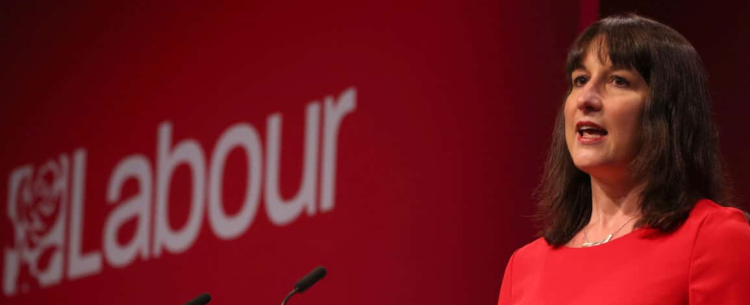
It came as a shock that she spoke for an hour, given that delegates who might want to oppose her, only got 1 minute. I summarise the speech here, as much of it was just political ballast, although sometimes you need to build a justification for what we do.

She started with a litany of Tory failures, and repeated the lessons that we can, post-pandemic, clearly see who are the essential workers in our economy and see how poorly they’re paid. She noted Angela Rayner’s announcement of a series of welcome protections and improvements to the social wage and employment protection law and segued to the need for an effective economy that works for all of us.

She started with a litany of Tory failures, and repeated the lessons that we can, post-pandemic, clearly see who are the essential workers in our economy and see how poorly they’re paid. She noted Angela Rayner’s announcement of a series of welcome protections and improvements to the social wage and employment protection law and segued to the need for an effective economy that works for all of us.

I say more overleaf, where I mildly praise the good bits, and critique the missing bits.