Solidarity with the UCU

Solidarity with the UCU

The UCU have just gone back to work after a strike campaign in which they would seem to be in dispute with their management over most things but there is a particular dispute about pensions. However the Twitter commentary offered me the thoughts of an account known as University Wankings, which I felt I had to follow and they pointed me at the @THEworldunirank from the Times Higher Education supplement. I had a look at the ranking systems 10 years ago while I was helping my kids decide which universities to go to and I had been pointed at the best known ranking system of the time by my work on NESSI.

While I consider the measured quality of the UK’s Universities to be based on the fact that they all have English as a first language, the quality of research, innovation and teaching are an important, if not critical part of building an economic future worth living in, that and worker’s control.


Solidarity with the UCU! ✊ …

Ideas, alliances and promises

Ideas, alliances and promises

I was pointed at, “If hopes were dupes, fears may be liars” by Rory McQueen who compares the state of the UK’s Left today with that in 1983, arguably the last time Labour was in this situation; he conducts a balance sheet on the balance of class forces, and then explores the issues of alliances and programme. He takes “The future of the Left”, an anthology written after the 1983 election as his historic benchmark.

I think this is incredibly well written and beyond my ability to summarise. i.e. you should read it. He provokes some thoughts in me, which is why you should read the rest of this. I talk, briefly, about the power of the Left in the country, it’s much weaker today, the need for and paradox of political alliances, and the failure of Labour’s policy & manifesto development programmes. I conclude by repeating the question, what’s the point for socialists in restricting alliances to exclusively to Labour’s right and how can Labour build a policy development process that delivers a realistic, popular and transformational programme for government. For more, see below/overleaf …  …

It’s cold outside

It’s cold outside

Carlotta Perez argues that Kondratiev Long Waves have an internal shape. One of the trends is the rollout of the driving technology from the core to the periphery and this takes place in the maturity phase as profitability of the once new technology declines. Another important event is the next eruption and where that takes place. Between the Steel & Oil phases, the world’s core moved from England, the economic and political epicentre of the British Empire to the USA and we should remember that this role was contended for by both Germany and the Soviet Union. It’s moved once, it can move again but it’s most unlikely to come back to England. I wonder what being part of the periphery will be like. I suppose it depends upon where the core is. Will it remain in the USA or move, to China or even the EU. The key will be the dynamism of the innovation economy; it looks like, due to Brexit, the UK’s Universities will decline and that much of aerospace and biosciences will leave the UK. Otherwise the UK & US industries may be defended by the ubiquity of English, but the EU has had 40 years of using it as their language of commerce and to a great extent the language of government.

I can’t see it clearly, but the corruption and financialisation of the anglosphere economies are stymieing innovation and inhibiting “creative destruction”; there is opportunity for other national economies to do better. It would also seem that Perez’s predicted regulatory correction is nostalgic this time, looking back to times when things seemed better, or defending old out dated business models. We  cannot recreate the industries of the steel revolution.

It’s unlikely to be pleasant, especially if the UK moves from being a 2nd tier economy to peripheral one. …

Card Votes on Demand

The LP platform stitched up Conference over Brexit by refusing a card vote. I think this power needs to be taken away, and so have drafted this rule amendment. It is interesting that the old rule no longer exists and has been transferred to Conference Standing Orders.

C3.III.G

Insert before These standing orders will be presented ……

The Conference Standing orders are to state that voting will be by show of hands except a card vote will be undertaken as decided by the CAC who shall in their report to conference determine which votes must be resolved by a card vote. Card votes may additionally be invoked by the Chair of Conference and shall be so invoked if called for by 30 delegates.

ooOOOoo

One thing to be noted is that Conference still has the last word on the contents of the Programme (C1.V.2). For inclusion, the Programme, it needs to be approved by Conference by a ⅔ majority. Policy cannot be included in the manifesto without this approval, so the Brexit position, free train fares and free broadband would seem to be promises we should not have made. I am equally unclear where the Faith and Culture manifestos came from. (I don’t even know if they were approved by the Clause V meeting.) Policy votes where not overwhelming should be counted by a  card vote to ensure that it is accurately recorded as meeting the necessary thresholds be it ½ or ⅔ majority. …

Cash in Hand

Amongst my discoveries while reading Labour’s 2018 Financial Report was the cash in hand figure which led me to post this!

Doesn’t seem to have caught, so I have reposted it here. …

Google, the GDPR and Brexit

Google, the GDPR and Brexit

Google are going to move their UK users data from Ireland to the USA. I wrote a little note on my linkedin blog. I headline it as

Google are moving UK data from Ireland to the US … what does this say about UK/EU/US dataflows and ompliance with the GDPR and the world’s data protection laws.

I also point out the need for robust legal redress to comply with the GDPR, which the UK and USA may not meet and that the UK will lose access to the US Privacy Shield arrangements. I note that the UK will lose its member state privileges and powers under the GDPR when the transition period ends and that RIPA 2016 and the immigration exception of the DPA 2018 may cause the Commission some problems with respect to “Adequacy”.

I note that model clauses and binding corporate rules will remain in place and I wonder if this is a business opportunity for a European based phone operating system author as people choose to withdraw from Android? Nokia? Canonical? …

Moving to Mars

Moving to Mars

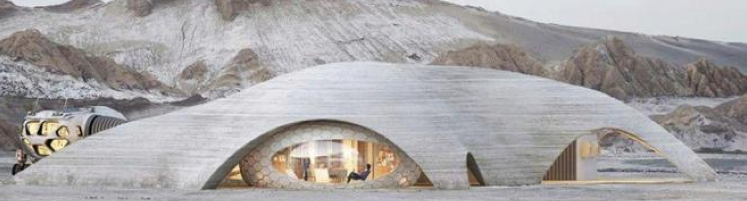
I went to this exhibition, amazingly there are projects in place that are thinking about this despite the horrendous difficulties this would entail. Getting there might not be the problem, but there is no oxygen and very limited water. It’d have to be taken with and recyled well. There are four exhibits that caught my eye.  A film from the Curiosity rover showing the Martian landscape, an exhibit/poster showing the world’s investment in space flight, in which the UK does not appear, an exhibit on what human houses might look like and an exhibit on a multi ten thousand year terraforming project using plants.

The Martian landscape is bleak and subject to, for humans, lethal dust storms. People and their homes would need to be protected from these, once the problems of oxygen and water, there is none, were solved.

Once the brexit transition period is complete, we’ll be out of the European Space Agency, so much for a high-tech, high wage economy. One of the exhibits on the geo-politics of space travel included a panel with Interkosmos suit patches from the Soviet Union, India, Sri Lanka, Vietnam, Cuba and others, a reminder that space travel does not belong to the USA.

They seem to be suggesting that people will live in kevlar tents, buried underground by robot builders. …

Blair’s Shadow

Blair’s Shadow

We in the Labour Party need to get to grips with Blair’s legacy. His shadow and that of his government still hangs over even this leadership election and it seems I am not the only one to thinks so. Andrew Fisher wrote something similar to this in the Independent. Coming to a consensus and coming to terms with its legacy will be difficult. I feel that it’s best viewed by considering the two full parliamentary terms as separate entities but for many of course the decision to go to war in Iraq will over shadow everything else he did. I have thought this about its record for a while but at least one speech by Zarah Sultana MP, and the adverse reaction to it and Jeremy Gilbert at Open Democracy who wrote Labour should have argued against the last 40 years of economic policy, not just the last ten have made me revisit New Labour’s record. This article reflects my views on the New Labour governments, together with my view that we i.e. Labour have been losing votes for 30 years and that 2017 was the anomaly. In the rest of this article, see below/overleaf, I look at the positive achievements of the first term, the evolution of the 2001 manifesto and the privatisations and war decisions of the second term. I look at the destruction of the Party’s checks and balances, the areas of failure (Trade Union law reform and housing), the power of Government and the seemingly inexorable loss of votes since 1997 aided by doomed and flawed New Labour’s electoral strategy of assuming the working class had nowhere else to go. … …