Unifying the Left in the Labour Party?
LRC SG< 2016 supports the Junior Doctors

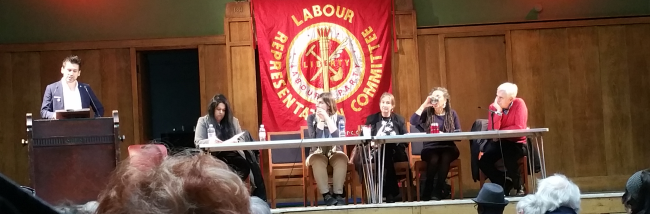
I went up to London to attend the Labour Representation Committee Special General Meeting. The original LRC was the fore runner of the Labour Party, but today it is a left-wing pressure group and it called a special meeting mainly to discuss strategy after the election of Jeremy Corbyn as Leader of the Party. The most important debate would be the LRC’s relationship with Momentum as Momentum regularises its position within the Labour Party. The meeting was opened by John McDonnell MP who reprised the previous nine months and then followed by the debate which shows the Left are as conflicted as the Right about the new members and renewed interest in the Labour Party. …

And now Spain turns to the Left

And now Spain turns to the Left

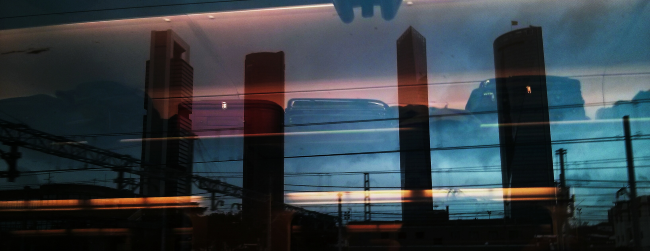
The mould has been broken in Spain. Yesterday, in Spain’s general election, yesterday, the two Parties that have dominated Spain’s post fascist democracy both lost seats and votes. The new parliament has no natural majority. The PSOE, in particular, has some interesting challenges in front of it and the next few weeks and months may act as a signpost for the politics of Europe. …

On an informed citizenry

On an informed citizenry

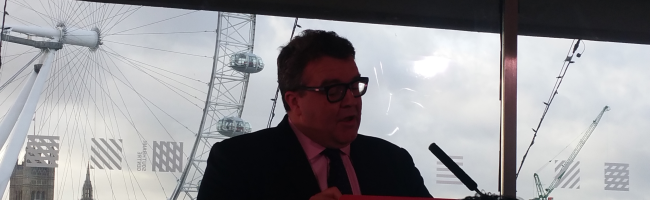
I was invited to attend Tom Watson’s speech building on much of his campaigning work and presented in the New Statesman as reclaiming civil liberty for the Left, although sub titled by him as “David Cameron is governing from the shadows”. In this article I review the speech; I try to report on it and to comment by adding some personal views and insights, in some cases new ideas provoked by Tom’s speech. It was quite a long speech and it takes a diverse route to get to its polemical heart which is that Democracy is the choice by an informed citizenry of a government, subject to the rule of law and that the Freedom of Information Act is one of the pillars of this contract and should not be diminished or repealed. …

Consequences and accountability

Consequences and accountability

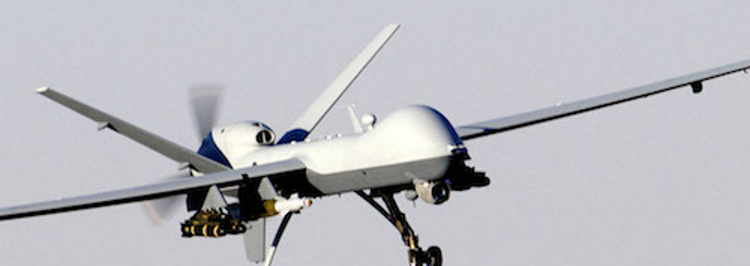
There’s no such things as unintended consequences, just poor planning. Last Wednesday the House of Commons voted to authorise RAF bombing of Syria. In the following hours, RAF jets attacked civilian oil installations in Syria. This was reported as using high level free fall bombs. Were there reports of civilian casualties? The government announce an increase in security for the Queen. The government of Syria announces that the RAF attacks are illegal acts of war. Seventy two hours after the vote, Londoners were attacked on the tube, albeit in only one incident with a knife. At the time of writing, there has been no fatal casualties from the London incident. …

Safe Harbour

Last month the Court of Justice of the European Union ruled the US Safe Harbour treaty to be insufficient for European data protection law purposes. How important this is, is subject to debate. One of the principles of European Data Protection law is that personal and confidential data must be “adequately protected”. The CJEU has stated that the US Safe Harbour agreement offers insufficient and uncertain protection to European personal data. …

Out of Sight with the Fabians

Out of Sight with the Fabians

I attended my first South London Fabian Society earlier tonight. This is part of my search for a place to think and refresh my enthusiasm for ideas and electoral politics. The speaker was a man called Richard Brooks, who had worked as a senior policy adviser to the Secretary of State for Children, Schools and Families. He is the author of an award for his Fabian booklet, Out of Sight, “How we lost track of thousands of NEETS, and how we can transform their prospects”. My big takeaway is below/overleaf … …

Bombing Syria

Bombing Syria

So Parliament is to debate if it should authorise the government to use the RAF to bomb ISIS in Syria. What we must keep in our mind is that we i.e. the British state must only act under the rule of law. While the UN resolution (SC 2249) last week makes military action more likely to be legal, the legality still depends upon the actions to be taken. Many argue that the UN security council resolution changes nothing, because it does not authorise the use of military force under Chapter VII of the UN Charter.

Any actions need to remain an effective act of self-defence.  …