It’s day four of the 2024 general election. In previous elections, I have written various think pieces about Labour’s offer, its manifesto and made some criticisms of Tory attack lines. I don’t know what I’ll be doing this time, as I have a number of blog articles stuck in production hell, which may have to wait until after the election.
I just wanted to comment on Rishi Sunak’s promise to reintroduce national service. This would seem not to be designed as part of an effective defence strategy as some have argued for (or on Medium). There are others, such as Nadia Whittome and David Osland who have eloquently pointed out the national service is not what young people need, what is needed his decent jobs, free education, an affordable home and a decent standard of living.
Sunak says 'bring back National Service'. I say bring back secure well-paid jobs, final salary pensions, union rights, properly-funded NHS and social care, free tuition and student grants, affordable rail fares and social housing.
One dimension I would like to add, to raise is that the Tories are not fit custodians of the British military, particularly the British Army. Cameron’s cuts slashed NCO wages and the Army is struggling to recruit to fill the current underwhelming cadre plans; the Army is the smallest it’s been since the Napoleonic Wars. It’s not capable of meeting realistic future demands in the defence sphere, asking them to train/supervise unwilling teenagers is just more of the Tories fantasy solutions design.
Antisocial behaviour and youth criminality are complex issues; Tory sloganeering is no help and they have proven they are not suitable custodians of the armed forces. …
Last week, Keir Starmer visited BEA systems at Barrow in Furness, the dockyard that builds and maintains the UK nuclear submarine fleet. He promised that a Labour Government’s support for strategic nuclear weapons was absolute and total. Here are the FT and the NWE Mail, the latter being the local news paper for the area. He said,
“My commitment to NATO and the UK’s nuclear deterrent — maintained on behalf of NATO allies — is unshakeable. Absolute. Total. The changed Labour party that I lead knows that our national security always comes first.”
Sir Keir Starmer
Some right-wing commentators have suggested that this is just cynical electioneering, and the FT article links the proposal to increase spending on defence to 2.5% GDP, to recent statements of admiration by Reeves and Starmer of Margaret Thatcher. The NWE article quotes Labour’s PPC for the seat but it finishes with quotes from Greg Hands, the current Tory defence secretary, showing no matter what a Labour leader says, the Tories will never concede any rhetorical grounds on the issue of defence, despite their appalling record.
The Tory record is indeed appalling and while Labour’s front bench is busy trolling its left wing on the issue of nukes, it is ignoring the massively degraded land forces capability, the army’s recruitment crisis and the very real threats to NATO & the EU from both Russia and a possible Trump led [or even influenced] USA. The Tories record, having cut both budgets, personnel and wages, and inclinations, the endemic Russophile sentiments, make them inappropriate guides to solving these problems. Even for those who think that Margaret Thatcher was robust on defence have forgotten that one of the reasons the Argentines invaded the Falklands was due to perceived hints from the defence cuts announced by her government.
Starmer was criticised by elements of the left arguing that it was morally wrong for a Labour leader to spend more on a nuclear deterrent while refusing to consider lifting the benefit cap placed by the Tories on large families, those with more than two children. To these critics who think it is a choice, I say the problem is austerity and Reeves’s “golden fiscal rules”. i.e. it needn’t be a choice and arguing it is, just allows yourself to be painted as unpatriotic, a fool or a pacifist.
This country needs an effective defence policy, as well as being able to offer everyone a decent standard of living. An effective defence policy requires an understanding of an effective military capability; while security of supply is important, possibly critical, jobs and wages in the arms industry are not a key success indicator. Neither is the expenditure level, which simply becomes a slogan.
Despite Sweden and Finland feeling provoked into joining NATO, it is an organisation on the cusp of crisis. It was designed to defend Western Europe albeit against the Soviet Union and was and is overly reliant on US military force. Today we have to ask whether America’s will is there. Starmer’s eulogies in favour of NATO are designed to embarrass elements of the Labour left. We can see the EU’s response as it crawls towards common European defence strategies, a direction mildly echoed in Labour’s alternative European Union cooperation prospectus.
Paul Mason has been writing on his most recent blog site on the need to refactor the defence policy to increase the capability of the Army, in his article, Land: the MOD’s “burning platform”, he quotes Sir Patrick Sanders, from his controversial IAVC speech in January, as saying,
“Modernisation is non-discretionary, and it is urgent – a burning platform. Its absence is felt in our recruitment numbers. The army’s size always generates headlines, but the real story is about capability and modernisation.”
Sir Patrick Sanders
from flickr “defence images” BY-SA 2016
Mason makes a more deeply evidenced argument in ”You only need tanks if you want to win”, in which he argues that it is necessary to rebalance the military defence capability to restore the British Army’s capability, increase the wages of the Army, plug the budget shortfall for current plans, and increase British aid to Ukraine. He also, rightly in my opinion, hints that the ambition of 1½ expeditionary divisions is insufficient for today’s security threats. The budget gap has been caused by overspends on the nuclear deterrent. An axiom of defence and security policy should be that, a reduction in conventional capability makes nuclear escalation more likely, and as in the case in the Falklands, deterrent is not always the nuclear threat.
But this is not just an argument about iron and treasure, Britain’s reputation as a military nation has been deeply damaged by the isolation that Brexit has brought, and the failings of its Army in Afghanistan most obviously demonstrated by the final evacuation from Kabul and Dominic Raab’s failure to return from holiday, although the Army had been failing there for several years.
In brutal summary, if Labour wants an effective defence policy; don’t start in Barrow, you need to start in Aldershot! …
This article in the guardian, entitled, “‘You’ve got to be joking’: Mandelson dismisses prospect of UK rejoining EU” reports a speech by Peter Mandelson to the BCC in which he reinforces the labour leadership’s argument that the UK will not rejoin the European Union. He states the British people would not want to go through another referendum and there is little appetite in in Europe to renegotiate a new accession.
I just ask how hard is it to say “yes”! The problem with Mandelson’s argument, although shared by others is they do not understand, firstly the damage that Brexit has done to our economy and standard of living and thus dismiss or at best trivialise the benefits that joining will realise and secondly all the opt outs from the European Union have gone. The only terms on which we might rejoin are full compliance with the treaties. It will not be a hard negotiation. What would be hard is negotiating piecemeal variations of the FCTA, which is what Labour claim to want.
This means no opt outs from the justice pillar which should never have been negotiated , compliance with the stability and growth pact and Euro membership, full payment of dues i.e no rebate, and if the the Irish agree, membership of Schengen.
As for the pain of a referendum, it seems he’s changed his mind, or was his support for a people’s vote just a tactic to thwart a Corbyn led Labour Party. I also remind him, we don’t need a referendum, although it might be best; the EU needs confidence that the decision is the popular will of the masses, and the Brexiteers need to know they’ve lost and get over it.
There are problems with the EU’s SGP but since Reeves’ Rules are even tougher than the SGP’s, they shouldn’t be hard for Labour to agree.
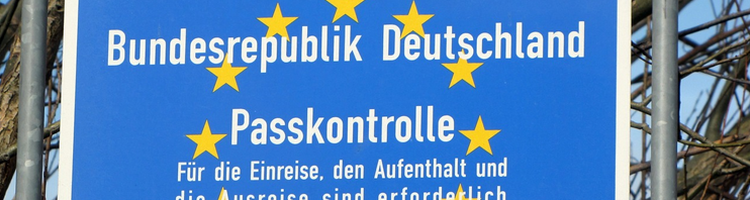
We need to agree with the Republic of Ireland because of the Anglo-Irish common travel area; if the UK joins then so must Ireland.
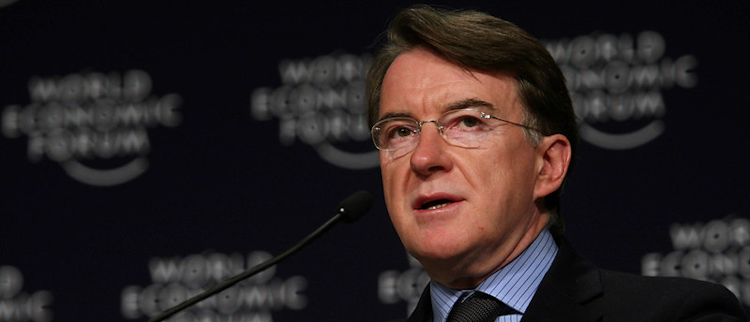
Image Credit: The picture is CC World Economic Forum 2008 BY-NC-SA; this blog is non commercial. …
I attended UKiCE’s webinar on referendums. It is available on You Tube, or at sli.do and they said in publicising the event, “The tumult that followed 2016 led many politicians and commentators to conclude referendums and UK politics don't mix. The 2019 Conservative manifesto explicitly pledged not to waste time on more 'acrimonious referendums'. But are they really off the agenda? Debates in Scotland and Northern Ireland would suggest otherwise. Contention continues to surround state-wide and national votes, whether on Scottish Independence or Net Zero, this panel discusses whether there is still space for referendums and direct democracy in the UK.” This blog article, highlights some contributions and adds some of my thoughts; they'll be please to know I shall be having a think. Read more overleaf ...
I attended a lecture last week, it was advertised by its conveners on twitter. The lecture was videoed and I am expecting the video to be posted on Youtube. I’ve made some notes, some about what the lecturers said and some about the thoughts they provoked. I try to offer some value on this blog, however much of this article is reporting the views of the three lecturers;
The lectures argue there's little to worry about; I disagree and quote the ICO and the DCMS select committee to back up my thoughts. They suggest that Gen-AI is not yet in use and suggest that Fake News does not have much effect. i suggest that Fake News reinforces prejudice and drives out reasoned policy analysis. I conclude that there are common practices that need better regulation. Regulation's weakness is based on powers and accountability in the case of the Electoral Commission, a lack of will in the case of the ICO and a lack of resources and independence in the case of ONS. I hope there’s enough of what I say to be worth the read. Please use the 'Read More' button to view the complete article which is about four pages long ...
There has been a buzz in the press about the potential need for the UK to reintroduce national service due to the increased threats to UK security on the continent of Europe. Wow this will excite certain trotskyists i.e. those who support workers militias, but this is unlikely to happen for two reasons.
It seems that commentators have forgotten the reason the UK abolished national service is that the army no longer wanted the responsibility and cost of turning unwilling volunteers into effective soldiers and this is an even bigger problem in the Air Force and Navy.
still from “Carry on Sergant”, no copyright assertion found using tineye
Second reason is that this is a problem caused by governments, specifically Tory governments. Cameron’s defence review in 2010 cut all three forces and delayed numerous procurement/re-equipment programmes. We note that Cameron’s 2010 review was so bad, that he had to do another one in 2015. I commented mainly on the nuclear deterrent, but in this article, I argued [and on Medium] that a weak conventional defence makes nuclear escalation more likely and identified significant failings in all three wings of the armed services.
Johnson’s review of 2021 was an attempt to reposition the UK armed forces so better support Johnson’s vison of a post-Brexit global Britain. In shorthand, the Navy won the review with a promise to double the number of non-carrier surface warships over the coming decade. To pay for this the British Army is now the smallest it’s been since Napoleonic time; beyond the manpower statistics this has been shown as its ammunition stores are insufficient to enable the UK to be a constant ally to Ukraine.
Martin Wolf, the Chief economics correspondent at the FT, just before Xmas published a piece of clickbait, entitled, "Britain won’t rejoin the EU for decades — if ever", with a tag line, “The sensible approach for the UK is to seek a closer and more co-operative relationship with Brussels”. He starts with an alleged piece of mystic folklore, that one can’t cross the same river twice, which stripped of its source and supposed wisdom of its age is clearly nonsense. Of course, you can cross a river twice and anyone that commutes from Canary Wharf to Westminster does it twice a day.
This rest of this article, overleaf, article looks at what Wolf said, refutes the arguments, exposes the lack of evidence and concludes that it's a failed project and that failure and the prospect of rejoining cannot be suppressed.
Larry Elliot wrote a piece of click bait in the Guardian on why since Britain is not a basket case, it should not rejoin the EU. He also argued that the growing strongman nationalism, and racism amongst some member states is a reason for avoiding the EU.
I wrote a reply which I shortened and offered to the Guardian, and was eventually published on Another Europe’s web site. I have also posted a copy on my Medium blog, outside the paywall.
I argued that the economy was in a poor state, certainly worse than it might have been and quoted the OBR and my “Remain” article, from this blog, posted in 2016 that the 4% growth underperformance was about where the forecasters had predicted.
I pointed out that his investment successes were selective good news, and only talk about yesterdays driving technology. He like most seem to fail to recognise that we have already missed the boat on renewable energy manufacturing.
I conclude by arguing that the UK is not inoculated from the racism inherent in authoritarian rule. It must be fought not avoided, starting by the repeal of Tories immigration laws.
I really conclude by stating that rejoining the EU is an inevitability not a pipe dream. …
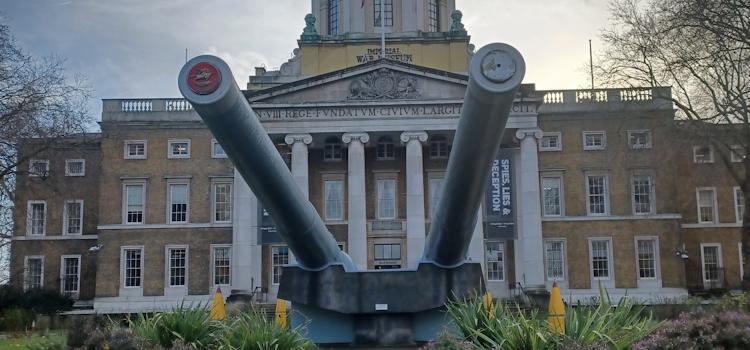
I went to the IWM on Friday and visited the "Living with the Troubles" exhibition. I was 14 when the Government sent in the Army presented as protecting the civil rights marchers from a sectarian and violent police force and 43 when the Good Friday agreement was signed; I lived in London, also working in government buildings for much of that time. This exhibition though is about NI and the experiences of those who lived there and participated in, or tolerated and survived the Troubles. The article allows me to reminisce, consider the poverty and sectarianism of the time. I finished watching a contemporary video, consisting of landscapes and quotes, which shows that despite nearly 40 years of an “absence of war" the sectarianism behind the politics is not over and peace and co-existence yet to become the reality. The Good Friday agreement entrenches the sectarian divide into NI’s constitution. It maybe that this settlement has reached its end but the video suggests large elements of the population may not yet be ready to move on. Our hope must be with the young, noting that the census results of 2021 have 50% of the population being under 40. Sadly, the old men of violence and the ultra-expressive sectarians seem still able to recruit to their cause. Let’s hope that the young can over come this and build a political leadership interested in inter-community peace. For more, Read More ....
The Guardian reports, “European Commission president said Brexit could be fixed because leaders had ‘goofed it up’” This has caused some excitement in the Brexit fantasist camp. This article is poor though, as ever, focusing on the UK, provoking both Sunak’s extremely rapid and intellectually vapid rebuttal and a ‘senior Labour source’ confirming that Labour will not rejoin the single market. They all fail to take account of the EU’s needs to prepare to accelerate the admission process for the Western Balkans and Ukraine/Moldova. Von der Leyen is also arguably speaking to the über-federalists who will not make a choice between enlargement and integration, or if they do, choose integration. She was also not talking in the short term. Although I expect she is hoping for a more rapid return than Starmer/Reeves’s “not in 50 years”.
The EU needs to avoid the idea of an a-la carte choice to EU membership with each member state negotiating its preferred opt outs. One of the fuels for British exceptionalism was the four opt-outs, and the expectation that more could be obtained. “Sailing the high seas” proposes tiers of membership, a bit more prix fixe and less a-la carte. The EP resolution confirms the indivisibility of the four freedoms of the single market.
The Union needs greater economic integration, even if only to pay for the Ukraine war, and for that to happen they need to change the way decisions are taken and change the goals of the Union’s current economic management regime. Enlargement also is a reason for increasing the decision making speed of the Union and its institutions. The size of the union budget is too small to perform effective demand management. At the moment, it is prohibited from raising direct taxes and thus the Union’s economic policy tools are exclusively monetary and thus mainly impact on euro zone states. The EP resolution proposes to reinforce full employment as an equal goal to the current debt management goals.
One of the key proposals in the EP resolution are about decision making and the powers of the Council. The EP proposals removes the member state veto from many areas of decision making and transforms many of them from Council decision to a Parliamentary co-decision.
The EP resolution carried by a slim majority with large parts of the EPP abstaining may not have the political weight it should, but it calls for a significant extension of competencies, which is what the EU refers to its areas of jurisdiction.
The list of extensions is extensive including exclusive Union competence for the environment and biodiversity as well as negotiations on climate change. It proposes to establish shared competences on public health matters and the protection and improvement of human health, especially cross-border health threats, civil protection, industry, and education especially when transnational issues such as mutual recognition of degrees, grades, competences and qualifications are concerned.
The Parliament proposes to further develop Union shared competences in the areas of energy, foreign affairs, external security and defence, external border policy in the area of freedom, security and justice, and cross-border infrastructure.
CTOE has called on the Council to agree to a convention and demands, “that any treaty revision process ought to include citizen participation, deliberation and consultation from the start and not wait until it will again be too late: failed ratification referendums.” It also observes that, “the proposals regarding the democratic life of the EU remain deceptively modest”.
The train maybe leaving the station; it’s certainly the case that the EU’s member states have little interest in supporting Britain’s political parties as they gather the courage to move beyond triangulation despite the polling evidence on the British people being ready and wanting to rejoin.
This website uses cookies to improve your experience. We'll assume you're ok with this, but you can opt-out if you wish.AcceptRead More
Privacy & Cookies Policy
Privacy Overview
This website uses cookies to improve your experience while you navigate through the website. Out of these, the cookies that are categorized as necessary are stored on your browser as they are essential for the working of basic functionalities of the website. We also use third-party cookies that help us analyze and understand how you use this website. These cookies will be stored in your browser only with your consent. You also have the option to opt-out of these cookies. But opting out of some of these cookies may affect your browsing experience.
Necessary cookies are absolutely essential for the website to function properly. This category only includes cookies that ensures basic functionalities and security features of the website. These cookies do not store any personal information.
Any cookies that may not be particularly necessary for the website to function and is used specifically to collect user personal data via analytics, ads, other embedded contents are termed as non-necessary cookies. It is mandatory to procure user consent prior to running these cookies on your website.