Virtual Worlds, Day 2

the flags at the Berlaymont

This is based on my notes taken on Day 2 of the EU’s citizen’s assembly on Virtual Worlds. These have been polished, but are not easy to draw conclusions or a story from, partly because I have tried not to leave anything out, and the participants were not looking to bring their stories and thoughts together. These notes do not tell a story and this article is quite long for me. I hope it has something interesting for you; it talks of the technology, a little bit of economics, social engagement and control and even a little about the changing nature of personality.

This is an excerpt, the full blog is beyond the "Read More" button. ...

Virtual Worlds, an EU citizens assembly

I have been granted Observer status to the EU’s second 2nd Generation citizens’ assembly, this is on Virtual Worlds. I felt my expertise might be useful. The first day (half day), was a plenary session, the final exercise in the afternoon was a brainstorming session in which all the invited citizens joined in. They were asked to identify the three best things and the three worst things, they have observed since 1992, the year the world wide web was invented.

from NWN Beneath the Cobbles, made by me

I report and comment on my day below/overleaf … …

On Musk and Twitter

On Musk and Twitter

Elon Musk has taken over twitter; I wrote a short piece on LinkedIn on the deal, its funding, and the technology. Since then some, including the FT (£) have commented on its funding, not the least the bank loans and thus collateral required. The linkedin article and this has some interesting links commenting on the deal, or at least I think so. Also I quote some sources about the fear of the world's town square being owned. For more, use the "Read More" button ...

Inflation

Inflation

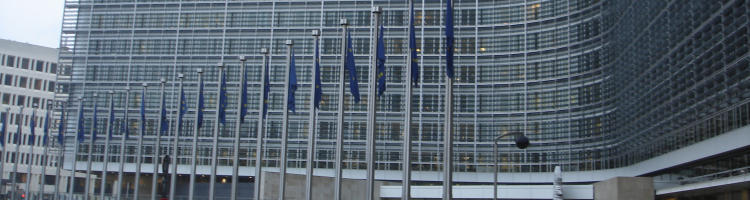
The Bank of England was made ‘independent’ of the Treasury in 1997, although not really, so that it could take the blame for any decisions to increase interest rates, such as those taken earlier this week (£) when the Bank increased bank rate to fight inflation.

How does that work? Inflation is believed to have one of two causes, one is that there is too much demand, chasing too few goods and consumers bid up prices. The other is that import prices are rising and thus have an impact on the domestic price level. These are known as demand-pull, or cost push. The current inflation would seem to be caused by the increase in the cost of imports especially primary energy products, exacerbated by a fall in the exchange rate.

The monetarist theory is that there is a real world and money view of the economy.

i.e.

Prices x Product = Money Supply x Velocity of Money

PQ = Mv

This equation is derived via definitions and algebra and thus there is no proof of causality. Monetarists say that reducing the money supply will reduce prices. This assumes that in the short term both the velocity of money and the amount of product are static. Recent econometric studies suggest that the velocity is not constant, and there has always been a problem of defining what money supply is as it must include some credit and so is very difficult to constrain. We should note that consumer credit can be increased very rapidly so can no longer be consider static.

There can be no doubt from studying economic history, that increasing interest rates to reduce the money supply causes a recession, unemployment and poverty. It’s also highly likely that unionised workers will demand higher wages to defend their living standards. In a world where business is internationally mobile, business will defend its profits by increasing prices and/or off shoring the work; this is the wage-price spiral where an economy has high inflation, both cost push and demand pull and low growth.

The drivers of growth and/or the floor to a recession are investment, exports or government expenditure, especially benefits. Increasing interest rates makes investment and the national debt more expensive. It makes exports cheaper in their foreign markets but of course the big factor in the export price uplift is Brexit. Higher interest rates increases the income on savings and the expense on business and domestic borrowing. A squeeze on profits will cause capital to go overseas, especially if the exchange rate is high although this may be ameliorate by the increasing yield in bonds. The other cause of the economic malaise is the poor investment rates by both the private and public sector in the UK.

There can be no doubt that increasing interest rates will cause unemployment. This is how it reduces demand.

The other option to monetary policy is product supply, direct investment such as the EU’s Horizon Europe programme or price regulation to cause a profit squeeze, tax the energy companies and banks, build more houses, control profits, transfer income from the wealthy to  the poor because the poor spend more of their income and of course rejoining the EU’s single market to reduce both import and export frictional costs.

High interest rates are a choice, a choice of theory and a choice of policy. The inconvenient truth is no-one knows if it works.

ooOOOoo

I conclude with some links to key commentators, professional economists. David Blanchflower, writes in the New Statesman, “The Bank of England is recklessly driving the UK into a deep recession”, he warns of the threat of unemployment, elsewhere on his twitter feed he is highly critical of the Bank and its Governor, Andrew Bailey, He is also quoted in a video clip by C4 on twitter, stating that unemployment hurts people more than inflation, which can be seen to be a declining threat. Anne Petifor exposes the role of the global capital markets in ‘managing’ food and energy costs, Richard Murphy provides a modern monetary critique of the theories. I particularly like his calling out of the role of import prices and speculators,

There is a third reason why the BoE policy will not work. It’s not just the assumption that people have too much to spend that the BoE get wrong. They have actually totally failed to identify the proper cause of this inflation.

The inflation we’re suffering is the result of shortages of oil, gas, fertiliser and food, in the main. Some of these are real (food, in particular). Others are being stoked by speculators who are profiting from them, which is why oil companies are declaring such big profits now

Richard Murphy – On Twitter

The featured image has been taken from Blanchflower’s New Statesman article where he asserts its a BoE MPC authored chart. This I assume can e used under the OGL license.  …
More consequences of Labour’s cyberbreach

More consequences of Labour’s cyberbreach

The Labour Party can’t issue the ballots for their internal elections; they claim it’s a consequence of the cyber-breach last October.

The Party seems to have attempted to create a replacement membership database by updating its mail manager system and presumably adjusting the feeds although much of the functionality previously offered is no longer available and the feed from the financial system is now days or weeks out of date. We should note that the membership self administration tool is also now not available. The mail manager is obviously from observation slowly dying. It is known to be inaccurate; there are errors in terms of who it considers to be a member, their addresses, and their payment status.

The Party plans to replace this recovered system with an off the shelf package[1] from Microsoft. At the moment we are advised that it is unlikely that local party role holders will get access to this until next year.

Until then we have to use a known to be inaccurate database. From observing, presumably NEC authorised actions, it seems to be considered accurate enough to select councillor candidates and run trigger ballots. Procedure Secretaries have been told that they may not override the membership system even when variances are well known and provable. I question that this is legal in it breaches the duty to be accurate and not to automatically profile people.

What seems to be forgotten that is data protection rests on seven principles, Lawfulness, fairness and transparency · Purpose limitation · Data minimisation · Accuracy · Storage limitation · Integrity and confidentiality. Often too much or too little attention is paid to integrity and confidentiality and issues such as lawfulness, fairness, transparency and accuracy are forgotten.

They are running selections and triggers on data known to be inaccurate. This isn’t right.

This has taken 9 months to get here. While culpability for the breach may be questionable, not having a recovery plan and or not funding it is the fault of the Labour Party and thus its NEC. CEO’s have been fired for less.

Why was there no recovery plan? Did they do vendor due diligence on the member centre hosting provider, did they keep it up to date? Is there a risk register? Has the NEC or the risk committee approved the mitigations? In fact, what is the NEC doing about IT Risk? Is there a DPIA on reusing the mail system? Is there a DPIA on reusing the SAR Tool? Is there a DPIA on using the social media scanners they use? When will we get a data protection capability that protects members data from bad actors rather than from themselves?

Nine months failing to recover is shameful and unprofessional. NEC members should be asking why it has come to this and determine if they, through their inaction, are in fact culpable.


[1] This I consider to be wise, although they will need additional software modules to support Labour’s unique processes, such as donation monitoring. Although it seems they plan to customise the UI 🙁 …

Are Transparency International wearing rose coloured specs?

Reuters Square, if its still called that in black and white.

I find it hard to believe that Transparency International, the world's premier anti-corruption campaigning organisation have marked the UK as having improved on 2020 in their most recent Corruption Perception Index and have the UK as within the top 15 countries. So I ask why might this be? This article looks at the issue of lags, TI's focus on the public sector, press bias via ownership, and some private sector scandals. I finish by asking, if they mark the UK so well despite the evidence, how much worse are the others?, ...

Meyer’s Cultural Map

Meyer’s Cultural Map

I have just finished the Culture Map by Erin Meyer. It’s taken me longer to read than it should, but that’s not her fault. She argues, building on the work of, her predecessors, including Geerte Hofstede,  that there are eight dimensions of business communication, these are communicating, evaluating (feedback), leading, deciding, trusting, disagreeing, scheduling and persuading. She argues that cultures share positions on these dimensions as people’s comfort and natural style is based on their education systems and often deep seated cultural and historical factors. She argues that differences are relative i.e. you might be mediumly robust in offering direct feedback, but if you come across someone more so, you will find them rude, and need to recognise that if delivering such feed back to some one from a more robust culture, they may fail to understand. She uses charts to illustrate cultural differences across the dimensions and I reproduce one. I also offer an Anglo-Dutch phrase translator. I finish by wondering how useful this is for 121s. The blog article says much more, ...

My Linkedin Blog

I have been blogging on Linkedin, for many years and used the linkedin blog as my CPD publication feed. I mirror the articles on my blog and here are links to the last seven articles.

This shows free feedzy at its best because the wordpress rss implementation is so cool.  …