Could the UK pass the Copenhagen criteria?

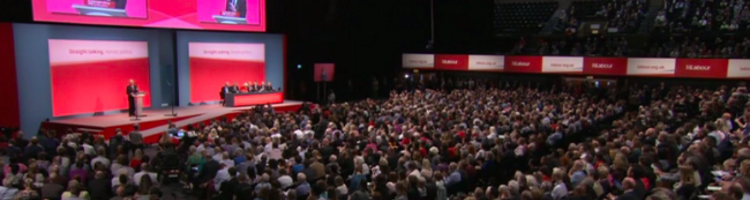
A UK flag at an EP meeting

As Labour turns a corner and begins to address if it should seek to lead the country into a closer relationship with the European Union, I found a thread on bluesky which questions if the UK is sufficiently democratic, and ready to adopt the complete acquis. I thought I’d reply, and this is what I say!

On Democracy

Is the UK sufficiently democratic to join the EU. The two key organisations that measure ‘democraciness’ both argue that the UK is a democracy. Its score in the EIU Index in 2024, is 8.34/10.00, its 11th out of 20 in Western Europe, and above France, Italy, Spain and three other countries.  France and Italy it considers “Flawed democracies”.

I have some difficulty with the EIU methodology, as while its open and accessible, I find it hard to replicate and comng from the Economist scores defences of liberal economics highly vs the pursuit of social rights. I looked at this in 2018, where I categorised the Economist’s weaknesses in the UK’s democracy. Amnesty International says that the UK’s treatment of refugees and asylum seekers is inadequate and that it fails to comply with its international obligations, including to ensure the rights to food, housing and adequate social security.

One issue raised in the thread is that the UK does not honour its devolution agreements. This will not impact the Copenhagen criteria; the EU treaties are an agreement between member states, and subsidiarity is an agreement between the EU and the member states. Subsidiarity ensures that “decisions should be made at the closest possible level to the citizen”. It would benefit all the citizens of the EU, and the UK, if the treaties required member states to have internal subsidiarity contracts with their people and that the Committee of Regions was accountable to the citizens of the regions and not appointed by member state governments.

On the Acquis

All the opt-outs are gone. The Brexiteers gave them away.

If the UK were to seek to rejoin the EU, it would need to agree to the EU’s freedom of movement laws. In fact all the opt-outs have gone and so while politically difficult for UK campaigners, freedom of movement is a benefit for which campaigners should argue and it is becoming more popular amongst young people.

The UK will also need to recognise that its Justice Pillar opt-outs have also gone, as everyone decent should want as they were designed, by a Labour Government, to allow the UK to have more illiberal immigration and trade union laws.

On the Euro, the UK should come to an agreement to adopt the Euro, i.e. supporters of rejoining need to be more explicit that both freedom of movement and the Euro are benefits and we should want them.

With respect to the Euro, I am still concerned about the Stability and Growth Pact as I don’t think macro-economic planning should be frozen in a treaty. I also think the quantitive money theory baked into the treaties are wrong and cause misery and poverty,. …

“Another Europe” & Citizens takeover …

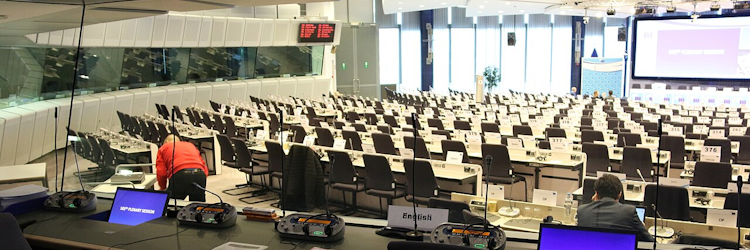
one of the conference rooms in the charlamagne bldg in Brussels

I have represented Another Europe within Citizens takeover Europe for five years and recently wrote a report on our joint work. This has been posted on the Another Europe's web site. I talked about tracking the Conference on the Future of Europe, the political denouement of CoFoE, the 2024 EP elections, the growing strength of the nationalist and far-right in the EP, citizens assemblies, the EU democracy plan and opportunities for improvement. For a lot more, read the post at Another Europe's site, for not so much, use the "Read More" button ...

Another Europe, Big Tech and democracy

a cctv camera

This was a webinar called, “The big tech threats to democracy, challenging the oligarchy from Musk to meta” which was hosted by Another Europe. This article consists of the notes I took at the meeting and while I was hoping to improve my notes on the speakers contributions by reviewing the video, I am unsure if this will become available.  It also consists of the notes I used for my contribution as I was asked to speak from the floor. I made this article because I think it was the first time I argued for the need for joining the single market to participate in the EU’s democracy shield and digital market regulation regime. This article has been back dated to the day after the day of occurrence. I have tried to ensure that comments that became obvious or were impacted by events after the seminar, are presented as foot notes.For more, see below or overleaf … …

Democracy is about policy too

Democracy is about policy too

 In a meeting last night, of my Union branch, and we were being spoken to by an MP, who argued that he stood on a Manifesto, and that this represented the Party’s view and its contract with the voters. My problem is that the Manifesto, while agreed by the National Policy Forum was not agreed by the Party and there is little doubt that the Party opposes austerity, wants to rejoin the EU and opposes racism in our immigration policy.

It made decide to redouble my efforts in support of the Campaign for Labour Party Democracy and to this time focus on how we make policy, and how we hold a leadership accountable to it. I mean, mandatory re-selection was meant to be part of this, but the 2019 selections and triggers show this may not be enough.

Today’s problem, is that the PLP is representing the leadership to the members and not the other way round. …

A growing authoritarianism

A growing authoritarianism

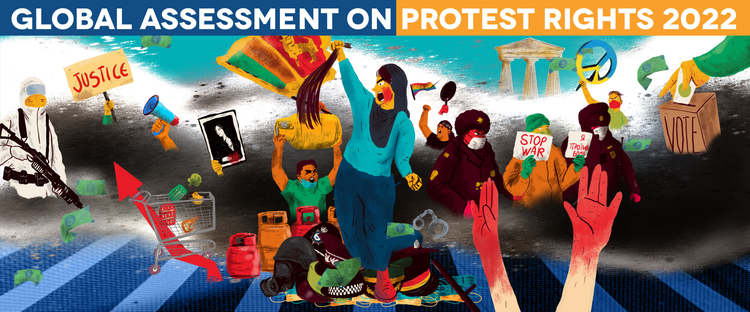
Today, the Guardian reports that Civicus, a global campaigning NGO, in its recently published monitor has downgraded the UK’s acceptance and tolerance of protest, ‘it is now classified as “obstructed” – putting it alongside countries such as Poland, South Africa and Hungary.’ Civicus classify countries as: open; narrowed; obstructed; repressed; or closed. Civicus say,

A significant deterioration in civic freedoms in the UK, particularly the right to freedom of peaceful assembly, has led to the country being downgraded from narrowed to obstructed.

I recently analysed both the Economist’s democracy index and Transparency International’s annual reviews, the former of which had the UK on a stand still. The Economist’s marking on Civil Liberties remains unchanged since 2017 with a 91% positive marking. As my article makes clear, I find this hard to justify then, and even less today as the Tory Government turns the screws on protest, judicial review and free speech. …

How democratic is the UK in 2022

How democratic is the UK in 2022

The 2022 version of the Economist’s Democracy Index is out, and I am surprised to find that the UK remains classed as a Democracy and maintains its position as 18th in the World. I last looked at this in 2018 and wrote quite a long article, being surprised at how few Democracies are defined as such by the Economist and how, if the US was classed as a flawed democracy, the UK was not. Democracy is,

Government by consent expressed through free and fair elections and under the rule of law without favour.

The Economist’s index measures over five classifications and sixty questions. The five classifications are Elections (with 12 questions), Government (14), Participation (9), Culture (8) and Human Rights (16). The article looks at theirs and my scoring in each category.

In summary, I believe that, on “Free, fair and meaningful elections”, the UK’s score is serious damaged by the existence of the House of Lords and FPTP votin. There is an inadequate regulation of election finance laws with recently weakened independence for the regulator and an inequality of access to the press and media.

On Functioning of government, I mark the UK down on a weak democratic control of the Government, and no basic human rights law. In the UK, the Government controls the legislature and not the other way around.

On Civil Liberties, I am concerned about the lack of social rights and the limited access to judicial review, there is a serious crisis of confidence in the police, racism is rife within the nation expressed both economically and in terms of relations between minority communities and the state and the government always over-reacts to public order outrages, and is inciting the political atmosphere to pass even more regressive laws.

I talk about the importance of the recommendations of Gordon Brown’s Commission on the constitution of the UK. I commented on the Commission's report in an article, called, New Britain, New Britcon [also on Medium]. The Commission ducked the issue of proportional representation which would be another means of ensuring that the legislature, i.e. Parliament held the government accountable and not the other way round.

Some of where we disagree is about methodology, some of it is values based, but there is a big difference in our scores and the issues I raise need to be addressed by the Economist in their methodology and by the rest of us in terms of building and/or defending a democratic state.

Even Norway’s democracy, the Economist’s No. 1, can be improved.

There is considerably more detailed critique overleaf, including three diagrams. Use the "Read More" button ...

Justice Crime and Democracy

Onto Tuesday 26th, the motions on PR, parliamentary sovereignty related to the ministerial code, powers of the electoral commission and prohibiting second jobs, and the abolition of the House of Lords were all carried. The words of the composites are published in CAC 2 Addendum.

The Justice agenda was introduced by Emily – she just doesn’t give a shit, the shortest front bench speech, in which she promised to end criminal impunity and address criminal system failures including the decimation of legal aid.

Steve Reed’s speech was a confirmation of the common speech design, loads of stuff on how awful the Tories are, chuck in an announcement if you have one and finish on everything will be better with a Labour Government, led by Sir Kier Starmer, peppered with the slogan, “Labour: On your side”.

Reed had a side diversion into “tough on crime, tough on the causes of crime”, they i.e. the front bench seem to be considering some form of early action to disrupt social inheritance of criminal behaviour, it all reminded me of the “Precrime” unit from Minority Report, brought to you be the people that developed “Prevent”, by which I mean the spooks and civil servants. I have commented on this, see below. …

NATO & democracy

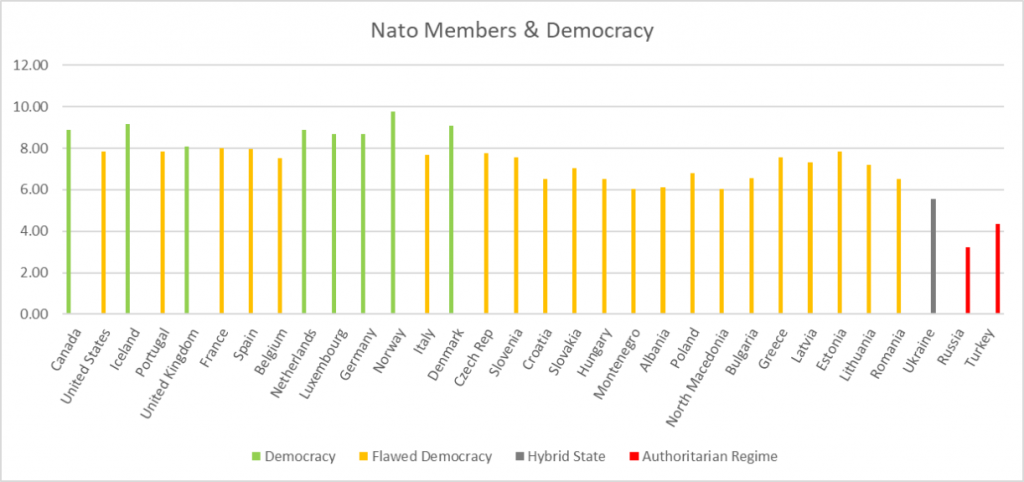
The Economist Intelligence Unit has produced its 2021 Democracy Index, which I have not yet read in detail as it would seem there are some interesting things to pick up and comment on, such as how the UK is not considered a ‘flawed democracy’ while Spain is? Is there a link between the Democracy score and GDP? But what this article looks at is the democratic credentials of NATO’s membership vs. those of the Ukraine and the Russian Federation. This is ordered west to east.

Nato members and democracy from the EIU 2021

In other work I am doing I note that over 50% of the European Court of Human Rights cases involves Russia, Turkey and the Ukraine, who are the top three defenders.

Flawed democracies are described as follows,

These countries also have free and fair elections and, even if there are problems (such as infringements on media freedom), basic civil liberties are respected. However, there are significant weaknesses in other aspects of democracy, including problems in governance, an underdeveloped political culture and low levels of political participation

The EIU Democracy Index 2021

I last looked at the EIU index in my article, How democratic is the UK?

This is one of the articles provoked by the question how to measure democracy? …

A short history of the British constitution

housesofparliament

How have the British ‘improved’ their constitution over the last 100 years. I have a look but conclude with how the Government is riding roughshod over what puny safeguards exist. I look at parliamentary sovereignty, suffrage, the parliament acts, the impact of the EU on the constitution, human rights act, the House of Lords and supreme court, and finally the Prime Minister. I conclude with a sad cry to do better.