I have now finished reading the EHRC Report into Anti-semitism in the Labour Party, and while doing this, Corbyn has been suspended, reinstated and then had the whip withdrawn, by it seems a small coterie of staff, in the Leader’s Office and General Secretary’s office, specifically the Leader and GS themselves. In looking at my blog article to remind me what I said, and what remains unsaid, I came across this quote, which is a recommendation; some work to do, I think.
Acknowledge, through its leadership, the effect that political interference has had on the handling of antisemitism complaints, and implement clear rules and guidance that prohibit and sanction political interference in the complaints process.
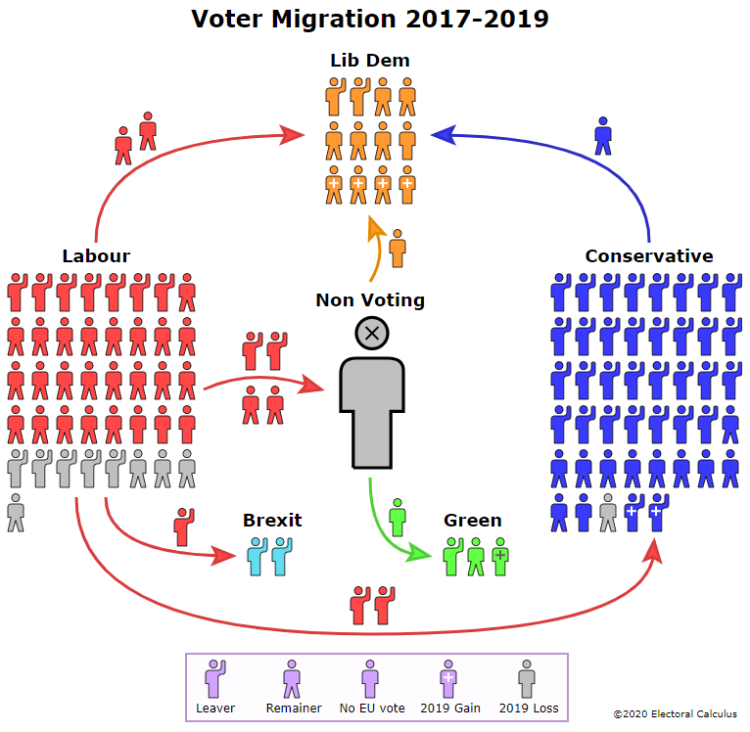
I am considering getting involved in a so-called debate about Lavery, Tricket and Smith’s recent revision of their No Holding Back report, which has been seized with alacrity by the usual suspects, possibly unfairly; it seems more nuanced than its authors and fans suggest but I may not be reading it sufficiently well. I am reminded of the Data Praxis report, Tory Landslide, Progressives Split, which shows how it might have been worse and blames our FPTP electoral system. I precis them by saying,
“Labour lost because, Leavers in Labour seats, switched to the Tories, but more Labour Remainers from 2017 switched; Corbyn (& the manifesto) were now unpopular and thus too many Tory Remainers stayed with the Tories.
Dave Levy
We should also note that Lavery, Tricket and Smith do not mention Scotland; it’s not their expertise but there’s no answer without the Scots.
While looking at what to say, and for help in understanding the problem, I was concerned to be truthful at the state of the red wall parties’ health, but it seems hard to get the local contact rates, which will all be poor nor to get the member/voter ratio. I looked at Labour Together’s report, again to see if they said anything useful about local Party organisation/structure and campaigning. This is difficult to be honest about because of the back office chicanery in Labour HQ on 2017 & 2019 and the myths and maybe truths about how Momentum’s volunteer organisation saved us in 2017 get in the way. They i.e. Labour Together don’t say anything useful or concrete about CLP organisation. We should also note that the Democracy Review did nothing to improve local campaigning effectiveness either. Perhaps we should be listening to Crispin Flintoff on his campaign to fund CLPs properly.
About the Labour Together report, I found this, at Immigration News, which pulls no punches. I say, using their words,
[the] New Labour Together Report investigates Labour’s 2019 Election Defeat with crushing honesty – but glosses over senior saboteurs behind the Labour Leaks dossier. A 150-page report published this week by research group Labour Together serves up some stone-cold truths and analysis in what may have led to Labour’s downfall in the 2019 General Election. “
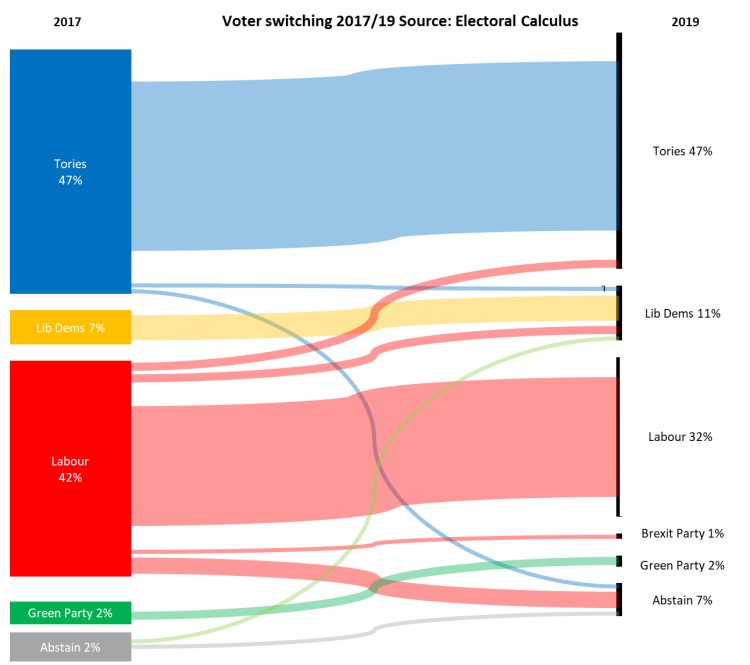
I have made a sankey chart from this, it would seem that this chart is for England & Wales only, but for other source notes, you’ll need to check out the original article.
The Labour Together report is strong on the need to get the strategy right; I think we may need to end the factionalism first and recognise the members must have the first and last word but we also need to resolve the fault lines in our coalition, because much of the pro-Brexit positions came from Labour politicians on the right of the party whose heritage is the “Control Immigration” mug and future road is that of Blue Labour, “work, family, community”. Adopting this sort of rubbish and its racist sub-text will jeopardise Labour’s city heartlands, apart from just being wrong. …
The EHRC have issued their report into Antisemitism in the Labour Party, they say that Labour needs to rebuild trust & confidence in the antisemitism complaints handling process, reform and provide education & training, most importantly to complaints handling staff, and monitor and evaluate the changes. Everyone has committed to doing this and the proposals are not controversial. They also found that unlawful acts under the Equalities Act had occurred and therefore served an unlawful act notice on the Party. The Labour Party is now legally obliged to draft an action plan by Thursday 10 December 2020 to tackle the unlawful act findings that were made in the report. The action plan should be based on the EHRC recommendations to avoid such acts from happening again. With good will, this should be possible, but with the remaining actions taken that day, we have to question if the Labour Party actually wants to move on. The rest of this blog article looks at the report and selects some quotes, it concludes, with the statenebt that, "The Labour Party will not fix the problem of anti-semitism or other appalling behaviour whether it be based on a protected characteristic or just straight forward bullying and cheating, until it recognises the corruption of the disciplinary process caused by factionalism. This diversion i.e. the suspension of Corbyn will make the task of making the Party a welcoming place for all who wish to join much harder. I have signed the petition that he should be reinstated, and the CLPD have published a solidarity motion to put to CLPs and Union Branches."
I have been ill over the summer; I wish I had written this earlier as the wheel tracks of the political debate in the Labour Party are probably too deep for these thoughts to take hold, or maybe not, some of the articles bookmarked here suggest some deeper thinking is going on. This blog article examines the inter left dialogue and what might be done to promote a greater left unity. It notes the number of people who voted for Starmer and Corbyn, it’s a lot, and suggests that these people are key to the future platform pursued by the Labour Party. We need a majority that will build a fair and principled discipline system and a democratic policy development process that allows out membership to lead the party. This blog article , see overleaf, explores these issues in more detail
I am pretty disappointed with Labour’s decision to abstain on the 3rd Reading of the Covert Human Intelligence Sources Bill. It’s truly disgraceful and allowing the State’s secret policy to operate with impunity jeopardises important human rights such as the right to a fair trial and the right to organise (freedom of association) not to mention the rights to privacy although the investigatory powers act of 2016 put these on the bonfire. Most of its opponents focus on murder, torture and rape, but the destruction of the rule of law and its application to the police is an on-ramp to these crimes, the principle of an accountable police and prosecutor is the key.
However, Labour is not good on these issues, more recently the PLP led by Burnham & Starmer colluded with the IPA 2016, supported the retention of ‘economic’ security as a lawful purpose of the intelligence service’s activities and when I proposed the supremacy of human rights law as a conference policy, it got 2 votes on the NPF web site and my CLP has always sent other, yet important, motions to conference while CLPD’s support was ineffective as they pursued their doomed attempt to rewrite the Leadership election rules. I posted my moving speech to this blog. I am not sure if this is because many people consider the NPF to be a waste of time, or that support for human rights law is weak in the Labour Party, because you can’t eat or burn human rights.
Please vote up my NPF proposal, if its still open and if you can, the software is, to use a technical phrase, a bit shit. Also you might like to share my motion via social media.
The Legislation tracker is here, the Lords Committee stage starts in 24th Nov and the Report stage & 3rd reading are not yet planned. If the Lords amend the Bill then it will return to the Commons for what is called the “Consideration of Amendments” where usually the Commons tell the Lords to “go away” (4,3). …
Rachel Reeves, Labour’s shadow spokesperson for the Cabinet Office, made a speech/webcast about Labour’s current Brexit policy, reviewed in Labour List, with the headline, ‘“We won’t be back in the EU”: Rachel Reeves sets out Labour’s Brexit policy’. It just raises the question, where did she get the mandate? It seems she believes that we have returned to the days when Labour’s policy emerged from the back pockets of the front bench spokespeople. This is not why I joined the Labour Party and to go from remain, to only leave if the terms are acceptable, to saying that the UK would not be back in the European Union under a Labour government, without even stating why the Tories deal and strategy is harmful, is shameful and gives evidence to those on the left who say that the people’s vote was merely a trojan horse to undermine the Corbyn project.
Her statement ignores, of course, freedom of movement, Erasmus, flight regulations, and the European Medical Agency and it all assumes that we get a trade deal. We can see the Tories, are not going to sign a reasonable deal and Labour should be putting our stake in the ground, otherwise any deal will seem a victory and even if shite, people will ask where we were.
This policy position will also test the theory that a pro-brexit promise will win more votes than it gains. It’ll go down like a ton of shit in a fan factory in Scotland and London. It must be remembered that Reeves has form for stretching Labour’s consensus, her time as shadow spokesperson on welfare include some disgraceful speeches and I have previously reported on her channelling of Enoch Powell. Giving her a second chance was a mistake. …
Another second reading abstention by Labour, this time on indemnifying police and secret police agents from criminal acts. It, the Covert Human Intelligence Sources Bill, has become known as the #spycops Bill. It was eloquently opposed by Zarah Sultana, who failed to mention that the remaining protection is the Human Rights Act, which the Tories have at times committed to repealing, but did include the second fatla flaw in that such otherwise illegal acts are to be authorised by senior officers in the agent's organisation. Much drama has been made of the potential for murder, torture and rape, but the line is that the police must obey the law, all of them. This Bill breaks that principle Here's Zarah (below/overleaf).....
While most attention is on the Govt’s response to the pandemic, and while expecting a reimposition of the lockdown, the second part of the the triple whammy is the looming end of the Brexit Transition agreement. What are Labour doing? Certainly not making so much noise. Here’s the FT on Kier Starmer’s response, which it headlines as “Getting Brexit Done!” on the basis of his speech to the TUC. Labour’s front bench spokesperson on Brexit is Rachel Reeves, who now it seems doesn’t really want to speak about it. While Starmer seems keen to ensure a visibly effective performance in Parliament, which seems to be paying off in the polls, as Labour draws even at 40%, it requires the acquiescence of the press to break through and both Reeves and Starmer were outshone by Ed Miliband in opposing the 2nd reading of the Internal Market Bill. Too much of Labour’s parliamentary attack position is based on competence, the failure of the Tories to meet their own goals without even addressing the issues of cronyism and accountability or more importantly of a vision of how things could be better.
But then the Remain campaign has disappeared, (or the Guardian’s view if you prefer), giving some on Labour’s Left, the evidence they always wanted that the Remain campaign was an anti-corbyn trojan horse. Not for me! But Parliament has voted to allow the Govt. to negotiate the trade deals without asking Parliament to agree, and the Govt. refused to ask for a transition extension despite the CV19 pandemic. These are both opportunities missed.
In running for election as Leader of the Labour Party, Keir Starmer published a 10 point plan, which I have noted & mirrored on this web site. A couple of months later, Richard Burgon, writing in Tribune produced his own 10 point plan as a focus for left unity within the Labour Party. I produce them below/overleaf in a table of titles. Provided we 'don't try and read the tea leaves in the order, there's not a lot of difference! For those of us who didn't vote for him, this should give us hope that Labour's opposition and manifesto will be worthwhile, but those that voted for him because of his 10 pledges need to be articulate in reminding him of them. ... ...
Things to be considered about Labour Party Policy making. Many people join because they have good ideas, and certainly have unique experiences and it’s not enough to just take their money and ask them to knock on doors. In “Ideas, alliances and promises”, I examined the long term failure of the Labour Party to develop long term effective and democratic policy making processes and the electoral consequences of this.
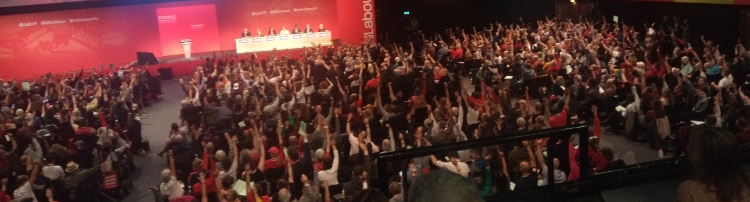
It’s possible that the most important reforms contemporary to the democracy review was the dropping of the need for motions to Conference to be “contemporary”, increasing the number of motions to be discussed from eight to twenty, which had the effect of ensuring that important topics with lower levels of support got to conference floor and the introduction of “reference back” on the NPF report. Let’s see how long these last. …
This website uses cookies to improve your experience. We'll assume you're ok with this, but you can opt-out if you wish.AcceptRead More
Privacy & Cookies Policy
Privacy Overview
This website uses cookies to improve your experience while you navigate through the website. Out of these, the cookies that are categorized as necessary are stored on your browser as they are essential for the working of basic functionalities of the website. We also use third-party cookies that help us analyze and understand how you use this website. These cookies will be stored in your browser only with your consent. You also have the option to opt-out of these cookies. But opting out of some of these cookies may affect your browsing experience.
Necessary cookies are absolutely essential for the website to function properly. This category only includes cookies that ensures basic functionalities and security features of the website. These cookies do not store any personal information.
Any cookies that may not be particularly necessary for the website to function and is used specifically to collect user personal data via analytics, ads, other embedded contents are termed as non-necessary cookies. It is mandatory to procure user consent prior to running these cookies on your website.