The House that Jack built, or will build

The House that Jack built, or will build

I popped back to the Metropole to listen to “The Housing Fringe”. This was advertised as having Jack Dromey MP as its star speaker and the meeting was chaired by a very self-satisfied Michael White of the Guardian.

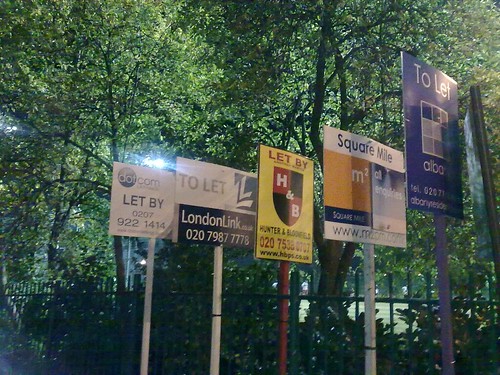
to let in Island Gadens

The slogan “A million houses in a Parliament” has been trialled in the Press and so expectations were high although the announcements of policy were reserved for Ed Miliband’s speech the following day. …

Without news rooms and journalists, we won’t get the news!

On my way to the Housing Fringe, I bumped into a Times journalist, who asked if I was attending their meeting, which was branded around one of their columns which I had not heard of, and was starring Peter Kellner, ex-political columnist and now star poller. I rather rudely said I hadn’t read the Times since it went behind a paywall neglecting to mention that I hadn’t been a fan before and I was challenged about how to pay for investigative journalism.

the wall at the end

While I could have carried on with my rudeness asking when the Times last broke an important story such as ‘Phone Hacking’ for instance,  I quoted the fact that 80% of the cost of newspapers is about paper, logistics and ink. This was denied. …

Cinderella, you shall go to the ball

hbm

I popped along to a session entitled “The creative industries: A Cinderella sector?”, convened by Demos. The panel speakers were Luciana Berger MP, Helen Burrows, and Doug Richards.

at brighton metropole

I got there in time to here Doug Richards speak, who stated that the UK was the “most successful creative sector in the world”, but lacked support.  Helen Burrows, report is now three years old, and either archived or behind a paywall, its launch was reported at billboard.com, where she put some numbers behind support, size and success. This is still missing the balance of trade figures; but the report acts as a prelude to the comments that ONS is not measuring creative business well i.e, the SIC/MLH industrial measurement model needs to be updated. It was published in 2010, just after the election as the coalition were settling in. …

Labour’s Rules considered by those that can change them

Labour’s Rules considered by those that can change them

I got there in time to hear the debate on the Collins Review Interim Report Sep 2013.  There was only time for five speeches from the floor of conference, one general secretary, two MPs, and one prospective Mayor, but then there are few newly joined activists on the floor of conference. The platform had made it clear that this was an interim report and an interim debate and Ed Miliband joined the platform to listen to the it. …

The ORG in Brighton with Labour

The Open Rights Group are convening a meeting as part of the Labuour Party Conference Fringe.

org

Event Title: PRISM and Mass Surveillance: a Threat to Democracy and Economic Welfare?
Start Date Time: Tuesday 24th September, 2013 at 17:00
End Date Time: Tuesday 24th September, 2013 at 19:00
Weblink: http://www.meetup.com/ORG-Brighton/

They say,

Mass Internet surveillance is now an undisputed fact. Its defenders tell us that it is necessary to protect us from terrorists, criminals and rogue states. But the Snowden revelations show that we face unaccountable indiscriminate surveillance of Internet users on a global scale. This attack on privacy has potential devastating implications for our understanding of democracy.

But is’s not just the foundations of democracy that are under attack. Recent revelations of a systematic weakening of encryption systems by US and UK security agencies undermine fundamental Internet security. These are the basics of trust on the Internet; they are the reason we trust our bank, our credit card payments or Virtual Private Networks not to leak this information to criminals, blackmailers or governments. Thus the real impact will not just be about state security, it may be about economics and the opportunities for increased wellbeing presented by the Internet.

Confirmed speakers: Tom Watson MP, Paul Johnson – Deputy Editor, The Guardian, Javier Ruiz – Campaigns Director, Open Rights Group, and Nick Pickles – Executive Director, Big Brother Watch.

Not sure if Tom’ll make it. He had to miss an earlier meeting today.

I’m told there’ll be free drinks.

Sadly, I’ll not be there, I need to be back in London. …

Reforming Labour’s Rules

Reforming Labour’s Rules

Ellie Reeves, one of Labour’s NEC member’s representatives and an ex-Lewisham Deptford Party member came to the Lewisham Deptford CLP General Meeting to bring us up to date on the proposals to reform Labour’s membership rules and its relationship with the Trade Unions.

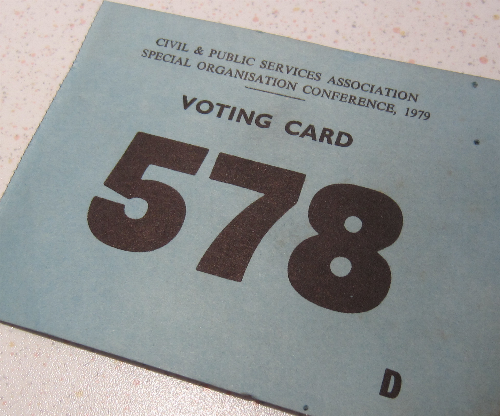
DEHQ Card Vote

As a result of some alleged improper behaviour in the Falkirk selection, Ed Miliband proposed to change both Labour’s rules and the Law to “Clean Up” politics. I commented on the proposals as they stood in an article on this blog called “Clean Politics, a bit of Ed, a bit of me” which lists the proposals as I see them. …

Backdoors

Backdoors

Earlier this week, the Guardian in conjunction with its partner publishers, New York Times and ProPublica ran an article, Revealed: how US and UK spy agencies defeat internet privacy and security. As we’ll see, the title is a bit misleading, but the agencies certainly gave it their best shot. This story builds on the initial Snowden leaks that the NSA has been using computer technology to spy on everyone using the internet in the USA. The story rapidly came to the UK where it became clear that Britain’s GCHQ was tapping the UK/USA telecom links, sharing intelligence with the USA and providing the NSA with a slightly more legal way of spying on US citizens. There is little doubt that the US & UK’s intelligence agencies have outsourced their own domestic spying which is legally restricted to each other. …

Citizens not Suspects

Citizens not Suspects

The Guardian reports that Privacy International are going to court to get the UK Government banned from using the USA’s ‘intelligence’ obtained via their Prism programme, and to suspend the UK’s equivalent programme, the GCHQ’s Tempora programme.

Privacy International argue that the UK agencies’ use of NSA supplied data is illegal since there is no warrant and no notification and no appeal; which is a problem when there is no ‘probable cause’. In order for GCHQ to intercept someone, they’d need a warrant issued under RIPA. This looks to be  an example of the two agencies outsourcing the surveillance of their own citizenry, since they are prohibited from doing so. i.e. GCHQ is spying on Yanks, and the NSA returns the favour by spying on Brits. Both agencies need a warrant to spy on their own citizens, but not on foreigners. …