GMB on Brexit

GMB on Brexit

The national committee of the GMB is called the Central Executive Council, and it produced a statement on  the subject of Brexit. The statement opposes a No-deal Brexit and calls for a final say public vote on any Tory deal to,

.. decide whether this is better than our current deal with the EU.

I was called to speak on the statement and my speech is on YouTube, as is the whole debate.

The statement was made available on the morning of the debate; I wish I’d had more time to consult members & colleagues. …

You can’t say that!

GMB Congress 2019 is a rules revision conference and one important rule change passed earlier in the week was to restrict the number of motions and rule amendments that a single branch can propose to three motions and two rule amendments.

One of our delegation spoke against the rule change arguing that restricting the number of motions would diminish Congress because branches would be choosing not to send motions, the difficulty that large branches with multiple employers in representing all their members was mentioned. A video of the debate is here.

On reflection, the idea that 2500 motions would be proposed is foolish, there were 435 motions on the order paper when there was no restriction. (I understand that one branch put in a shed load, but they obviously thought it important.)

I would add that, since the CEC, through its power to recommend “support with qualification” can uniquely move amendments to every motion, this change (of restricting a branch’s voice) will increase the CEC’s power over the agenda and the results. Also the CEC can table non emergency business, as special reports after the closing date for motions and so amending these is procedurally difficult. No system is perfect, but I agree that this is a retrograde rule change. …

There’s a reason that votes are secret

I didn’t win again, but in another part of the business a comrade asked for a motion to be voted on via secret ballot. This is what the rules say

C15.I.2.M.ii   Ballot votes shall be held at meetings to select candidates and where otherwise provided for in the Party constitution; and where requested by any member supported by at least two others.

The Chair was advised that the request for a secret ballot required the agreement of the meeting, I have looked and can’t find such a rule. The purpose of this rule is to avoid intimidation and coercion. I did ask where this was defined, but got no answer.

We have now set a precedent that secret ballots can only be agreed by the whole meeting. It’s a charter for bullies. …

Vote for me!

There is a vacancy for the position of Secretary of Lewisham Deptford CLP. I have been nominated by my Branch and plan to stand. If you are a delegate to he CLP’s Geneneral Committee, then this is why I think you should vote for me. My speech and a video we made, are below/overleaf … …

Should you stay or should you go

Alastair Campbell, Blair’s Director of Communications has been expelled (or auto-excluded) from the Labour Party probably under rule 4.I.2.B. He stated that he voted for the Lib Dems in the European Parliamentary elections. This was done as per the rule, with no right of defence, no hearing and no right of appeal.

The rule states,

2.I.4.B A member of the Party who joins and/ or supports a political organisation other than an official Labour group or other unit of the Party, or supports any candidate who stands against an official Labour candidate, or publicly declares their intent to stand against a Labour candidate, shall automatically be ineligible to be or remain a Party member, subject to the provisions of Chapter 6.I.2 below of the disciplinary rules.

The rule is in three parts, the first is about “political organisations” and the second about behaviour during elections, the third governs the exclusion & readmission process.

As Shami Chakrabarti points out, we cannot expel or in anyway sanction people for the way they vote, but it seems the NEC are having second thoughts; we’ll see what happens, but whatever they do, they need to recognise that the no defence, no appeal part of this rule put it in contravention of the rules of natural justice. If they let Campbell off, as they did with Andrew Fisher, this will be rightly seen as one rule for the powerful and one for the rest of us.

The rule should be re-written to add clarity as to which organisations or class of organisations lead to sanctions; I would argue this should be limited to fascist organisations or borrow from the NUS no-platform policy and add to that all other political parties. The rule should be rewritten to have a right of defence, and right of appeal although I recognise in some cases there is a need for velocity. (Or maybe just abolish it and define campaigning for another party as “conduct prejudicial” and dealt with by the NCC processes which are in need of reform themselves.)

I argue that all 2.I.4.B auto-excluded should be given amnesty as not only is the rule contrary to natural justice it was applied factionally and in bad faith.

It should be noted that the Labour Party has other rules to protect itself, it can refuse to allow people to join or it can sanction them under its Chapter 6 processes if actions are prejudicial or grossly detrimental. …

Europe and Brexit, yesterday & tomorrow

Europe and Brexit, yesterday & tomorrow

I look at the European Parliamentary election results. It wasn’t a good night for Labour last night and but not as good for the Brexit Party as they might have hoped. This article was written mainly on Tuesday and backdated to Monday 27th. It looks at the impact on the European Union, how the earth moved in the UK,  and the dreadful and inept campaigning decisions taken by the Labour Party. It finishes with a brief look at the immediate reactions in the Labour Party not least the twitter spat between Paul Mason and LOTO. For more, see below/overleaf. …

British Steel

Our minds have been distracted or mine has anyway, but British Steel became insolvent last week. Of course a huge blame game is started. Have the Chinese been ‘dumping’ steel on the rest of the world? Could the Govt. or the EU have protected it? Did the single market aid rules stop the Govt doing so?

Is China dumping? This article at the Conversation says “Yes”, big time!

This article at fullfact.org, “Is the UK calling for EU duties for Chinese steel?” deals with next three questions. The EU have raised duties but for many years the UK Government has been resisting more; they wished to avoid retaliation and for ideological reasons. There’s probably some “don’t give a shit” there too. It would seem that this is another policy area where New Labour failed to support its natural people.

The calls for renationalisation are now, rightly growing …

Vote Labour again

Welcome to the Brexit merry-go-round!

I have been reading the news as have you all. Labour’s promised vote seems to be plummeting, in London in 2017, we got 61% and in the Mayoral election, Sadiq Kahn got 41% of first preferences. Polls are suggesting that Labour is on about 24% in London, although they could be wrong.
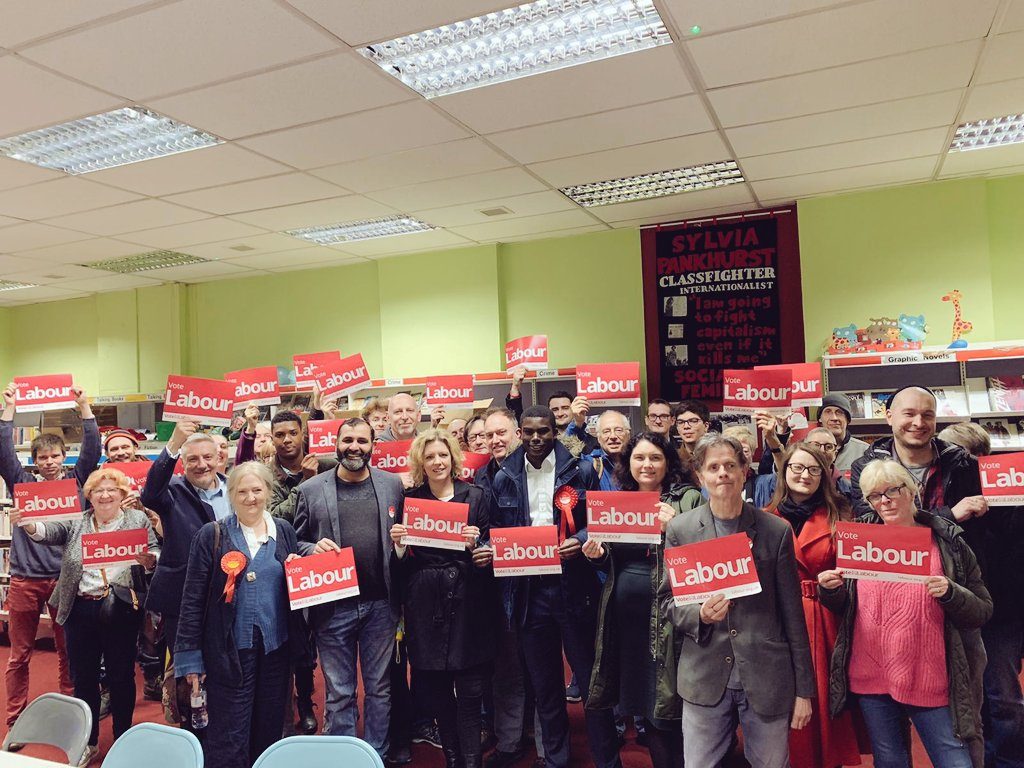
Labour supporters should vote Labour.

If you are a Remainer, and we win, these MEPs will sit for 5 years holding a Commission accountable.

Labour’s MEPs will be the Party of European Socialists and will pursue the objects of the PES Manifesto, which is largely influenced by Labour’s agenda of anti-austerity economics and social solidarity. Labour MEPs will vote for the Socialist candidate for the position of President of the Commission.

In London our candidates are good people. Claude Moraes has an exemplary record as European Legislator acting as Rapporteur (i.e. author) for the GDPR which redefined the right of Privacy in Europe. He has been Chair of the Civil Liberties committee, Seb Dance is probably best know for the he’s lying stunt but has been campaigning on environmental rights, Katy Clark used to be an MP and was a strong civil rights campaigner and Laura Parker is an articulate socialist who would strengthen Labour’s parliamentary team; she has been part of the team that has led Momentum to its “remain” supporting decision.

We talk of beating Farage; this is not just important in the UK for our own political health but the number of MEPs in the European Parliament matters. Historically Farage has sat independently with allies but apart from the Fascist parties from France & Hungary. These far-right parties are likely to be joined by the Alternative for Deutschland and the Italian hard right. The idea of an alliance of the political right of such size is frightening and all democrats should do their best to oppose these people. i.e. coming first or second matters in the UK.

The alternative for many seems to be the LibDems. If elected, they will sit with the ALDE group led by Guy Verhofstadt, who has been the European Parliament’s Brexit co-ordinator; he has given up partly because he feels that ALDE will be more powerful without a strong Labour delegation. The British LibDems are no longer part of a British progressive alliance and ALDE cannot be trusted to fight the far-right.

  …