On the Boles proposals

On the Boles proposals

There is an essay by Nick Boles, published on demos website that argues to reframe Starmer’s EU reset by offering to extend Britain’s nuclear umbrella in exchange for a single market in goods. It is claimed this is circulating within government.

It has caused much excitement by the rejoin opposing press and its followers in the Labour Party. It has also been noted by some of the rejoin commentators as an item of hope.

It’s nonsense.

This proposal fails to recognise that, Starmer’s reset has failed, mostly through lack of ambition on the British side. This proposal is similar to the reset agreement made in May 25 which set an agenda, including an enhanced defence agreement. Not one single item of the reset has been finalised.

 The one disappointment I have in Starmer being replaced is that the learning process on the subject of EU relations within the government has been set back. I believe the Starmer speech on 1st May, together with the House of Commons Select Committee report and the Fabian Society’s “Pressing Reset” shows that large elements of labour we’re ready to learn a new lesson.

What needs to be understood is that the European Union will not make an agreement that leaves a third country in a better position than either current members or aspirant members and it considers the single market as indivisible.

The proposal has the benefit to Labour’s Atlanticists that it embeds Britains commitment to the US designed strategic nuclear deterrent, and its proposed extension, the air based so called tactical nuclear weapons in exchange for minimal concessions from the EU. I say, minimal, splitting the single market which is what is proposed is not minimal,  but if the UK is making the offer, it should be able to get more than a single market for goods, even if only seen from the nation of shopkeeper’s accountant’s lense.

The country needs a better deal on all three dimensions of the issue, defence, trade and international solidarity.

Labour’s NPF also shows a continuation of this lack of ambition, and a failure to learn from the failed two years of the Reset.

Rejoining the EU could be the easiest deal in the world if we just forget what we once had and embrace the economic benefits, the opportunity for deeper social relationships between our peoples, and the continued development of a force for peace, democracy and human rights.

This needs ambition and I am very unclear that Burnham’s government is ready for this.

Those of us that want to rejoin need to push harder and articulate achievable goals. The UK should join the single market now, and Labour should put that a Labour Government will seek to rejoin the EU in its next manifesto.


The Russian Ukraine border Sergey Bystro, CC BY 2.0 https://creativecommons.org/licenses/by/2.0, via Wikimedia Commons …

Could the UK pass the Copenhagen criteria?

A UK flag at an EP meeting

As Labour turns a corner and begins to address if it should seek to lead the country into a closer relationship with the European Union, I found a thread on bluesky which questions if the UK is sufficiently democratic, and ready to adopt the complete acquis. I thought I’d reply, and this is what I say!

On Democracy

Is the UK sufficiently democratic to join the EU. The two key organisations that measure ‘democraciness’ both argue that the UK is a democracy. Its score in the EIU Index in 2024, is 8.34/10.00, its 11th out of 20 in Western Europe, and above France, Italy, Spain and three other countries.  France and Italy it considers “Flawed democracies”.

I have some difficulty with the EIU methodology, as while its open and accessible, I find it hard to replicate and comng from the Economist scores defences of liberal economics highly vs the pursuit of social rights. I looked at this in 2018, where I categorised the Economist’s weaknesses in the UK’s democracy. Amnesty International says that the UK’s treatment of refugees and asylum seekers is inadequate and that it fails to comply with its international obligations, including to ensure the rights to food, housing and adequate social security.

One issue raised in the thread is that the UK does not honour its devolution agreements. This will not impact the Copenhagen criteria; the EU treaties are an agreement between member states, and subsidiarity is an agreement between the EU and the member states. Subsidiarity ensures that “decisions should be made at the closest possible level to the citizen”. It would benefit all the citizens of the EU, and the UK, if the treaties required member states to have internal subsidiarity contracts with their people and that the Committee of Regions was accountable to the citizens of the regions and not appointed by member state governments.

On the Acquis

All the opt-outs are gone. The Brexiteers gave them away.

If the UK were to seek to rejoin the EU, it would need to agree to the EU’s freedom of movement laws. In fact all the opt-outs have gone and so while politically difficult for UK campaigners, freedom of movement is a benefit for which campaigners should argue and it is becoming more popular amongst young people.

The UK will also need to recognise that its Justice Pillar opt-outs have also gone, as everyone decent should want as they were designed, by a Labour Government, to allow the UK to have more illiberal immigration and trade union laws.

On the Euro, the UK should come to an agreement to adopt the Euro, i.e. supporters of rejoining need to be more explicit that both freedom of movement and the Euro are benefits and we should want them.

With respect to the Euro, I am still concerned about the Stability and Growth Pact as I don’t think macro-economic planning should be frozen in a treaty. I also think the quantitive money theory baked into the treaties are wrong and cause misery and poverty,. …

EU-UK reset and the electricity market

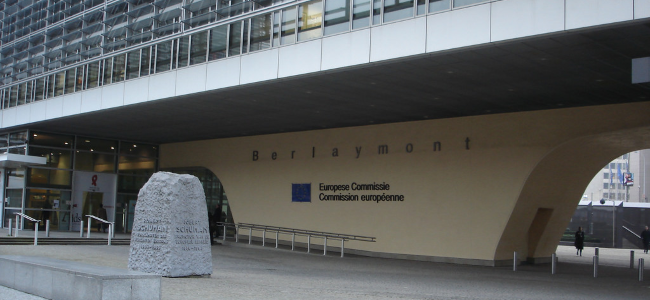
the flags at the Berlaymont

I was informed by the European Movement on threads, that the EU Council has approved talks between the EU & UK on electricity market integration and cohesion. While electricity was on the cards and was signposted in last years May Summit, the cohesion talks are a major departure. Whether this is the EU ensuring that the UK pays its way into the single market, or a genuine attempt to broaden the conversation about what the UK adopts/rejoins is to me unclear.

It may be some surprising good news, perhaps more evidence that Labour’s tanker is turning.


I was surprised at the cohesion fund announcement and so asked Gemini if the UK would be a net contributor to the fund. They suggest that it is unlikely that the UK would be able to claim from the fund as the UK’s GDP per capita is too high and its purpose is now targeted at poorer member states and not smaller localities. Gemini’s full reply is at https://share.google/aimode/R99jBkDkHT8Qd5Y2E

It seems they think the UK paying into the cohesion fund is to contribute to single market costs of joining the electricity single market. Under current rules the UK is unlikely to claim against the cohesion fund, despite having numerous European poverty areas. …

Single market, customs union and a poison pill.

Single market, customs union and a poison pill.

In an article, Starmer prepares for parliamentary battles over imminent EU ‘reset’ bill, jessicaelgot suggested that there is movement on the “red lines”. It is clearer on reading that this is an attempt to accelerate UK agreement to the currently on-going trade negotiations by increasing the powers of the relevant ministers.

The article uses the phrase swiss-style agreement which is highly unlikely to succeed and at the best is tone deaf as to the EU’s needs and wants.  

UK in a changing Europe, document what they see as the timetable and goals of the current reset negotiations.I see them as optimistic, and everyone seems to forget that the EU’s starting point is full implementation of the withdrawal agreement and Windsor framework; there remain, even 18 months after the general election, eight infringement proceedings unresolved.

It’s sort of interesting that they think they need new language, but to me, they have not yet changed their mind.

I also see this as a means by which the Government deflects the internal Labour Party pressure towards joining the Customs Union by posing, parts of, the single market as an alternative. It is disappointing to see so many seeing the Customs Union as sufficient advance, but the UK economy and people need and want membership of both, including, reciprocal, free movement of  people.

Labour should join the customs union and single market now and promise to rejoin the EU in its next election manifesto.

Various news sources, including the Brussels Times, report that EU is demanding a “poison pill” clause in further agreements, to make the cost of revoking the new treaties exorbitant. This should have been proposed by the UK side, and without it negotiations would stop.

I predict they won’t until they abandon the strategy of triangulating against reform and that will take significant personnel changes in the Government.


Image: from PIxabay, their licence …

The single market

a greek market, on a back street in the sun

The number of senior labour movement figures have argued over the Christmas break that the UK should seek to rejoin the European Union’s customs union. They leave out a call to rejoin the single market.

The customs union relates to tariffs, the single market governs common non tariff import barriers on goods & services. The single market also deals with freedom of movement of capital and labour.

I question whether joining the customs union is sufficient to deliver the increased growth that is proponents and the country seems to want.

Obviously, the single market opens the issues of free movement of people and trade sovereignty (as does the customs union). Now that it’s understood, British people seemed to want to return to the free movement and there is no national sovereignty in international trade.

I believe that the UK should join the customs union and single market now, and that Labour should put a rejoin promise in the next manifesto.

The near-fetishist concentration on in trade and economics suggests that most of our parliamentarians are not yet ready to be good citizens within the European Union. It is necessary that they change their minds, and Labour must play its part bringing this about.

The UK was and will be a better place to live within the European Union. …

The Draghi report on European competitiveness.

The Draghi report on European competitiveness.

I have been trying to get on top of whether the Draghi Report on European economic competitiveness is really a game changer. Without study it seems to be a call for more EU (as opposed to member state debt. I am of the view that within the UK, there needs to be transfer union i.e. that borrowing and wealth from London needs to be shared with other parts of the country.

I found this article from the FT, which is headlined, “Europe can learn fiscal lessons from the UK on how to achieve its goals”, and subtitled, “ A co-ordinated reform agenda is crucial if the EU is serious about becoming a climate leader and geopolitical player”, written by Draghi. On diigo, I highlighted the following lines,

The UK government has chosen to significantly raise public investment over the next five years and has adopted precise rules to ensure that borrowing is used only to fund this investment. … Moreover, in order to ensure the quality of spending, transactions will be validated by independent authorities.

To which I reply, “Of course Draghi would argue for independence. The near cultish following with which his recent comments have been greeted is based on the desire by politicians and capitalists to ensure the macroeconomic policy and regulation is outsourced to non-democratic agencies. Central bankers underestimate the ability of democracies to present a wisdom of crowds, even on investment decisions. An example of this is the EU’s horizon investment valuation process, which ranks proposals and select winners from a competition. The technocrats and democrats, particularly representative politicians also underestimate the value that citizens assemblies may bring to these decisions.

Draghi continues,

“A more efficient use of Europe’s high private savings rates requires integrating its capital markets. To redirect private investment from mature industries to more advanced sectors will hinge on completing the single market. … innovative firms in fast-growing sectors such as digital services will not be able to scale up and attract capital. And, as a result, investment will remain locked in old technologies.”

Is this true? Perez, whose theories I summarise on my blog,  argues that the declining profit of now legacy industries will ensure that investment goes to new innovative industries. Also, like most Draghi is betting on digital services as the driver; Perez’s theories suggest that IT is now reaching its stagnation stage and will be replaced although we maybe in a stage where the political power of legacy capitalism is too powerful to be overcome. This is why corporate lobbying power is so destructive to human progress. …