Are we moving closer to joining the EU? It’s been quite an eventful month, culminating in Wes Streeting’s call for the UK to join the EU’s Customs Union. This article looks at the current state of thinking of HMG on negotiations with the EU, comments on the velocity and direction of travel, contrasting the red lines vs the numerous programme adoptions, recent polling evidence that a majority of people in the UK now want to rejoin, the House of Commons vote on rejoining the customs union, and the announcement of the UK’s rejoining Erasmus+, the EU’s student exchange scheme. It concludes looking at a Guardian EB piece questioning if British Politics is fit to survive the current challenges and the Labour Party’s abysmal response.
What HMG thinks is happening.
I reported and commented on the UK hosted EU-UK Parliamentary Partnership Association meeting with a seemingly imaginative title of “The EU hokey cokey” but it seems many people are now using it to describe the UK approach. The day I watched was on trade & defence, and in reviewing the speeches of NST, the HMG Minister for Europe, and Maros Sefcovic, the EU Commissioner for Trade there is still a way to go to make further agreements, or even get back on the same page.
In my commentary, I said,
One problem is that the UK Government is behaving as if it doesn’t really care. There is no strategy and given a choice between rejecting freedom of movement, and better trade and even defence, it’s clear what this government will choose. i.e they will choose to reject freedom of movement.
I also comment that Defence and Security co-operation is going much more slowly than the UK might hope and the two parties failed to agree for the UK to join the EU’s SAFE programme the following week.
Despite HMG’s headline position of repeating the manifesto red lines at every opportunity, in reality more is happening.
Velocity and direction of travel
The “Reset”, the results of which are summarised in this EU press communique, is moving at glacial pace, yet despite the lack of headlines, we are moving closer and closer to the EU, except it seems on defence procurement where, the Government policy remains to buy American and to refuse to pay for a share of the EU’s arms budget.
I commented on the May summit, with articles on my first impressions, where I sum up the meeting as a draw and explaining the basic compromises, second thoughts where I examine the transatlantic dimension of politics as it impacts EU/UK relations and a 3rd piece where I quote a number of press sources critical of the ambition and pace of the UK Government.
UK in a Changing Europe, catalogue the negotiating structure and start dates, but the failure to secure membership of SAFE, although counter-balanced by Erasmus+ is a setback. Despite this, UKICE seem remarkably optimistic though. They forecast success in making agreements on agriculture, and electricity, and note the success on the revised fisheries agreement, to which we can add the extension of the “Adequacy” agreement. The agriculture/SPS agreements will need to address the EU’s contention that the UK has not fully implanted the Withdrawal Agreement and Windsor Framework with respect to GB/NI trade. NI remains in the EU’s single market.
However, most writers and commentators ignore, or park, the issue of the eight infringements of the treaties governing Brexit, all of which would disappear if the UK were to rejoin the single market.
UKICE also publish a tracker, which states that at the end of Q2 2025, the UK had rejoined or realigned with 25 of the EU’s programmes.
I note that the EU had to postpone the rolling over of the data adequacy agreement due to the timing of the passage of the Data (Use & Access) Act, which they needed to review due to its weakening of certain provisions, such as freedom from profiling, and the extension of the datamining exceptions. They also had questions about the increase in powers of the government.
The pace of change remains glacial, and I would argue both that the reset is failing, because mood is not enough and that the mood in continental Europe is not as good as members of the UK government seem to think it is.
I also agree with the wag that states that the May communique is a long agenda to argue about money.
Balance of class forces
Despite this set back for HMG, on Dec 8th, Peter Kellner of YouGov reported that the polled majority for rejoining the EU had grown to 8m.
Liz Webster (and others) published the results as a Sankey diagram.
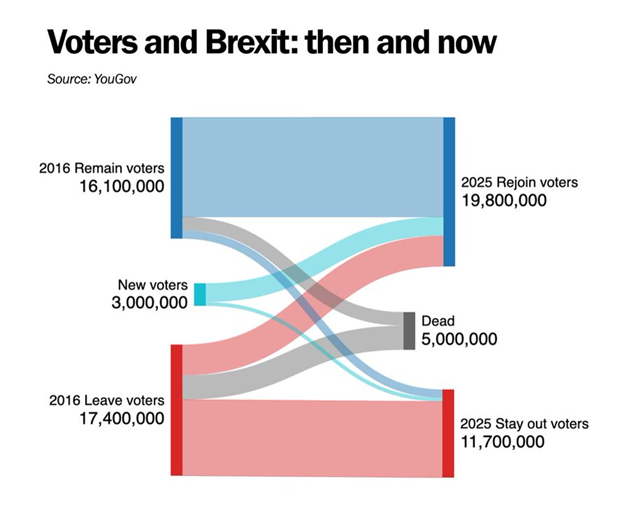
Figure 1: from https://x.com/LizWebsterSBF
The chart shows that more leavers have dies and that young people becoming voters, are overwhelmingly pro-rejoin. This confirms my second reaction to the referendum result, we just have to wait, till the old die and are replaced by their children who will vote to return if only for freedom of movement and the ability to study anywhere in the EU. My first was, wrongly, that we wouldn’t leave without a second referendum to confirm the terms.
The Customs Union Vote
A second event is that the House of Commons voted in favour, albeit by casting vote of the speaker, to mandate that the government negotiate re-entry to the European Union’s customs union. This was supported by 13 Labour MPs.
The Customs Union vote in the House is a morale booster for those of us who want to rejoin the EU, although I am not sure by how much.
Stella Creasy, the President of Labour’s Movement for Europe, seems, now, to agree and published an article in the Guardian supporting closer links with the European Union. I have selectively picked the following quotes,
History shows that simply saying we want something from Europe doesn’t make it happen. The UK can be its own worst enemy – acting as if the challenge is in us deciding our objectives and the easy part is Europe agreeing. …
… the government should approach next year’s negotiations with Europe clear that it is looking for a deal offering “more for more”, with everything up for discussion – not just because we want better trade but because, in a world shaped by Donald Trump, Vladimir Putin and Xi Jinping, Britain and Europe need each other more than ever.
The repeated efforts by Labour’s factional loyalists to the government in their refusal to articulate the demand to rejoin whether from electoral caution or a narcissistic desire for personal reputation enhancement is becoming a barrier, or in the case of many Labour MPs, cowardice.
For all the Government’s boasting, the reset is not working. Even the so-called trump card of defence co-operation is not opening doors.
While the vote on the Customs Union is very positive, both Nick Symonds-Thomas & Keir Starmer did their Thatcher impersonation, “The Lady’s not for turning” and stated that even a parliamentary vote is not enough to get them to change their minds and modify their “Red Lines”.
After the vote, Starmer announced no change in government policy and while we, in the Labour Party, are used to Labour’s leadership doing this to Labour conference, constitutionally, the Commons should be telling the government what to do not the other way round. Since the vote, the number of governments, anonymous, of course, briefings suggesting that the government, may, despite Starmer and Symonds-Thomas denials, consider joining the customs union.
It was also announced that Symonds-Thomas would now be attending Cabinet; some suggest this is an important signal in favour of movement; I am not so sure. Symonds-Thomas, unlike, say David Lammy, is a persistent repeater of the Red Lines, although perhaps like many he’ll come to realise there’s little payment of gratitude for loyalty.
Erasmus & Youth exchanges
HMG announced that the UK would be rejoining Erasmus+ from 2027. This is another significant step on the journey. It should never have been wound up; it’s absence has damaged much academic pan-european co-operation and denied ½ a generation of young people the opportunity to meet and know each other across the continent.
The EU still want a youth opportunity scheme, which at the moment, the Government are treating with the same alacrity as everything else.
The Geopolitical dimension
Another set of drivers to close relationship with the EU, is high lighted in an article in the Guardian, where in an article, signed by the editorial board, they make it clear that they believe that, given the isolationism, and commercialism of Trump’s USA, that the UK has a choice, between Europe and the USA, and that following the USA is an act of appeasement to Trump’s Maga movement and not in the interests of the UK state or its people.
This appeasement is illustrated through our defence procurement policies, the failing UK-US tech prosperity deal, the agreement on US pricing in the drugs industry, the backsliding on a digital services tax, and on the Chagos Islands.
The Guardian article is a damning indictment of Atlanticism’s hollowing out of the British state, and that the Starmer administration, firstly has now will to change this, and that the policy levers no-longer exist.
Their final paragraph,
Nostalgic appeals to “a special relationship” that no longer exists will not renew Britain. That demands a profound reimagining of the nation’s constitutional, economic and geopolitical identity. The prime minister’s response to US manoeuvres over Ukraine reveals a leader trapped within a fading order. The tragedy is not just that he cannot meet the moment, but that neither can the British state. Until the country’s politics can move on from past glories, it will continue to produce leaders who mirror the state they inherit. Even if they are dutiful and conscientious, they will still be lost.
A change is needed
On Brexit and the EU, the problem is partly because the Labour Government is pursuing a negotiation strategy of topic-by-topic agreements in which each deal must be in the UK national interest. This merely makes the cost to the European Union stunningly obvious. Limiting each agreement to a single topic makes trading the benefits and costs across a portfolio much more difficult, maybe impossible.
It also undermines the good will created towards the UK by the departure of the Tories or more accurately Johnson because it continues the approach, that we only want the bits we like and don’t want to pay for the bit we don’t, and Europe’s answer will be “Non!”.
Creasy in her Guardian article, says,
Anyone pro-European should resist talk of rejoining – not because Brexit was a good idea, but because to rejoin is, right now, an impossibility.
And yet adds,
None of this is a reason not to aim high
I shall continue to aim high, but recognise that while the popular will of the masses seems to suggest that rejoining would be popular and is wanted by a growing number of people, the route remains unclear. Much of this majority are still probably committed to the idea that the EU is and should be a trading bloc, I’d argue that the changing and dangerous state of world politics, and my own personal commitment is that it’s capable of being more than that. One of the reasons the Brexiters wanted out is that it was a democratic anchor for the UK’s politics.
In summary, I believe we need to rejoin the EU, to rejoin the Customs Union and Single Market now, and ask for a mandate at the next election. This cannot be done in good faith (or successfully) until the UK and its leadership are prepared to be good citizens of the Union and this won’t happen until the Labour Party returns to its centre of gravity and becomes part of that current.
There will remain the problem that the Labour Party and Government are enabling Reform UK. With FPTP, and four parties contending for power, a general election becomes a lottery. Reform are leading in the polls; a Reform government will stop movement towards the EU dead, and probably replace it with alignment with the alliance of the plutarchs.
My first call on my Party’s government and election planners, is to stop copying reform.
On renewing the state, maybe they should return to the Brown Commission’s proposals and look at Parliament, and proportional representation rather than focus on creating more Mayors. In my review, I argued that the UK needed a “transfer union” for local government; one of the key weaknesses of local government is that it has no money to even perform the basic functions well, let alone participate in improving people’s lives.