Is Labour about to ‘press reset’ again

a button label 'press'

I reviewed “Pressing Reset” , the recent Fabian pamphlet on the state of play within the mainstream of the Parliamentary Labour Party on relations with the EU. This was published on the Chartist Magazine’s website. I conclude that the Parliamentary Labour Party is still not ready to abandon cherry-picking, and abandon Starmer’s red lines.

In my review, I highlight Stella Creasy’s contribution where she makes a cogent argument for a Swiss style deal, made easier by the EU having recently updated the Swiss agreement. She recognises that to make progress, the UK is going to have to give something on freedom of movement. Liam Byrne makes an argument for an Economic Security Union, which he claims is definitely not just the single market renamed. It is in fact more comprehensive than the single market .  In the review, I say, “Byrne argues that a broader agenda will make agreement easier and that the UK must stop asking for favours and offer a true partnership.”. This is a contribution from a heavy weight to be welcomed.

 The final two chapters look at what’s happening in the EU. Jannike Wachowiak of UKICE writes about what the EU wants. He starts by saying that, “Brits spend an inordinate amount of time discussing what they want from the EU. They spend far less, however, pondering what the EU and its member states might want from them.”  In the review, I say, “Wachowiak argues that the consensus within the EU is that the TCA works well for them. He also argues that the EU still maintains an opposition to cherry-picking, and while there is some evidence that this is not as strong as it once was, it is clear that the EU will not agree to a better deal for an ex-member than that offered to other members and members of the EEA. Again, he argues the UK needs to put more on the table, and it needs to be what the EU and its member states want.”

As part of my conclusion, I say,

From reading the pamphlet, I have heard that some argue that we can’t rejoin, because  the EU has changed. This is true, but it seems we haven’t. We are still acting like a nation of shopkeepers, and unless we raise our ambitions, the EU is planning in further changes which will make it even harder to participate as a partner 3rd country or even as members unless we decide that membership of these programmes is more beneficial than a Scrooge-like analysis of the costs and benefits of each programme.

Also,

… the biggest disappointment in the pamphlet. If Labour doesn’t lead [opinion] and drop its red lines, the cost of Brexit will increase, and the relationship will stagnate as the EU concentrates on other things.

Jannike Wachowiak and Jude Kirton Darling’s articles make it clear that we need to put more on the table and see the EU as a coalition of values and culture rather than exclusively a trade club or a defence market.

Despite all this, starting conversations about contributing to the cohesion fund and HMG’s commitment to legislate to allow dynamic alignment are hopeful.

However, without pressure, this government may make verbal compromises with its red lines but express no desire to genuinely commit to the European Union and thus the EU may just move on, addressing the issues that are more important to them. …

On defence sovereignty

a missile being launched from underwater by AI

James Schneider is in the ‘Statesman writing on Defence. This article is published with a tag line of, “Military insiders are trying to bully the government into dependency on an erratic United States”. I comment on the his arguments, and look at views expressed by other military commentators as to the sense of the UK’s US centric procurement policies and look at Kaldor and Cooper’s paper arguing that social resilience is a defence policy too.

Schneider argues correctly, but not with originality, that expenditure targets are not a strategy. A strategy must consider purpose, weapons and their source. He points out that George Robertson, a recent critic of the financial targets, is connected to and a long time supporter of the US Military Industrial complex. While Defence Secretary, he established the now bi-partisan position that the UK would develop an expeditionary capability designed to work in the context of “allies” i.e. a US led NATO. Robertson then went on to serve as NATO’s General Secretary. His criticisms of the Labour Government’s defence policies and appetite to fund them is repeated in an article in the Spectator written by John Foreman, who was formerly Britain’s defence attaché in Moscow and before that, Britain’s defence attaché in Kyiv.

The problem is that under Trump, the US is clearly an unreliable ally to the UK & Europe.

This opinion is the major assumption in Kaldor & Cooper’s paper, Organised Irresponsibility, where they argue that the Strategic Defence Review, is based on the assumption that NATO is the cornerstone of UK defence policy and that it double down on using the US as its major supplier focusing on expensive weapon systems which have been shown to be extremely vulnerable in Ukraine.

Does the reliance in US weapons systems and infrastructure jeopardise the UK’s defence capability. Schneider questions the availability of both the F35s, used on the aircraft carriers and for European operations and that of the nuclear deterrent. Further evidence is obliquely provided by Perun, an open source intelligence commentator, in a video entitled, “Arming Europe Without US Weapons?“, where he suggests in his imaginary European military, by their omission, that the UK’s exquisite weapons are all too US dependent.

Kaldor and Cooper make two additional arguments. The first that the SDR’s arguments and the government adoption of buying more US weapons limits European Co-operation, and they sub-title their conclusion, “Welfare is Resilience”.

I was reminded at a seminar yesterday, that some defence thinkers are trying to prepare the UK for the view that modern wars are between societies and that everyone needs to contribute. The SDR recognises, and observing Ukraine’s resistance, shows that, yet again, modern wars are likely to be conducted by the whole of society. Additionally, the new cold war is conducted in the grey zone, to which the best defence is a well informed and committed society.

A country at the end of fourteen years of austerity, with a corrupt media, and a public social wage commitment the lowest in Europe is not going to support enhanced defence expenditure at the expense of increased wages and diminishing social security.  The second part of Robertson’s statement is that the welfare bill is too high and that It needs to be cut in order to fund defence; this was days before we discover that the HMG undershot its borrowing projections by £700m.

The UK can’t have an impoverished people and a well funded military, even if the current weapons procurement proposals made sense. A defence policy/strategy needs to be about purpose, then weapons and their cost. The country also needs that its population thinks its worth defending.

Social justice & equality are defence projects too. …

Only full membership works!

the flags at the Berlaymont

Rafael Behr writes a trenchant statement about the weakness of Labour's "Fix Brexit" policy. It's titled, "The Brexit delusion is dead – so now Keir Starmer doesn’t need to pretend any more" with a tag line, "To rebuild relations with Europe in a dangerous world, the prime minister needs to win big arguments, not hide behind outdated red lines".

He criticises the timidity of the manifesto, Starmer's apolitical approach to dealing with Europe, and everything really, points out that cherry-picking can never succeed and that membership is the best answer even for the economic questions.

Today's debate amongst Labour's leadership, is whether its possible to pursue a sector-by-sector negotiation without compromising the red lines. It is not! Unless the UK gets on the train, the next tranche of EU reforms will make it harder for an incrementalist approach to succeed. Furthermore the EU are not going to give better terms to an ex-member than to current or acceding states. Also the five year review is due to start, there is no reason why the EU will want to put more on the table, and Behr's eloquent statement, that the only model that truly works is membership is now obviously true, made more so by the changing geo-political circumstances. I would add, that until we begin to talk about the need for mutual social solidarity with the peoples of the European Union, again progress will be slow. 

To me, this is a great article which you should read yourself, for those short of time, I have book marked the article in diigo, and made the following notes. These can be seen overleaf, by using the "Read More" button ...

Checks and balances in Poland?

Checks and balances in Poland?

I attended the Citidem seminar, on Poland. It was addressed by Professor Maciej Kisilowski, who has authored a book/paper collecting his thoughts. The paper is called , Introduction: A Polarized Country in Need of a New Social Contract, Let’s Agree on Poland. A Case Study in Strategic Constitutional Design. The paper is available at  the University of Warsaw site.  The seminar is available on youtube.

I made a contribution, here are my notes.

Professor Kisilowski spoke of the centripetal forces in Poland and argues that to combat these forces there needs to be new foci of power. He proposes Mayors, who will also meet in a national senate. He described the mayors as guardians of the constitution which reminded me of Labour’s proposals, for a basic law, enforced by a reformed upper house,  in the Brown Commission, a topic on which I blogged, and on which little progress has been made.

The problem with populist politics is the winner take all nature of the liberal democracies and their parties. Electoral systems that reinforce the winner take all culture do not serve democracy. In elections of Presidents and Mayors, there can only be one winner which reinforces the anti-democratic tendencies of politicians and weakens ‘loser’s consent’. One counter model is found in Switzerland, but parliaments and committees can and have to negotiate in the open and often they will find more acceptable solutions from the various stakeholders second and third choice preferences. I question whether directly elected presidents and mayors are the superior democratic answer to government.

It was argued that the EU could act as a guarantor or underwriter of human rights law, although it may be that there are those who oppose human rights law, and certainly human rights laws written by foreigners. This is certainly the case in the UK. I can see a role for the EU in this role and have supported the opposition and implementation of measures that the UK parliament would have wanted or not. The EU is operating its own agenda of centralisation which if desirable needs changes in governance rules.

Within the Aquis of the EU, subsidiarity is a relationship between the Union and the States. We, the people, need that subsidiarity to become a right; and that decisions are taken as close to the people it effects as possible.

Devolution is hard to implement because it means the meaningful transfer of power. If devolution is a gift, then it can always be taken back. We can see imperfect implementations of devolution in the UK in Scotland and Wales and in Spain in Catalunya & the Basque country, but also in Italy, Belgium and Finland.

On writing this piece, I add this as a conclusion. The arguments about a new constitution and the necessary conflict resolution mechanisms raises the issue of the freezing of inter-community dialogue and the embedding of the cultural polarisation. This can be seen in a number of places in the world, including Northern Ireland, Belgium, the Lebanon and Bosnia-Herzegovina. In Northern Ireland, which I know better than the other locations, the power-sharing has led firstly to increased polarisation as the Unionists moved from Official Unionists to the DUP, and latterly, a structural inhibition on building cross-community parties.

My conclusion is that constitutions needs both flexibility and boundaries and that representative parliaments/councils are superior to presidents and mayors.


Featured Image: The Polish Sejm by Polish MFA cc-by-nd-2011 via flickr; w750 …

EU-UK reset and the electricity market

the flags at the Berlaymont

I was informed by the European Movement on threads, that the EU Council has approved talks between the EU & UK on electricity market integration and cohesion. While electricity was on the cards and was signposted in last years May Summit, the cohesion talks are a major departure. Whether this is the EU ensuring that the UK pays its way into the single market, or a genuine attempt to broaden the conversation about what the UK adopts/rejoins is to me unclear.

It may be some surprising good news, perhaps more evidence that Labour’s tanker is turning.


I was surprised at the cohesion fund announcement and so asked Gemini if the UK would be a net contributor to the fund. They suggest that it is unlikely that the UK would be able to claim from the fund as the UK’s GDP per capita is too high and its purpose is now targeted at poorer member states and not smaller localities. Gemini’s full reply is at https://share.google/aimode/R99jBkDkHT8Qd5Y2E

It seems they think the UK paying into the cohesion fund is to contribute to single market costs of joining the electricity single market. Under current rules the UK is unlikely to claim against the cohesion fund, despite having numerous European poverty areas. …

Labour’s Brexit tanker is turning

A UK flag at an EP meeting

On the Great Reset with the EU, things continue to move, if not between the EU & UK, at least inside the Labour Government.

At the end of February, the EU & UK signed a “cooperation deal on competition”. I find it hard to discover what this actually means but it gave Peter Kyle the opportunity to say that people want better, but the Government is not going very far. He is also quoted as saying that the British public are “not nostalgic” for the pre-Brexit past.

This was followed by a devastating and frank report from the House of Commons Foreign Affairs committee, published on a web page entitled, ‘UK-EU reset lacks “direction, definition and drive”’. It’s chairperson, Dame Emily Thornbury, is quoted as saying

“Sadly, we found that despite progress in some areas, the Government’s reset is languishing, suffering from a lack of direction, definition and drive. It feels as though we are on a journey with no clear destination. In many areas, the Government has failed to provide timelines, milestones, or priorities and it does not appear to have an ambitious, strategic vision for the UK’s new relationship with the EU.”

I was surprised to find, this report, of Maroš Šefčovič[1]’s speech, presumably to the March meeting of the EU-UK Parliamentary Partnership Assembly[2] where he warns that closing the Erasmus deal is in danger, because the UK won’t agree sufficiently favourable financial terms for EU students to study at UK universities. This is symptomatic of the mean spirit in which HMG is negotiating the reset with every line item to be in the black inked “national interest”. Stella Creasy MP issued a short video, stating that the real prize is signle market compliance.

To succeed the UK needs to put more on the table.

On March 16th, inews reports, echoing the Times, that Tracy Brabin, an ex-MP and West Yorkshire’s Mayor, calls for a closer, frictionless trading relationship with the EU after having participated in a trade delegation to Europe. Two days later, Sadiq Khan, Mayor of London, in an interview in Republica, reported in the Guardian calls for Labour to rejoin tha single market, and fight the next general election pledging to rejoin the EU.

Rachel Reeves returned to the City Business School to deliver the Mais lecture, the text is posted on gov.uk and it is reported in the FT, in an article entitled “Rachel Reeves to make new push for greater single-market access”. Having read the speech, this should be seen as the unique centre piece of the speech, but she certainly identifies a better relationship with the single market as a key desirable driver of growth. Reviewing what she said, she retains the rhetoric of Starmer, Simmons-Thomas & Kyle, she says,

“…  alignment should be forward looking and durable, providing the certainty that businesses on both sides need to invest and grow. … There is also a strategic imperative for deeper integration between the UK and EU – in our shared need for greater economic resilience.  So my choice, the choice of this government, is not to turn back the clock but to look towards a new and stable, future relationship. 

One of the first replies to Reeves, was Anand Menon in the New Statesman, who says,

So Rachel Reeves wants more alignment with the European Union. Or so she announced in her Mais lecture yesterday (17 March). Cue commentators here going off on one, wondering if the Brexiteers will react, whether Leave voters will be concerned. Pro-EU voices retort that public opinion has moved on since the referendum and point to the increasingly clear economic impact of Brexit. What no one does is stop to wonder what the EU might think. This, unfortunately, is how we do Brexit.

It’s an important question to ask and answer.

The following week, Chris Bryant, the UK Trade minister made a speech, also reported in the Guardian calling for more ambition, and it reports that Sefcovic says the EU are still willing to offer a “Swiss Deal”, but I suspect the EU’s redlines drawn up by the reset agreement in May 2025 will not waver. The single market four freedoms are indivisible, the Court is the final arbiter, and the UK has to co-fund its agreements.

Sir john Curtice in an article, entitled, Sir John Curtice: Why Labour’s Brexit focus has shifted from Leavers to Remainers, writes of the electoral implications which is what we i.e. Labour Europhiles have always been told is the key reason for turning their backs on the EU and the party.

Will the pursuit of a closer relationship with the EU risk courting electoral disaster by alienating Brexit-backing voters? Or has the political front line fundamentally shifted so that it now makes political sense for Labour to change tack on Brexit?

He discuss polled switchers and concludes,

So, although Labour’s vote is currently down by nine points since 2024 among those who voted Leave, it has fallen by 19 points among those who supported Remain.

Over four weeks, a number of senior labour MPs and Mayors have reopened the debate, perhaps with the fear and influence of McSweeney diminished, this explains the new loquacity but it remains economistic and nationally selfish. We need to do more, the Govt needs to put more on the table, recognise that the May 25 Reset agreement together with the 2020 treaties are the start point of any and every new agreement. In my article, Brexit: reset or stall, I stated that

The EU have ensured the current treaties are confirmed and that any entrance to the single market includes dynamic alignment, CJEU judicial authority and financial contributions, in exchange, the UK have obtained agreement that the Commission will engage in pre-legislative consultation. 

To get further politicians need to think beyond our wallets and begin to listen to our EU member allies and the solidarity, security and cultural benefits that membership of an ever closer union brings. I would also add that in debating this in the party, too many take the leadership line without recognising the number of times people have been put up to defend a line that’s already changing.


[1] The Commissioner responsible for Trade & Economic Security.

[2] I have not reviewed the documentation of this meeting as it took me by surprise unlike the December meeting. At the same/similar time, Stella Creasy has also issued a video clip arguing that the benefits of a Swiss style single market agreement are more important than customs union synergies and that the time required for complete adoption is not available and too hard. I am not sure I agree. …

“Another Europe” & Citizens takeover …

one of the conference rooms in the charlamagne bldg in Brussels

I have represented Another Europe within Citizens takeover Europe for five years and recently wrote a report on our joint work. This has been posted on the Another Europe's web site. I talked about tracking the Conference on the Future of Europe, the political denouement of CoFoE, the 2024 EP elections, the growing strength of the nationalist and far-right in the EP, citizens assemblies, the EU democracy plan and opportunities for improvement. For a lot more, read the post at Another Europe's site, for not so much, use the "Read More" button ...

Political Tech Summit 26, Berlin

on Koepenicker Str, Berlin

These are my notes from Political Tech Summit 26. I have focused on those sessions I attended. The technology support presents what looks like AI written summaries of the sessions which were mainly panel sessions. I have quoted from these summaries and in one case sought to re-summarise using another LLM. I have tried to humanise the text so that the article remains in my voice but also informs you of what happened. For more, see overleaf ...

Energy supply policy

Energy supply policy

I came across this cartoon, on linkedin, which reminded me of a comment made at a recent ORG meeting that the UK cannot be an AI powerhouse because our electricity is too expensive.

It’s also possible that this is one reason why the bitcoin miners are now all located in China.

It set me thinking, and I made this chart.

International Energy Prices 2026: Source google

The UK is expensive, and it would seem that this is true of the EU too.

The linkedin article argues that China’s energy investment has been about energy sovereignty. Perhaps its time the EU and UK governments thought about these issues. …

More on the “Reset”, progress over Xmas?

A UK flag at an EP meeting

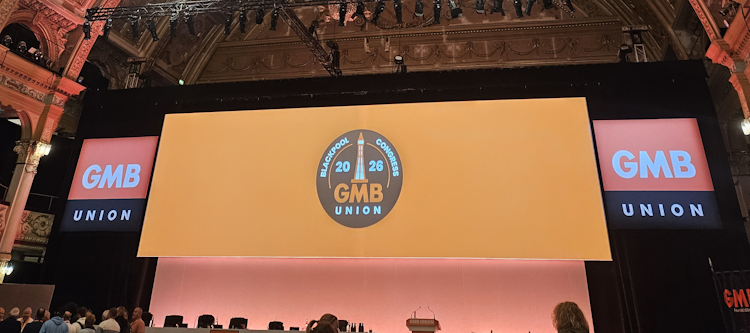
My Union branch has passed a motion for GMB Congress calling for the Labour Government to rejoin the single market and customs union now, and for the Party to ask for a mandate to rejoin at the next election. Is this needed? I am of the view that the speed of the “Reset” is glacial and that without a change in attitude they will not achieve anything of significance or notice before the end of the parliament. For the whole article, use the "Read More" button ...