Travel to the EU

Travel to the EU

I have just seen another article, this time in the Metro issuing scare stories about entry into Europe claiming that the EU is tightening up on border controls starting this year. It is, but much of this seems to be exaggerated for Britons, or should I say British Passport holders.  

As far as I can see, this autumn/winter, British passport holders will need a biometric passport to enter the EU and the EEA except Ireland where freedom of movement is guaranteed by the Good Friday agreement.  We should note that Bulgaria, Cyprus, and Romania are not in Schengen but Switzerland is it seems in Schengen, because it’s part of the single market.

The UK government have been issuing biometric passports since 2010. To be honest and from my experience at Vienna airport, this first stage will be an advantage to most people.

The second stage is to tell the EU that you intend to travel, the so called ETIAS process. This seems identical to what the USA demands today and has done for over a decade. NB the US charges $21 and lasts for two years. The EU process is new, will have to be done, and paid for, but it’s not exactly onerous and unlikely to be implemented this year. Of course, if we were in the single market, this wouldn’t apply to us and I wonder if NI passports could be exempt although documenting the passport as issued for Northern Ireland would be extremely provocative to the Unionists.

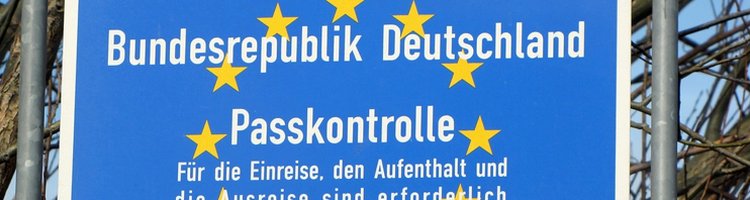
Image credit: Passport Control, BRD, by Heike Baerbel from pixabay, shrunk and cropped, reused under the Pixabay Content licence. …

Crime, memes and politics

Crime, memes and politics

Over the weekend, Labour produced what it seems we must now call a meme, associating Rishi Sunak with Tory policies of being ineffective and soft on crimes against children.  This may have been in response to some disgusting things said by Braverman who wrongly sought to associate British Pakistani men with child grooming. The meme and the sub-text have repelled a number of anti-racism, pro-migrant activists and almost certainly some ethnic minority voters if you want to see more of the debate then it’s easy enough to find.

The rest of this article, overleaf, looks at Labour's response, at similar responses in the past, and finish by examining the complexity of the issues and the expertise available to move beyond abuse and slogans. ...

Digital Transformation in Europe

Digital Transformation in Europe

I attended a conference, on the Digital Transition chapter of the CoFoE final report. This was hosted by the Estonian Human Rights centre and held in Tallinn. This article contains my notes and views of what happened. The conference invited two keynote speakers but otherwise looked at the four objectives from the COFOE final report, Chapter 6 on Digitisation, which I précised on my blog [or on Medium], in working groups.  The conference came to together in plenary to share its findings on the CoFoE proposals. My key takeaway may be that the Eastern European citizen’s legitimate fear of a censorious and surveillance state, will lead to a failure to regulate private sector players who are driven by profit, wealth and exploitation.

The article continues, overleaf. Please use the read more button if necessary ...

What did CoFoE say about digitisation?

What did CoFoE say about digitisation?

When socialising the CoFoE final outcome last summer, I didn’t look at the Digitisation chapter. I have decided to plug that gap. This is a personal summary of the Digitisation chapter of the Proposals/Outcomes of the CoFoE. The CoFoE was organised into streams and within those streams there were usually four citizen’s panels. This led to on occasion multiple proposals on the same topic, which have been collected together. In some cases, a topic is dealt with in multiple proposals and even multiple chapters.

There are four proposals in the Digitisation Chapter, they cover a right of access and use, the accrual of benefits to be shared by all, a safe, resilient, and trustworthy digital society covering cyber security, fake news, and data protection & privacy.  The issues of investment and citizen rights are covered in all four proposals.

The bulk of the article is overleaf, please use the "Read More" button ...

Starmer’s radicalism?

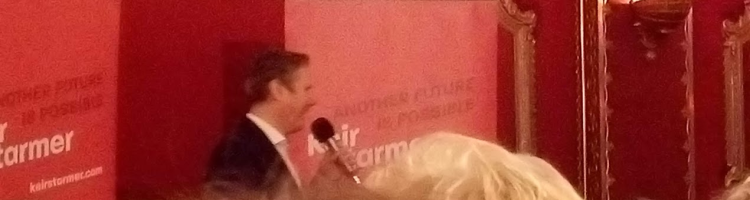
Sir Keir Starmer at the Rivoli

Will Hutton, the author of “The State we’re in” (1996), has written in the Observer, and article entitled “Ignore the detractors – Keir Starmer is a radical who can transform the country“.

I find this drastically over-optimistic; the demand expansion of £28bn over 5 years is not a lot and is less than we used to get from the EU’s Horizon. The Labour opposition, are flirting with QMT and have a dreadful view on policing, protest and a whole bunch of civil liberty issues, and that’s before we start on immigration. Even when they come close to innovative decency, such as on pre-crime, someone pulls them back. In terms of building a progressive government, it’s like Dave Allen’s journeys to Dublin, you don’t want to start from here! I look at the promises on constitutional reform, growth & energy, nationalisation and economic planning, demand management, workers’ rights and crime. … …

Scottish politics

Scottish politics

The New Statesman has a look at Scottish politics where most importantly to me Chris Deerin suggests that neither of the likely candidates to become leader of the SNP can unite the party and effectively lead Scotland and that the rapid collapse of the SNP vote is likely.

In my article, Labour & Devolution, I argued that in order to win seats in Scotland, Labour needs to address “the constitutional question” with sensitivity; it seems from this, that this may not be so. Although Andrew Marr, again in the Statesman, seems to agree with me.

It is a commonly held belief that oppositions don’t win elections, governments lose them.

Starmer and Sarwar seem to be ready to give nothing other than Union to the Scottish people and they may get away with it. …

On proposals for a British digital currency

The UK Govt have issued a consultation on how or whether to implement a Central Bank Digital Currency. I have written up my thoughts on LinkedIn & Medium and have some further notes on my wiki. I look at the arguments in favour, cite some Swedish sources, who are four years ahead of the UK, and conclude, “This is ideologically dangerous, technically complex, and a solution in search of a problem.” …

A growing authoritarianism

A growing authoritarianism

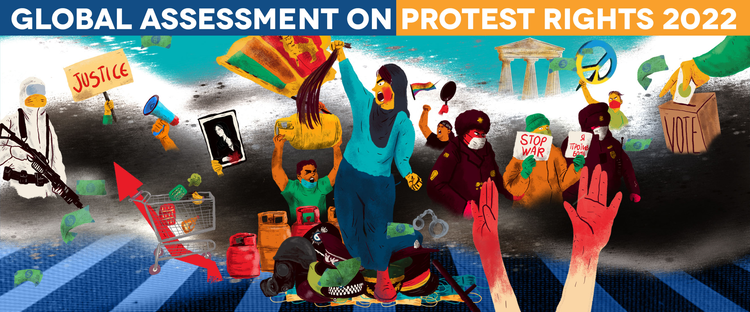
Today, the Guardian reports that Civicus, a global campaigning NGO, in its recently published monitor has downgraded the UK’s acceptance and tolerance of protest, ‘it is now classified as “obstructed” – putting it alongside countries such as Poland, South Africa and Hungary.’ Civicus classify countries as: open; narrowed; obstructed; repressed; or closed. Civicus say,

A significant deterioration in civic freedoms in the UK, particularly the right to freedom of peaceful assembly, has led to the country being downgraded from narrowed to obstructed.

I recently analysed both the Economist’s democracy index and Transparency International’s annual reviews, the former of which had the UK on a stand still. The Economist’s marking on Civil Liberties remains unchanged since 2017 with a 91% positive marking. As my article makes clear, I find this hard to justify then, and even less today as the Tory Government turns the screws on protest, judicial review and free speech. …

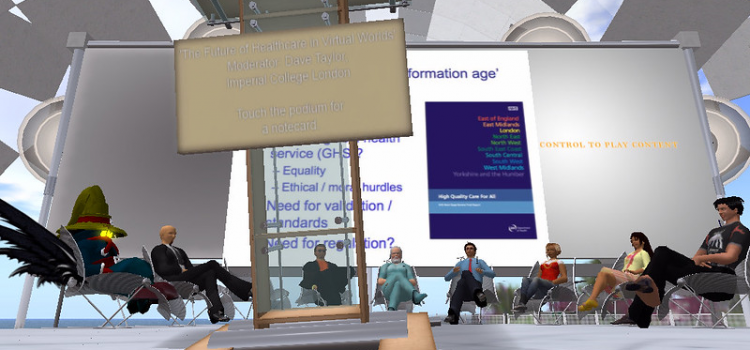
Virtual Worlds, the EU citizen’s assembly, session two, day three.

Virtual Worlds, the EU citizen’s assembly, session two, day three.

Here is my write up on Day 3; the meeting kicked off in working groups and then returned to plenary. The plenary video is indexed on their web page. This article is made from mainly contemporaneous notes, but I had to revisit the video for the final two speakers. The plenary had guest speakers and allowed some of the working groups to present their ideas. My article here does my best to tell the story of what happened. Most groups seem to have some difficulty in imagining what will change, and there is much inertia and fear on what we'll lose and whether it'll get worse and crime will grow. I am disappointed at the failure to emphasis privacy except for Renate Nikolay, from the Commission and there were some belated calls for free speech, universal access and a need to regulate and suppress fake news. There is an interesting but inconclusive discussion on how to catch up with the USA and China, and a need for education and information. Possibly the most important contribution came from Rehana Schwinninger-Ladak, one of the knowledge committee, again from the Commission who classified the problems and solutions as about people, industry and infrastructure.

The full article is overleaf, please use the "Read More" button. ...

Virtual Worlds, the EU citizen’s assembly, session two, day two.

Virtual Worlds, the EU citizen’s assembly, session two, day two.

On the second day of the EU’s citizens assembly on Virtual Worlds, I observed Working Group 6 which reconvened to further develop proposals aimed at informing the regulation and development of a digital Europe. The working group was directed to focus on the Commission’s digital principles, numbers four and five, “Fostering participation in the digital public space” & “Increasing safety, security and empowerment of individuals”. I wonder if the Commission’s short list of broad principles, is a better way of getting something on the table, rather than the detailed multi-point manifestoes that I have tried to build with others.

While the moderator tried to give the meeting some structure much of the meeting was very disjointed with citizen panel members saying what they wanted, which is their role, but rarely adding to what others say by improving or disagreeing. I believe the moderating team have created a summary to forward to the final plenary, if so they have done a better job than me.

This blog article is based on notes taken at the time, and while I have polished them and turned them into sentences, they do not tell really tell a coherent story but I hope that the combination of the wisdom of crowds and my comments, insights and lessons will be interesting

My notes and comments are below/overleaf; use the Read More button to see the full article.