Fair Pay!

Fair Pay!

The press are full of stories about Google looking to reduce the pay of those who continue to work from home as the public health restrictions are lifted. This is unjust; if there’s one lesson learnt during the pandemic it’s that essential workers are under paid, but the idea of the world’s most profitable companies trying to restore/boost their profitability by reducing the wages of their workers is, while not unexpected, pretty appalling. In the UK, this may open an employer to equal pay suits.

Google claims to be a global talent company and it would surprise me if they don’t pay the market rate for the job wherever! I know that Sun Microsystems, in its last few years came to the view that the talent market was global and set up HQ offices around the world with Labs in Grenoble and St. Petersburg and a location in India. It bit them the arse when they came to close the offices, French redundancy consultation laws are a bitch … we could do with some laws like that. (In fact a game I played with my US managers and peers, was asking which country in Europe is it hardest to fire people in, and they all thought it was Germany. The answer was in fact Italy, where the comrades went on unofficial strike. Germany was 4th, after Italy, France and the Netherlands.)

Marxists argue that employers will seek to pay the minimum wage with crudely speaking a floor of the replacement cost of the labour; they also argue that all the value is created by the labour and that it’s the appropriation of surplus value is the driver of the class struggle. Classicists argue that now that labour has transformed from animal effort, there is a supply and demand for skills and experience and there is an equilibrium grate of wages. I suppose the cost to commute vs the born cost of provisioning the workplace are factors in determining replacement cost and/or the supply curve, but they are also part of a 21st century trend of dumping cost elsewhere. Let’s note that when employees work from home, Management save the cost of office space.  Here the employer is seeking to reduce wages by clawing back the employee’s travel to work costs and also make savings by reducing its office costs.

You need a Union, see also Less money for working from home? at GMB London General X58 Branch …

Community creates value

Community creates value

Cory Doctorow comments on Games Workshop’s latest legal initiative against its fans, I chose some quotes from the article, including the allegation that they behave like sociopaths and created their IP in exactly the way they're pursuing others for. I conclude with, the probably not original statement, "Open source campaigners have always argued that community creates value, here's another battleground where it will be tested.".

The Northern Ireland Protocol

The Northern Ireland Protocol

I was originally going to write something which I hope might be profound or provoking, but in the end, this just noted more of the Govt's myopia. Northern Ireland Protocol was agreed to avoid border infrastructure on the island of Ireland. The UK Govt agreed ... Boris and the DUP blew up May's previous solution to the problem , which was to belong to the Customs Union while working out something better. I look at the 'command' paper, which is an attempt to renegotiate the Northern Ireland Protocol, part of the Withdrawal Agreement which left Northern Ireland in the EU’s customs area for the purposes of intra-Ireland trade. It looks at the EU's response. ...

Meals Ready to Eat. Not!

Meals Ready to Eat. Not!

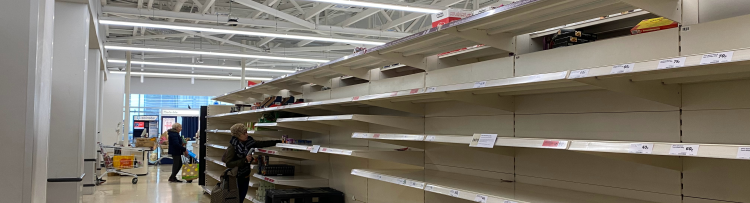
Reuters reports on a meeting between food distribution industry representatives and DEFRA. Using the Army was only one idea expressed, and it’s an indicator of the com9ing food shortage crisis created by Priti Patel & Boris Johnson’s “controlled border” policy and Brexit. One of the massive labour shortages at the moment is HGV drivers, and we can’t get the food to the supermarkets, even if we can pick it from the fields. The problem is compounded by the relatively low wages paid these people . UK PLC is failing because its low wage economy cannot get people to work for it any more.

from team voyas, via unsplash

My evidence for the coming crisis is that. in Tesco’s yesterday, there was no cabbage. and the garlic came from China. (I have grown garlic in my garden in previous years, so there is a food miles carbon cost thing here too..) …

Why inflation?

Why inflation?

Have we returned to the Phillips Curve which described a macro-economic policy choicei.e a trade off between inflation and unemployment? The Bank of England predicts an inflationary blip, and yet labour shortages in the UK seem endemic. The Govt’s policy is to constrict labour supply by restricting immigration which is increasing wage costs and effectively reducing gross national product. It’s not wages that are problem, although in many sectors they remain are too low and subsidised by in-work benefits, but a lack of workers. Time for the QMT loonies to pull their heads in, as explained by Simon Wren Lewis in his near rant on the elitist pessimism of the inflationary hawks.  …

On economic migrancy

On economic migrancy

The dirty secret that makes a non-racist immigration policy difficult is that economic migrancy is demand led. Post Brexit, we are short of farm workers, lorry drivers, hospitality workers, and health workers because they’ve gone home and aren’t allowed back in or don’t want to come because of the xenophobia. All of this is causing food shortages, price increases and reduced and delayed health delivery.

On the whole immigrants are younger and of working age; as our population ages we need more people of working age, to produce stuff, deliver services and pay for the pensions of our old and education of our children. The quid pro-quo must be that we offer them citizenship and treat them as neighbours, not to harass them using the hostile environment laws.

A further problem is that the work not being done reduces the tax income of the treasury.

Migrants and young workers pay old people’s pensions.

I salute those who made the single market and freedom of movement the centre of their opposition to Brexit; the facts on the ground today show them to be right, and this is before we consider those Brits in Europe who’ll have to give up their homes and jobs, and those people who travel to Europe for work, such as musicians and actors and others, it’s not just building workers anymore.

If it’s in our interests to welcome migrants, then there’s only one reason for behaving as our government is!

ooOOOoo

The ageing of the global north, and its funding sustainability was observed and publicised by the IMF in the paper,  “Immigrant Swan Song”. For more, from me see tag:immigration

I was thinking of linking to a video clip from “Auf Wiedersehen, Pet”, but the quality on youtube is not good and it’s probably not as funny or insightful as I remember. …

Crisis in the hospitality business

Crisis in the hospitality business

While it seems people are desperate to get back to the pub, the staff don’t seem so keen. Across the country, pubs and restaurants are having difficulty in recruiting staff. Here’s the BBC, here’s the FT and again, here’s the Manchester Evening News. Even Tim Martin, the arch Brexiteer Weatherspoons boss is complaining. This is another lesson to us about how our economy is out of kilter, essential work is not well paid!

While much of the reporting suggests a desire for a better life work balance, I wonder how much Brexit and the end of Freedom of Movement has to do with this.  …

More nonsense on Bitcoin

The Indy reports on Bailey of the Bank on Bitcoin, who warns, “Cryptocurrency has ‘no intrinsic value’ and investors will ‘lose all your money’, says Bank of England chief” I add, “Bitcoin only works because the ‘proof of work’ is so expensive and time consuming; and its also destructive of the environment due to its useless power consumption. (It’s also very slow, doing 700 TPS, that’s not enough for a business, let alone an economy.) …

It’s demand stupid

It’s demand stupid

Simon Wren Lewis tweets on the Budget, the full thread talks of macro-economic illiteracy, the need to stimulate demand and the fact that this is a budget for austerity. He writes more on his blog, mainly macro where he talks about the need to spend more on those with less savings i.e. the poorer 20% of our society because their multiplier is higher as is their need. He also repeats the Economics 101, that fiscal policy is about growth and monetary policy about inflation. I also link to Paul Mason's comment which reinforces the need to concentrate on demand.

Is there a storm coming?

Is there a storm coming?

In an article on CNBC, with an article entitled, Bank of England's Haldane warns on inflation; bond yields move higher (cnbc.com), they summarise the article, "In a recorded lecture, Haldane noted that there were both upside and downside risks to the inflation outlook, but cautioned that an inflationary “tiger” had awoken. ... Global markets have been jittery over the past week due to a spike in the U.S. 10-year Treasury yield, driven in part by rising expectations for inflation and economic growth. I review the comments and look at the basics, present some charts on employment, inflation, growth and investment and ask if this is just fear mongering by monetarists ....