Digital Transformation in Europe

Digital Transformation in Europe

I attended a conference, on the Digital Transition chapter of the CoFoE final report. This was hosted by the Estonian Human Rights centre and held in Tallinn. This article contains my notes and views of what happened. The conference invited two keynote speakers but otherwise looked at the four objectives from the COFOE final report, Chapter 6 on Digitisation, which I précised on my blog [or on Medium], in working groups.  The conference came to together in plenary to share its findings on the CoFoE proposals. My key takeaway may be that the Eastern European citizen’s legitimate fear of a censorious and surveillance state, will lead to a failure to regulate private sector players who are driven by profit, wealth and exploitation.

The article continues, overleaf. Please use the read more button if necessary ...

Horizon Europe

As the UK government sorts out the argument with EU over the border between Eire & Great Britain, rejoining Horizon Europe becomes a possibility although it seems that Rishi Sunak is not so keen. In an article on Linkedin, called “Horizon Europe, more than just cost”. I note that in the final year of Horizon the UK rresearch entities were granted €5bn. The most important point made by my article was that the value of Horizon is as much the contribution of the other partners, some of whom must be from a 2nd country. The value of Horizon to researchers is the leverage of the domestic investment as much as the grants. …

Virtual Worlds, Day 3.

On day three of the EU’s citizen’s assembly on Virtual Worlds, after a short meeting in groups, we reassembled in the plenary hall. We were introduced to a speaker panel, which they referred to as a knowledge committee which included three Belgian improv artists. The whole session is available at for review on the Commission’s streaming platform. In my article overleaf, I catalogue the EU’s definition of people’s rights and principles, briefly look at the regulatory aquis, and briefly introduce the key members of the panel of experts. I criticise the lack of emphasis on privacy & anti-fake news, and the absence of any talk of investment policies. I end by asking how the topic was chosen and if it is in fact of real relevance for tomorrow? to read the full article, please use the "Read More" button ...

Virtual Worlds, an EU citizens assembly

I have been granted Observer status to the EU’s second 2nd Generation citizens’ assembly, this is on Virtual Worlds. I felt my expertise might be useful. The first day (half day), was a plenary session, the final exercise in the afternoon was a brainstorming session in which all the invited citizens joined in. They were asked to identify the three best things and the three worst things, they have observed since 1992, the year the world wide web was invented.

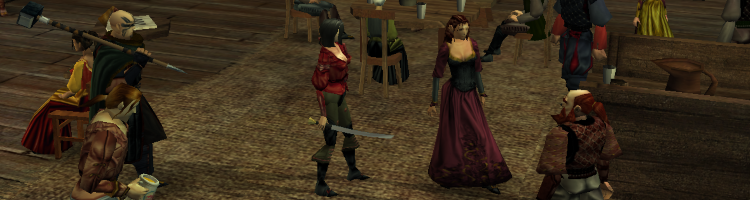
from NWN Beneath the Cobbles, made by me

I report and comment on my day below/overleaf … …

Online Safety Bill progresses into the Lords

This article is repost of a the Open Rights Group newsletter. Please look at this, it's really quite short but I am quite shocked at just how far the government plans to go, prior restraint, ministerial decrees on acceptable content, encryption breaking surveillance, and more. Please use the read more button to see what the Govt is up to and how you might help in stopping the worst of its proposals.

On WOTCs permissive licences

On WOTCs permissive licences

Earlier this year, Wizards of the Coast, the owners of Dungeons & Dragons, bought D&D Beyond, the premiere and largest web store for the rules of D&D and they are now trialling a new version of the rules called One D&D; they are also planning to release a virtual table top solution and have a new movie in production. Also recently at a Hasbro earnings call, one of their executives stated that D&D was now a lifestyle brand and was under-monetised. This has created a sense of fear amongst 3rd party creators that WOTC will revise their intellectual property sharing agreements to the detriment of themselves and non-Dungeon Master players who have been identified as under spenders. Depending on where you look, this has created a lot of noise; I think there’s a lot of fear being generated, and it interests me to consider the issues in the context of the software industry practice. I think that software industry grew the open source models and the interaction by games vendors such as Wizards with software continues to inform good & bad practice, There's more overleaf ...

Froth about the Swiss style deal with the EU

Froth about the Swiss style deal with the EU

The Times broke a story (£) on Sunday that the UK would start to seek to improve relations with the EU and seek a “Swiss style” deal with the EU. This has caused some bad reactions in the parliamentary Tory party and the detritus of the Leave campaigns, with even that political zombie, Nigel Farage, offered us his advice.

A number of so-called experts add their voices on the impracticality of a “Swiss” style deals for reasons  of the size of UK economy, the absolute lack of will by the EU to repeat the Swiss treaty model and, for some, the democratic deficit that single market membership without the right to appoint CJEU judges, MEPs, commissioners and having a seat (and veto) at the Council would entail.

Opinion both expert and popular is now of the view that the UK must rejoin the single market; even some previously silent Remainers are finding their voices.

The Government spooked by the reaction from some of their backbenchers and Brexit supporters are trying to calm the political seas. The fact is that the language of a Swiss style deal is an attempt to linguistically soften the blow to the Brexit project. The idea, based on some truth, that the Swiss have more say than the rest of the EEA countries on sovereign issues is something that the Tory advocates of the single market are seeking to persuade rump Brexiters as acceptable.

Any road to change will be via the EU-UK Trade and Co-operation agreement. We will have a single agreement, unlike the Swiss, which will be developed to include the customs union, single market and CJEU supervision of regulatory compliance.


Image Credit: from wikipedia, cropped and passed through an ‘inks’ filter originally by John Fielding CC 2012 BY-SA …

Adversarial Justice, maybe not all its cracked up to be.

Adversarial Justice, maybe not all its cracked up to be.

I am working my way slowly through “Stories of the Law“, by the Secret Barrister and came across this,

Such as whether adversarial criminal justice is all it is cracked up to be. Whether to much – truth, dignity – is sacrificed on its alter. Whether a system that does not have as its stated aim the pursuit of truth, but instead rewards the best game player in a winner-takes- ll contest, can really be said to deliver justice in a sense understood by anyone outside of legal circles. And whether, if we have abandoned –  or never even prized – truth as a guiding principle of our trials, we’re doing the gross injury to Enlightenment principles with the result that all of us – defendant , victim and society – are wronged.

The Secret Barrister

I wrote this too soon. In the following paragraph, SB, makes the argument that inquisitorial systems have one fundamental weakness

Such cases demonstrate the fallacy of assuming the state is able to neutrally seek truth as opposed to aligning on its own theory and embarking on ex post facto buttressing of that narrative. And this is a criticism often levelled inquisitorial systems by those who work within: not withstanding their oxymoronic designation as ‘neutral’ prosecutors, the prosecutor and the police may bow to natural inclinations to take a partisan position against the suspect and construct a case against him.

The flaw runs deeper than the motivations of individual investigators, however: inquisitorialism is compromised by the inherent susceptibility of the state machinery to political influence not at the level of high conspiracy, but the subtle pressures the government bring to bear on the administration of criminal justice. The ubiquitous ministerial intuition that cost savings can be made without public outcry by shearing the justice budget, cutting a few corners here and there,  has been demonstrated at length. You do not need to be modelling a tin foil hat to recognise the politicians incrementally dispense with systemic safeguards, increasing the incidence of wrongful convictions, to bank transitory credit for being ‘tough on crime’; often as a reflex to media campaigns to improve conviction rates for particular offences.

The Secret Barrister

Featured image : Richter benutzt dunkelbraun-goldenen Hammer vor weißem Hintergrund CC 2.0 Marco Vetch 2018 BY …