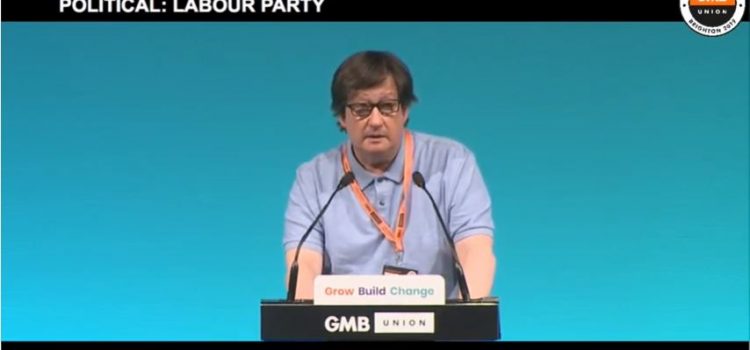
One of the key debates, at least as far as the platform was concerned was the debate on whether to freeze the subscriptions again. The CEC had made their task harder by deciding to reduce the branch capitation payments. Until earlier this year, branches by rule, retained 10% of the membership fees paid by their members. The CEC implemented a 25% cut to these payments. They proposed a special report confirming their actions and amending the rule to permit this to occur. The initial agenda had 19 motions critical either of the adjustment, or of the way it had been done and one in favour; it had seven motions calling for alternative subscription fee structures. By the time of the debate, the only survivors were the motion supporting the CEC, one removing regional committee discretion, one postponing it to later in the year and one criticising the way in which the CEC had behaved.
The article overleaf is quite long; the conclusions are that the CEC got their way but to my mind didn't tell the whole story, which they may come to regret.
I moved Motion 194, from my branch, on the Future Trade & Co-operation Agreement. This motion called for five reforms in the FTC, calling for relaxation of the agreement on freedom of movement, rejoining Horizon Europe, the mutual R&D programme, to enhance inward investment, rejoining Erasmus+ to continue youth and educational exchanges, mutual reciprocal voting agreements to allow citizens of the UK and of the EU to vote where they live, and to ease trade friction particularly in the context of the Northern Ireland Protocol. I have clipped my moving speech, and Joanne Rust's seconding speech. The CEC supported with qualification, and the motion was carried. If you use the 'read more' button, you can see the video of the debate, the words of the motion and my notes on the speech ...
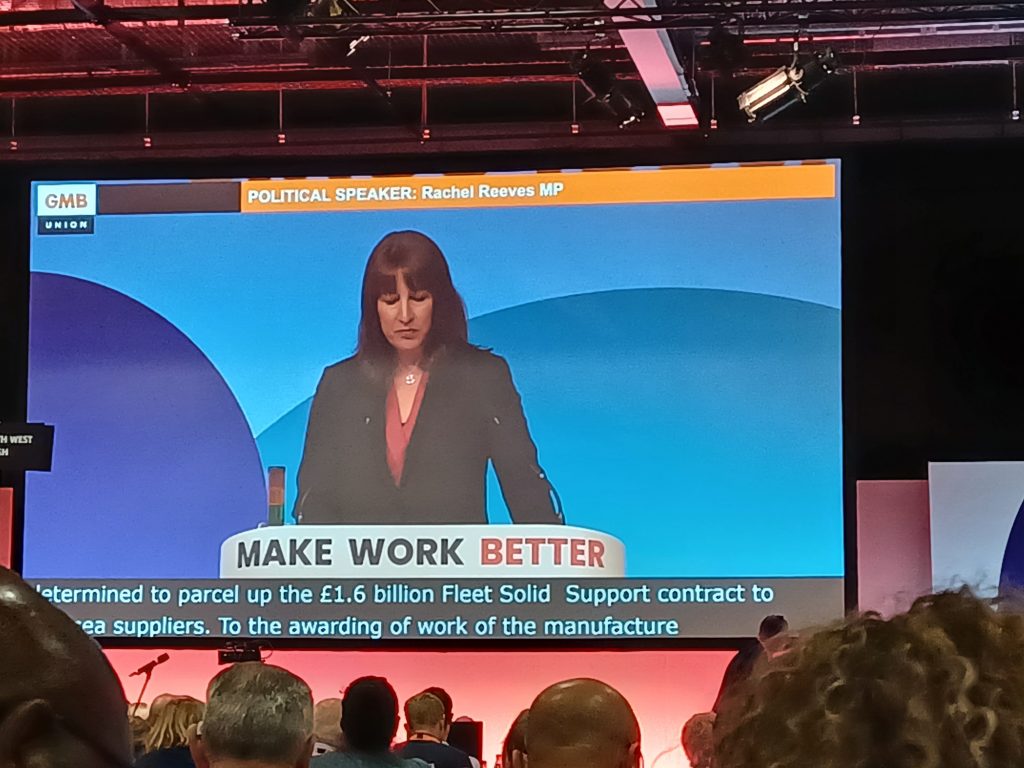
Here are my notes from Rachel Reeves speech to GMB Congress. It comes as a surprise to me that she’s a member of GMB, I thought she was in Unite, but possibly like so many MPs , she’s in more than one. The full speech and Q&A session is available online. Some of what she said, I have heard before, but interestingly she promised the biggest programme of in-sourcing in history. Some might call this nationalisation!!!
Another slogan I picked from the speech is having a buy British first policy, admittedly the options are much narrower after Brexit as so many European suppliers now choose not to sell to us because the cost of delivery is so high.
She highlighted the Tories shrinking of the UK’s gas storage capability which is one of the prime causes to the volatility of the level of prices.
Labour will increase SSP, although no targets announced. They will introduce sectoral collective bargaining, starting with social care and prohibit the use of scab agency labour.
She announced that new Infrastructure Bank will only lend on the basis of a jobs/wages contract. She will also ensure that there is a worker director on the board. This was very popular but the jobs contract is the more important promise.
There were a number of questions raised.
London Region asked a question on the WASPI women, while RR condemned the Tories for letting the problem arise, her promises to put this right were harder to find. Perhaps the question should have covered all the Tory pension theft some of which is much more hidden.
In reply to a question, she announced the end of Tebbit’s Rule, defending people’s right to make a home and the government’s duty to have a comprehensive levelling up programme which brings high pay, high skill jobs to the whole country. It’s a task when one considers that many communities in the UK are the poorest in Europe.
One delegate got the cheer of the week asking why Starmer couldn’t support the rail workers. Reeves did not answer although spoke of her own committent to the Union movement and the labour link. She was very unsure in her reply to this question. She was strong on strikes, less so on Kier on which she was silent.
It’s GMB so I have to report on the question on domestic nukes and hydrogen. We want’em, and she’ll give them to us. …
The GMB announced the results of its GS&T election, the winner was Gary Smith. He got just over 50% of the vote from three candidates. I have mirrored the results in HTML, below/overleaf. He writes another introduction in the Morning Star.
I have been in correspondence with “Make Votes Matter”. There’s more to be said, but I think it’s how we need to go; we need a House of Commons based on a proportional “Additional Member System”, like the GLA and the devolved nation assemblies. Their model motion text pasted, and they say, “… below is taken from our website. There’s some strong claims in it, so we also a one-pager of supporting evidence available here.”
Conference notes that the UK is one of only three major developed countries to use a First Past the Post voting system for general elections.
There is consensus among experts that First Past the Post has a strong right wing bias wherever it is used, leading to parliaments and governments that are on average much more right wing than the voters.
This corresponds exactly with the UK’s experience. Most votes went to parties to the left of the Conservatives in 18 of the last 19 general elections, yet the Tories have been in power for 63 per cent of this time. Instead of building a society “for the many”, this has created one of the most unequal societies in the developed world, with some of the most restrictive trade union laws.
Conference believes we need a Labour government to reshape society in the interests of workers and our communities. But it is imperative to realise that the current voting system offers no protection against later Conservative governments tearing up these hard fought gains as they have in the past. The world’s most equal and progressive societies all use forms of Proportional Representation which prevent rule by a right-wing minority and lock in the hard-won victories of their Labour movements.
Conference therefore resolves:
– To adopt a policy of opposing First Past the Post and instead supporting moves to explore, select and introduce a new voting system for the UK.
– To call for the Labour Party to do the same and to commit to including the voting system for general elections in the remit of its planned constitutional convention.
I moved this at my Union branch last night. The meeting decided to drop the second and third paragraph and to weaken the firsts resolves.
The motion will not be sent to Congress due to the 3 motion limit. We decided to send something else. …
YouGov have run a poll, on behalf of the People’s Vote Campaign asking Trade Unionists some questions about their opinions on the EU & Brexit, this was done on 20th-23rd June and it reports on the GMB, Unite & Unison, the top three by size. It makes sobering reading for Labour’s “Lexiters”, as all three samples would vote to Remain by significant margins and that ~35% would be more likely to vote Labour if it supported a 2nd referendum, with Remain on the ballot.
69% stated that they would vote remain in a referendum held tomorrow.
There was an appalling motion calling for Maduro to be deposed in Venezuela. GMB policy is to support the Venzuelan people through, in the UK, Venezuelan Solidarity Campaign. Things have changed in Venezuela and the CEC took the opportunity to recommend the motion be referred so that they can review the policy and the situation. I spoke against the motion, here is the youtube link to the start of the debate, since I think it worth publicising the speeches in favour, the other motions are then moved and there were two speeches against, I am the last speaker before the CEC. My last line was,
Our solidarity must be with people of Venezuela; regime change is both illegal and wrong, aggressive war is both illegal and wrong.
This motion does not deserve our support in any way.
I was actually quite shocked to see how few delegates supported us outside London, although a lot of people didn’t vote the first time round. I asked for count of the votes, but they asked delegates to show their votes a second time and it was clearly carried, i.e. referred to the CEC. …
I have worked as a London (or Thames Valley) white collar worker for all my working life but the GMB is strong in manufacturing and energy. We had several debates of special interest to Shipbuilding, Steel, and Energy, especially the Gas industry and there was also a motion on fracking. For more see below/overleaf.
Ships
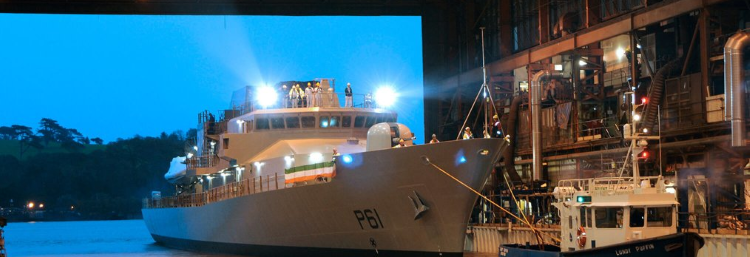
The shipbuilding motions refer to public procurement policy and reference concepts echoed in the “Just Transition” movements, about not leaving communities nor workers behind. While looking for a picture to decorate this article, I came across an article, entitled, “Another RN supplier goes under – the closure of Appledore shipyard”, which documents the impact on the community but critiques Babcock’s commercial strategy. In reading the article, it makes clear that Appledore was part of the Aircraft Carrier supply-chain and so their commissioning prolonged the life of the shipyard. GMB Congress also highlighted the failure of the Government to “Buy British” for the latest generation of Fleet auxiliary ships. I have written several articles mirroring arguments about what I consider to be the mistakes of renewing Trident and the building of the new Fleet Carriers. I think the Union needs to engage in these arguments i.e. what do we need and can they be built in multiple sites. It’s not just about how many hospitals could have been funded; what defence assets are we missing to fund the subs & carriers. The country needs to also address retraining and skills reuse. Labour’s promise of a National Education Service, with free, life-long learning available to all is an important part of keeping the UK’s skills relevant and renewing them. The debate can be found on youtube.
Steel
The fate of what remains of British Steel was also debated, and I reflected on this earlier this month on this blog. A motion had been submitted to Congress over the winter, again calling for a “Buy British First” policy and this was supplemented by an Emergency Motion calling for the Scunthorpe Steel Works to remain open. [Video of the moving, in several ways, speech]
Nothing was mentioned about the Government’s handling of tariffs. (A mistake I would have thought).
Gas
The future of the Gas industry was debated via Composite 15.
While in entering the debate, I assumed that I’d have a problem with the GMB position as too often Unions take a no change position, the composite is well argued and highlights certain critical facts, although not others. (Electricity cannot be stored at scale, Gas can, electricity leaks over the grid. Hydrogen is not a fossil fuel.) The science of innovation with respect to the use of Hydrogen has not been documented either by the GMB branches nor by Friends of the Earth. (I am trying to chase it down; I have written to SGN who had a stand in the exhibition space.) There’s no question that if Momentum and Friends of the Earth get their motion to Labour Conference, the Just Transition Unions will vote it down, unless they compromise on Gas & Nuclear. The GMB motions states that there is scientific consensus that gas heating in the home is part of a transition to a carbon neutral economy.
I think we need a better understanding of the science.
Just before lunch, Congress heard from Leroy Rosenior from Show Racism the Red Card; this is fabulous, click on the picture to go to the GMB Video channel.
This has been backdated to (roughly) the time of the event. …
This website uses cookies to improve your experience. We'll assume you're ok with this, but you can opt-out if you wish.AcceptRead More
Privacy & Cookies Policy
Privacy Overview
This website uses cookies to improve your experience while you navigate through the website. Out of these, the cookies that are categorized as necessary are stored on your browser as they are essential for the working of basic functionalities of the website. We also use third-party cookies that help us analyze and understand how you use this website. These cookies will be stored in your browser only with your consent. You also have the option to opt-out of these cookies. But opting out of some of these cookies may affect your browsing experience.
Necessary cookies are absolutely essential for the website to function properly. This category only includes cookies that ensures basic functionalities and security features of the website. These cookies do not store any personal information.
Any cookies that may not be particularly necessary for the website to function and is used specifically to collect user personal data via analytics, ads, other embedded contents are termed as non-necessary cookies. It is mandatory to procure user consent prior to running these cookies on your website.