Is winning in Makerfield a new dawn for Labour, or just that this time, voters chose Labour as the “Not Farage” candidate. Since they won in Runcorn & Helsby, Reform have failed in Caerphilly, Gorton and Denton, and now Makerfield, losing to Plaid Cymru, the Greens and now to Labour. It was a great victory for Burnham and Labour, but the question has to be asked together with has Labour learnt the lesson that to fight Reform, you need to fight it. (I think not!)
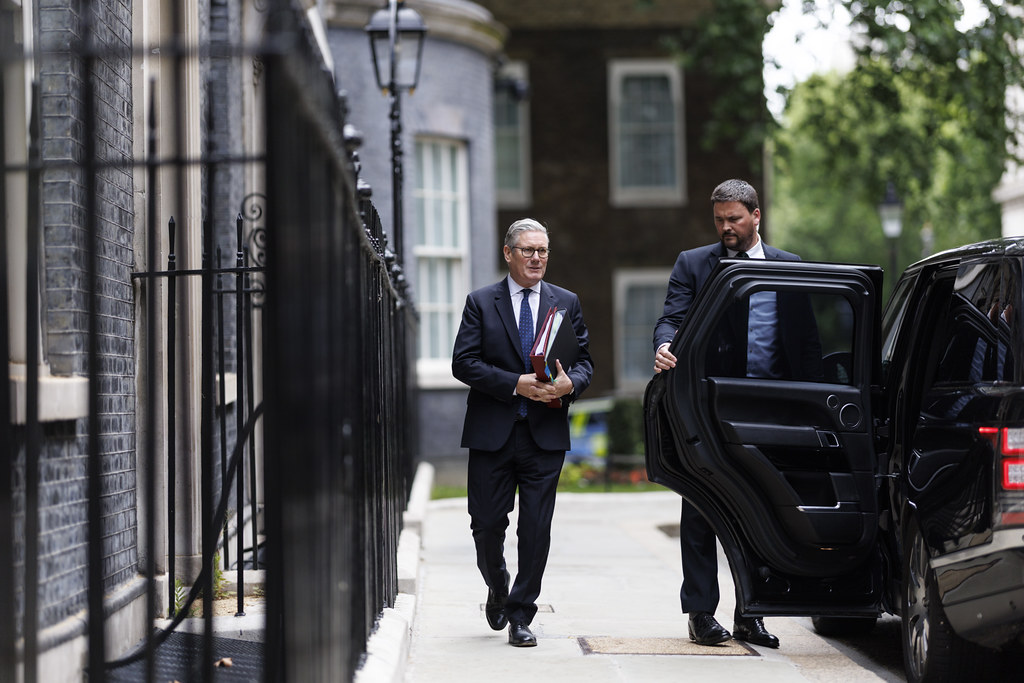
Having returned to the House of Commons, Burnham has forced Keir Starmer to resign and a time table for a Party leadership election has been declared.
Much has been written about why he had to go; I have been calling for it since February when the likely defeats in Scotland and Wales became obvious. On the day, Labour also lost three more London Councils.
Starmer’s resignation speech starts in the same way as his election campaign to be leader of the Labour Party, with lies. When Starmer inherited the Labour Party, it was in the strongest financial position it had been for decades and anyone who has closely read the Forde report and the EHRC report knows there is still work to do to eliminate racism from the Labour Party. The focus on macroeconomic statistics repeats the mistakes that Biden made. While I do not subscribe to the meme that “perception is reality”, perhaps it is truer in politics than in engineering. Claiming the credit for growth doesn’t work if income equality remains at the current miserable level and if the growth in the economy goes into the pockets of a few. If people don’t feel better off, then it’s pointless claiming they should. It’s also difficult to understand, how Starmer can claim credit for the abolition of the two child benefit cap when he initially suspended seven MPs for voting for that abolition.
Much has been written about Starmer’s weaknesses as a politician and Prime Minister. For a lot more words you can check out Jonathan Freedland in the Guardian, who focuses on personality and the politics of Downing St., and fails to mention Gaza and the Middle East, and alternatively, Phil Burton Cartledge, who does mention them, together with the dishonesty of his mandate within the Party. Phil also repeats his accusation that Starmer and McSweeney deliberately sought to break up Corbyn’s electoral coalition.
Although some would seek to claim he’s been good on the world stage; this does need to be contrasted with his speeches and actions on Gaza, which is one of the primary causes for Labour’s loss of political support. Labour started the general election campaign with a poll score of 44%, finished with a vote of 34% which has since collapsed to a score in the high teens.
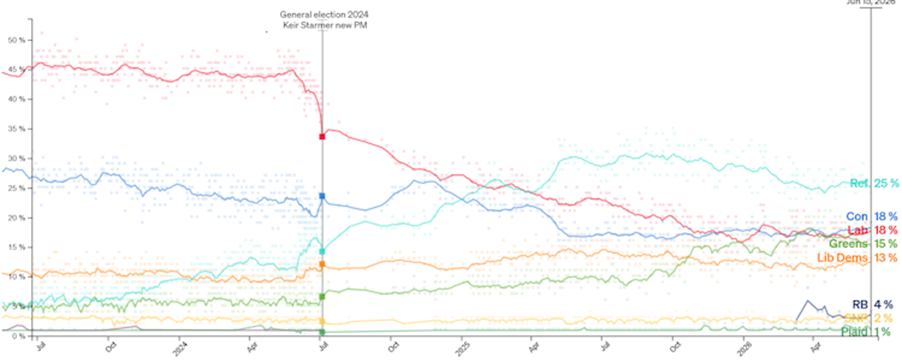
It is expected that Burnham will be crowned as Labour’s new leader. If so he will be beholden to the fixers and not the membership and his retreats from his beliefs in order to win Makerfield are worrying because Labour and the country need a change of direction not a change of personnel.
The new leader also needs to turn Labour’s democracy back on. It is clear from the ending of Blair’s New Labour government that this Government and Labour leadership have run out intellectual steam; the Party needs debate and new ideas to sustain its relevance and energy. We can also see by observing the last two years of the PLP what happens when MPs fear their whip more than their members and voters.
Clive Lewis, in an article entitled, ‘After Burnham’s Win in Makerfield, the Answer Cannot be Managerial Politics with a Different Accent’, speaks for me, when he says,
“Climate breakdown, war, energy insecurity, financial shocks, technological upheaval, and democratic decay are here. They will not wait for Labour to finish its management seminar.”