Labour’s Programme

Labour’s Programme

Sadly, I know the rules well and was asked about how to get policy into the manifesto or create binding policy on the Party’s leadership. Labour’s Rules (C1.V) state that all policies carried at Conference by a 2/3rds majority must go into the programme, and the manifesto can only contain policies from the programme. These rules seem to have been forgotten for quite a while. The control of who can call card votes, is another means by which the rights of members are being suppressed. Not all policy motions get to go to card votes, even if the hand vote is overwhelming. And so they may not get into the programme, not that it matters too much as I don’t think they maintain the document anymore and it takes them 7 months to release the rules, imagine how long it would take to release a programme. The rules in question are in C1.V Party Programme, and can be found, overleaf/below ...

Reeves on Macro-economics

Reeves on Macro-economics

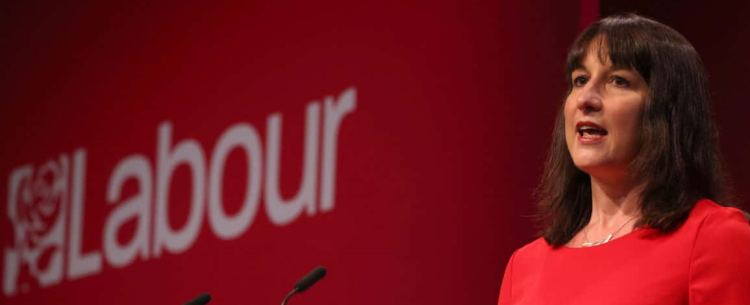
It came as a shock that she spoke for an hour, given that delegates who might want to oppose her, only got 1 minute. I summarise the speech here, as much of it was just political ballast, although sometimes you need to build a justification for what we do.

She started with a litany of Tory failures, and repeated the lessons that we can, post-pandemic, clearly see who are the essential workers in our economy and see how poorly they’re paid. She noted Angela Rayner’s announcement of a series of welcome protections and improvements to the social wage and employment protection law and segued to the need for an effective economy that works for all of us.

She started with a litany of Tory failures, and repeated the lessons that we can, post-pandemic, clearly see who are the essential workers in our economy and see how poorly they’re paid. She noted Angela Rayner’s announcement of a series of welcome protections and improvements to the social wage and employment protection law and segued to the need for an effective economy that works for all of us.

I say more overleaf, where I mildly praise the good bits, and critique the missing bits.

Stiff triggers

Stiff triggers

The Party voted to reverse the 2018 trigger ballot reform which had reduced the threshold required to force a reselection ballot to ⅓ of the membership branches or ⅓ of the Affiliates; now it’s ½ of the membership branches and ½ the Affiliates. While in our CLP, all seven branches voted to confirm Vicky Foxcroft as our candidate, there are only seven membership branches, there are over 20 affiliates and we’re arguing about several more. In any seat with a reasonable number of affiliates, it is now those affiliates that decide if an MP needs to be face the membership.

We had been treated to a speech from Shabana Mahmood, claiming that trigger ballots were a distraction from campaigining, but no-one mentioned the failure to trigger Hooey, Danczuk, or Mann, who at the end of their service had ceased to be supporters of the Labour Party, nor of Keith Vaz who had been under investigation since 2009 and yet had been confirmed by the trigger ballots and allowed to run as Labour candidates. In my article, “The Magnificent 7, not!“, I note that Labour lost 15 MPs during the 2017/19 parliament, six of them due to unacceptable behaviour and the other eight through a loss of commitment to the Labour Party. (Of the six, two were new MPs in 2017, yet four had survived trigger ballots although in 2017, there were none, and not all MPs went through the trigger process in 2019. )

Why do we permit the corrupt and foolish to stand & restand? If we make it harder to lose a trigger, the NEC is going to have to look harder at the records of those who ask to remain in place; as it seems they do for Councillors.

It’s fortunate indeed that Conference passed a rule change to mandate selection processes involving the CLPs in the case of by-elections and snap elections. We’ll see if it survives the tyrannical trifecta of Starmer’s NEC. …

Not a panacea

Comrade Cummins explains why Community Wealth Building via procurement is not a panacea. He also shows how to steal more time from the Chair; he was only due a minute, which is an act of contempt to delegates. What can you say in one minute, particu7oalry if you wish to oppose a motion, and how much time does the NEC get to speak? And the shadow cabinet? Unite report on the speech here The video is below/overleaf ...

Some hope from the polls

Some hope from the polls

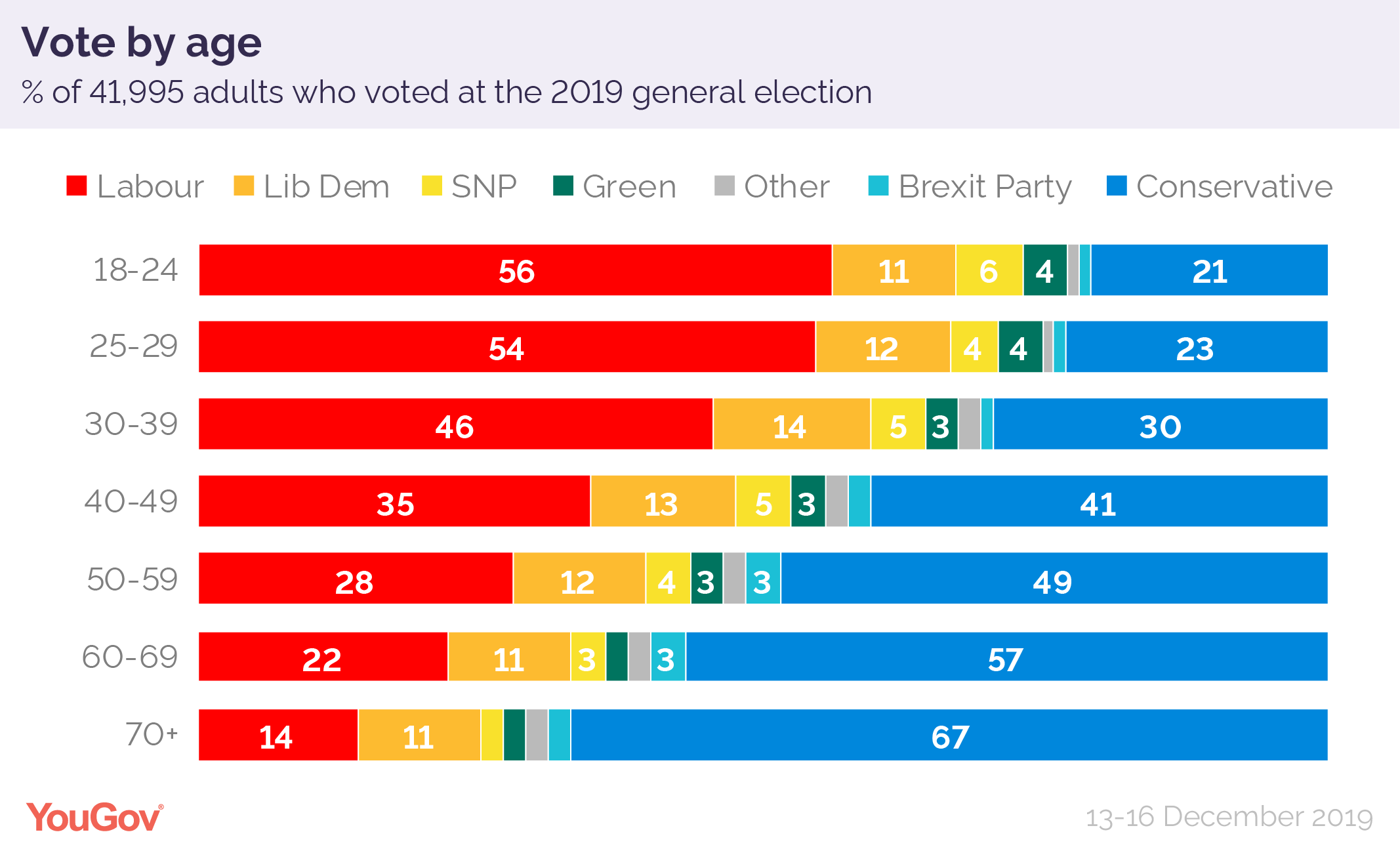
It would seem the polls are narrowing, with yougov reporting a Labour lead. I held off commenting because sometimes a single poll is rogue. The politco poll tracker reports the Tories on 38% and Labour up to 35%. The Tories have lost 5% (percentage points) since May and Labour are up 2%. Is this real and sustainable. Maybe! The Tories have adopted three policies that affect their base. Now that age is the key determinant of how people vote, it seems to be on par with hitting yourself in the nuts. Read more ...

Fit for the Future

Fit for the Future

There's been a lot of words caused by Labour in Communication's publishing of their report Fit for the Future. This was covered by Labour List, who majored on Neil Kinnock, who wrote a forward and gave an interview. Much of the press and labour party comment followed this lead and talk about the ongoing purge which Kinnock, surprisingly, suggests is a distraction. The usual culprits are banging on about the unacceptability of legacy Blairite politics and how Kinnock lost the next two elections after he expelled the Militant. This is not helpful and suggest that the report has not been read. I precis the interesting bits and quote some other commentators. I think it's too long but more helpful than some might think. ...

Software Piracy and supply

Software Piracy and supply

This is interesting. From the Register, an article called, “Software piracy pushes companies to be more competitive, study claims • The Register“, sub-titled, irreverently as ever, “So, do copy that floppy?”

The article is written by, Wendy Bradley, assistant professor of strategy, entrepreneurship, and business economics at Southern Methodist University’s Cox School of Business, and Julian Kolev, an economist at the United States Patent and Trademark Office. The article describes their methodology, and links to their paper. They define the launching of Bittorent as a shock and examine the intellectual property development of vulnerable companies to that shock.

“When comparing the IP strategies of software firms at risk of piracy (the treatment group) against those of not-at-risk firms (the control group), we find that our treatment group significantly increases its innovative activity after the piracy shock in terms of R&D expenditures and granted copyright, trademark, and patent applications,”

Bradley & Kolev – Software Piracy and IP Management Practices: Strategic Responses to Product-Market Imitation (August 2021)

Interestingly it seems, that Entertainment software companies behave differently. although the academic work done, as quoted in the article does not suggest that piracy reduces the supply of content.

Basically the big software firms use their superior cost structures, achieved by size and source code ownership to increase the rate of innovation to keep their customers coming to them. The entertainment companies don’t. I don’t think they look at the size and cost of investment into regulatory barriers to entry, both buying the laws they want, and pursuing newly created malefactors.


Bradley, Wendy and Kolev, Julian, Software Piracy and IP Management Practices: Strategic Responses to Product-Market Imitation (August 2021). USPTO Economic Working Paper No. 2021-3, Available at SSRN: https://ssrn.com/abstract=3912074 or http://dx.doi.org/10.2139/ssrn.3912074 …

Competent Business

Competent Business

I hope I get my act together and do the reading or writing for something on ‘shortages’, Citizens take over Europe‘, economics, immigration, union democracy or UK defence policy. But meanwhile here’s a piece on the Labour Party rules and competent business.

I was asked, but not personally, and I paraphrase, “Are motions on the current round of proscriptions and auto-exclusions ‘competent business’ for CLPs?”

I have not read the motions in question and it’s possible to write one that is not competent.

I think that arguing that the proscription process, the criteria defining ‘support’, the members of the list of proscribed organisations, their swapping the disciplinary route from C6/NCC to 2.I.4.B, their prosecution for events that took place before the proscriptions decision, their failure to notify members of the change of rules are wrong, is legitimate business. (You can probably add to this list.)

I think there is an argument that auto-exclusion under Rule 2.I.4.B is not a disciplinary process.

Formby’s ban on discussing disciplinary cases was based the powers in 1.VIII.3.A.iv & 6.I.1.D both of which state that the decisions of the NEC or NCC shall be final but only if the process defined by those rules is engaged. As should be obvious, the decision to auto-exclude means that the NEC & NCC do not take decisions and so these protections for the decisions no longer apply. 2.I.4.B does not provide the “finality” protection to the decision. I would also argue that switching a prosecution track from one route to another is contrary to natural justice as is backdating the date of the events leading to prosecution.

Overall the prohibitions cover individual disciplinary cases, because they belong to other bodies, challenging the EHRC report, challenging legal settlements associated with court supervised apologies, and there’s a form of words stating that CLP leaderships have a duty to “… [create] an open and welcoming environment for people of all communities and backgrounds”. ( I need to find a reference for this last bit, and there is a more explicit guidance as to meaning of this last prohibition but it’s not on the internet nor afaik on the LP’s web site.)

To answer the author’s question, CLP leaderships will get into trouble for ignoring region or GLU advice, or acting in bad faith. If in doubt ask them, but bear in mind your members right to write and move a motion, it’s protected by their rights to freedom of speech and doubly so if the motion is proposed as conference motion.  …