A question

To Labour’s Leadership/Deputy Leadership candidates: What confidence can you give us that you will put a stop to the toxic culture of bullying & slander that comes from many parts of the factional disputes, often covered up, as shown most dramatically by Bex Bailey, by Labour Party full-timers, who in some cases act with impunity in breach of the law and the rules? …

The Trade Union Gateway

Sadly, Clive Lewis didn’t make it onto the Labour Leadership ballot paper, and we move onto the next stage. The candidates now need support from the affiliates or from 33 CLPs.

The affiliates rule is,

At least 3 affiliates (at least 2 of which shall be trade union affiliates) compromising 5 per cent of affiliated membership

Some of them, LIsa Nandy, Emily Thornbury and Jess Phillips, I am talking about you, will have some difficulty reaching this threshold, there are now only 12 Unions affiliated, six of which are above 5%. …

Accepting or rejecting Labour’s members

It’s that time again, people are scrutinising applications to join the Labour Party in great detail. I was asked my advice, and wrote and posted this. I am strongly of the view that we should on the whole take people at face value and believe them if they state they’ve changed their mind. I think we are all agreed that expulsions and exclusions should only be used in exceptional cases; they must not become a tactic of member management as was sought to be done in 2015/2016. Before you read the bollocks below/overleaf, if you want to join the Labour Party, you can do so here. The rest of this article looks at Labour’s membership rules; there are two ways of being expelled from the LP and one way in which membership can be denied. …

What happened?

What happened?

So what happened? Where does it leave me and my allies? I have been doing a lot of reading much of which I have bookmarked on my diigo feed, tagged GE2019. I wanted to write something deep, insightful and original, but others got there first. The result has two highlights, the loss of seats in the East Midands, North East, East Coast, primarily leave seats, primarily seats that have voted Labour forever but secondly an overall loss of votes to “Remain” parties. Labour’s so-called Lexiters were quick out the gate blaming Labour’s promise for a second referendum as the core cause of the loss of these seats. Reality requires a deeper look; it also requires the recognition that some of those seats will have been lost because remain supporting labour voters chose to vote elsewhere. Would the result have been better or worse if we had not promised the second referendum? How many of these seats did we lose by less than the Green/LibDem vote? How many of the seats in the Leave voting majorities that we held, might we have lost if remain supporters had been less committed to us? It could have been worse! For a more detailed insight I need to wait for the Electoral Commission spreadsheet. I say more below/overleaf …  …

Lies, damn lies and …

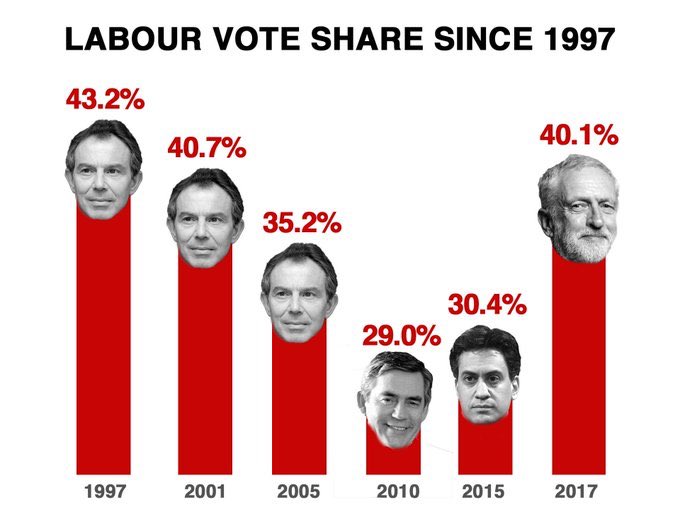
This time it’s about voter share but it reminds me of a debate I had about the quote in the title. We felt the and was actually an OR, Another piece of post election analysis that can’t wait. There is a chart being circulated showing Labour’s vote share with the startling result of 2017 as it’s last data point. This makes it pretty useless. They also commit the error of not publishing the complete vertical axis, which has the effect of exaggerating the visual differences and then it seems extend the charts using faces. Anyway, here’s my version …

We should remember that 1992 is 25 years ago, another generation. Without the 1992 data point the argument that 2017 is the anomaly in a declining labour vote is more compelling.

Here’s the meme I am critiquing.

 …

Free and fast broadband; it wasn’t to be.

Free and fast broadband; it wasn’t to be.

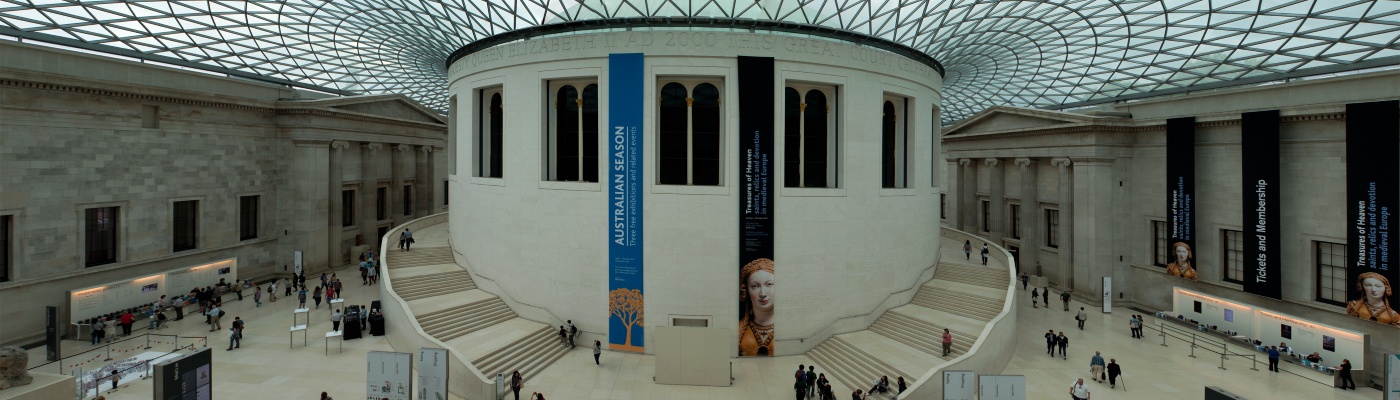
It’s time for me to consider the election results; I think in terms of ideas I am set back four years  but in this blog article I want to look at Labour’s manifesto for the Arts, callled a Charter for the Arts. One of the criticisms that being made of the campaign is that unlike 2017, the manifesto was not seen as signpost for better times. It was seen as a classic shopping list to bribe a winning coalition, and constructed without thought or knowledge of how to pay for it. The promises need to be bound into a single promise, and the details need to be the result of debate and consensus in the Party. Much, including the Arts manifesto seemed to be an after thought, an insight underlined by it’s late publication.

Policy for creative industries has not been debated at Conference in my memory, and the NPF reports have been weak although the 2017 manifesto played with ideas around the “value gap“; this document does not repeat this. Corbyn’s introduction is radical, as you would expect, establishing Art as the property of and the right of all.

The manifesto promises to defend and extend free access to museums and art galleries, invest in diversity in the arts, ensure lottery money is fairly distributed, that schools are invested in to support the arts, and possibly most radically, but equally unprepared, promised free broad band for all.

The decades old commitment to free access to museums and libraries, the productive macroeconomic arguments and the failure of the market to deliver nationwide fast broadband are all good reasons to make this promise but we allowed it to hang on the question, “Why free? We don’t do it for water!” and I don’t have an answer to that. (Although we do it for museums, galleries and libraries). …