Parliament considers Syria

They have been debating the Syria bombing in the House of Commons over the last two days. This is Parliament’s page on the 2nd day of debates which is based on a motion put by Alice McGovern MP (Labour). Jeremy Corbyn instructed Labour to vote against, spoke against it and the debate is recorded in Hansard here, together with the voting record. The previous day, the Prime Minister made a statement to the house, the web page with links to the video and Hansard record is here…. I watched a couple of hours; it’s dispiriting stuff, the PM makes every other speech, and half the remainder are Tories and Labour’s Refusniks were out in force.

Here’s how the argument goes, the use of chemical weapons is a humanitarian crime, despite the fact that the two organisations responsible had not determined that such an attack had taken place, nor that military force was to be used, the Governments of the USA, France & the UK had decided that bombing targets in Syria was an appropriate & legal response.

Only the British Government has published its legal reasoning. They argue that Sovereigns have the right to make humanitarian interventions without permission from the UN. That would require the act of a chemical attack to have occurred and the western power’s action to have reduced the likelihood of further attacks.

The right to make such humanitarian interventions is controversial and has never been agreed by the UN nor any international court. The attack has not been confirmed by the international body designated as responsible, and it’s highly questionable if the actions will improve the lot of the Syrian people. This is why the claim to have degraded the chemical warfare capability of the Syrian Government is so important. Otherwise its just recreational!

The argument that the UN had failed to act because Russia was cheating does not give the Governments of the USA, UK & France the right to substitute their judgement for that of the Security Council. As Dapo Akande argues in his legal opinion for Tom Watson, if nothing else there’s always the UN’s Uniting for Peace process which is designed to deal with a deadlocked Security Council. The UN flawed as it is, is our only hope. The three governments have weakened its authority. A further option was as Corbyn says, to support the OPCW and continue to pressurise Russia by diplomatic means. …

And they did it.

In the early hours of yesterday morning, the armed forces of US, UK & France bombed three Syrian Government sites. 😪

In the UK, there has and will be much comment on the Prime Minister’s lack of mandate both from the UN and from the UK Parliament. …

Some more on Syria

This is the first time I have missed storify, I used it to capture inspirations for blogs but here’s a couple of things you might like to read on whether to bomb Syria. It seems that my cautious, only if legal line has some controversy amongst some friends.

The Guardian has some letters and comments in an article called “Syria, the west’s response and international law“, they report the Government’s response in calling for a robust response to Syria’s chemical weapons attack, which is also reported by the BBC

Corbyn has commented, arguing for a UN led approach.

And the Canary reports on a lawyer’s round robin published at Radio Free, which is interesting because it so clearly states the law.

I also found this, “When it comes to Middle East policy, the UK is nothing but a rogue state“, which, details a number of failings of the UK to honour it’s international legal commitments, from sanctions busting, to illegal weapons supply, and the use of “advisors” in war zones.

I also looked up what the UK did and thought over Gulf War II, and found this, this & this. While some are less clear than others, the following quote is from the Radio Free article

… military strikes by the United States of America and its allies against the Syrian Arab Republic, unless conducted in self-defense or with United Nations Security Council approval, are illegal …

must be central to what limits decent people. …

Bombs away again

Bombs away again

Here we go again! What more do the warmongers want us to do in Syria? The RAF is already participating in the “coalition air intervention”. In 1944, the victorious powers of the 2nd World War created the United Nations, criminalised aggressive war and authorised the UN to determine if, when & how collective military action was required. The UN will not authorise revenge or punishment bombing raids, even if only the Russian veto stops it. The bellicose language used by Trump and the threatened Russian reaction are frightening. Our government should be arguing for restraint and the application of international law not colluding with this disaster. …

Failing flanks and the new centrism

The Guardian recycles the story about forming a new centrist party and much of the comment is about whether this will damage Labour as the formation of the SDP did in the 1980’s. I wonder? One of Blair’s successes was picking up on the fact that the Tories had lost the trust of business. We are today in a world where British capital is losing faith in the Tories ability to represent them. The Tories, when they think about it at all, rather than their game of thrones, seem to think that the dilettante capitalism of the hedge funds, rentiers and speculators is all that counts. One can assume that this pro-capitalist force in society cannot see how to make an accommodation with Corbyn’s Labour but it’s their loss of faith that the Tories can give them what they need that is driving this. …

Soft-Brexit?

I had dinner with an old friend last night, and one of the topics of conversation was Brexit, he’s of the view that the Government will negotiate a transition period which will be like the EEA and close a deal during the transition either the same or maybe like Ukraine’s. In this case, we may well then decide we want to re-join once we know what the final deal is like and they reckon the EU will let us back in. We’d probably lose the rebate, immunity from the Euro and being outside Schengen. …

Losing one’s way

Over the last few days, the Guardian has broken the story of the illegal use of personal data in the US 2016 general election. We are now waiting for the trail to come back to UK politics, in particular, the use of Cambridge Analytica (or one of its associates) by the alliance of Leave organisations. The data was stolen, well acquired, from Facebook, but it seems they knew for two years and there is some argument as to their corporate complicity. Their Chief Information Security Officer has been on the way out since the end of last year and some stories suggest it’s because he argued for greater openness in co-operating with the enquiries into Russian state sourced fake news.

Citizens, their representatives and law makers have been arguing that IT companies should have a duty to report security breaches to law enforcement and the EU is introducing such a law now; such Laws exist in California which is where Facebook is headquartered. We should also note that their duty to protect their users personal data is governed by the US privacy laws, the now defunct EU Safe Harbour agreement and its successor, the Privacy Shield. In addition, the US signed up to the 7 Principles of Data Potection when first declared by the OECD.  It is a fact however, that many US business executives (and their employees) consider the European Data Protection laws as non-tariff import barriers, not that this should matter but I have no doubt that considerable time has been spent in determining where the line between legality and illegal activity stands.

There are several factors in the US political culture which often makes it hard for the US to obey foreign laws (and their own), one of them being, that they often have difficulty in legitimising their own laws and law enforcement.

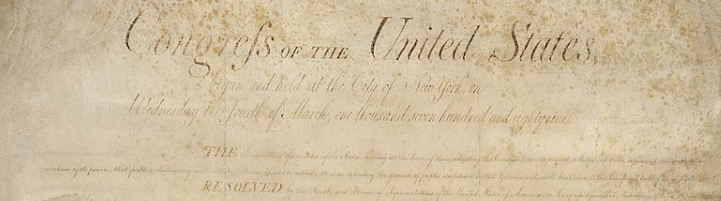
This is, to me, summarised in the 10th Amendment, one of the Bill of Rights amendments to the US Constitution.

The powers not delegated to the United States by the Constitution, nor prohibited by it to the States, are reserved to the States respectively, or to the people.

There is a beauty to the sentiment and an economy to the words, but they are a fundamental challenge to the rule of law. (Is this a bit extreme?) The Citizen’s United ruling, which upheld the citizen’s free speech rights for an association, can be taken to mean that corporations have citizenship rights. US Laws are hard to make and often Laws re challenged in court often to the Supreme Court asking for laws to be struck down as unconstitutional. The upshot of all this is that politicaly citizens can take a view on whether a law is legal in the knowledge that if they win, unlike in Europe & the Antipodes where the Government’s have majorities in their legislatures and will rewrite the laws, they get to do what they want.

The US tradition of a people’s access to justice, showcased by the Judge Judy show is also admirable, if a bit bizarre to UK eyes but it is another dimension of the US commitment to rights and the rule of law; they’e just a bit weaker in understanding collective and inalienable rights, such as privacy (except from Government).

We also have the growing dichotomy between companies Legal and Compliance teams, with Legal advising under the protection of client/attorney privilege in the best interests of their clients and Compliance having a duty to the public advising how not to break the Law.

One can see how US Companies might lose their way. It’s nothing to be proud of though, the UK route to corruption is just shorter as currently viewing the C4 news program on Cambridge Analytica will show.

Do politicians understand? They may not understand the details of the tech., but they do understand Human Rights law and the rule of law, although some of the House of Commons are to quote the shadow chancellor “Fucking Useless”, and the select committees could do with better advisors;  the purpose of the witnesses is to deliver this advice and knowledge, but you need to know the questions and understand the answers. You need a nose for a cover up and to know the 2nd question. …

What’s a (LP) conference delegate do?

What’s a (LP) conference delegate do?

You need to be in the conference room for the debates (and votes). It runs from Sunday through to Wednesday lunch and ends with the Leader’s speech. It is likely that Woman’s Conference will be on the preceding Saturday. The most important task is to represent your members by voting on motions, rule changes, reports from the NEC, Officers and the National Policy Forum and in elections because some elections are still conducted at conference. Since a delegation is responsible for representing the organisation that sent it, it is expected that the delegation should vote together …