Checks and balances in Poland?

Checks and balances in Poland?

I attended the Citidem seminar, on Poland. It was addressed by Professor Maciej Kisilowski, who has authored a book/paper collecting his thoughts. The paper is called , Introduction: A Polarized Country in Need of a New Social Contract, Let’s Agree on Poland. A Case Study in Strategic Constitutional Design. The paper is available at  the University of Warsaw site.  The seminar is available on youtube.

I made a contribution, here are my notes.

Professor Kisilowski spoke of the centripetal forces in Poland and argues that to combat these forces there needs to be new foci of power. He proposes Mayors, who will also meet in a national senate. He described the mayors as guardians of the constitution which reminded me of Labour’s proposals, for a basic law, enforced by a reformed upper house,  in the Brown Commission, a topic on which I blogged, and on which little progress has been made.

The problem with populist politics is the winner take all nature of the liberal democracies and their parties. Electoral systems that reinforce the winner take all culture do not serve democracy. In elections of Presidents and Mayors, there can only be one winner which reinforces the anti-democratic tendencies of politicians and weakens ‘loser’s consent’. One counter model is found in Switzerland, but parliaments and committees can and have to negotiate in the open and often they will find more acceptable solutions from the various stakeholders second and third choice preferences. I question whether directly elected presidents and mayors are the superior democratic answer to government.

It was argued that the EU could act as a guarantor or underwriter of human rights law, although it may be that there are those who oppose human rights law, and certainly human rights laws written by foreigners. This is certainly the case in the UK. I can see a role for the EU in this role and have supported the opposition and implementation of measures that the UK parliament would have wanted or not. The EU is operating its own agenda of centralisation which if desirable needs changes in governance rules.

Within the Aquis of the EU, subsidiarity is a relationship between the Union and the States. We, the people, need that subsidiarity to become a right; and that decisions are taken as close to the people it effects as possible.

Devolution is hard to implement because it means the meaningful transfer of power. If devolution is a gift, then it can always be taken back. We can see imperfect implementations of devolution in the UK in Scotland and Wales and in Spain in Catalunya & the Basque country, but also in Italy, Belgium and Finland.

On writing this piece, I add this as a conclusion. The arguments about a new constitution and the necessary conflict resolution mechanisms raises the issue of the freezing of inter-community dialogue and the embedding of the cultural polarisation. This can be seen in a number of places in the world, including Northern Ireland, Belgium, the Lebanon and Bosnia-Herzegovina. In Northern Ireland, which I know better than the other locations, the power-sharing has led firstly to increased polarisation as the Unionists moved from Official Unionists to the DUP, and latterly, a structural inhibition on building cross-community parties.

My conclusion is that constitutions needs both flexibility and boundaries and that representative parliaments/councils are superior to presidents and mayors.


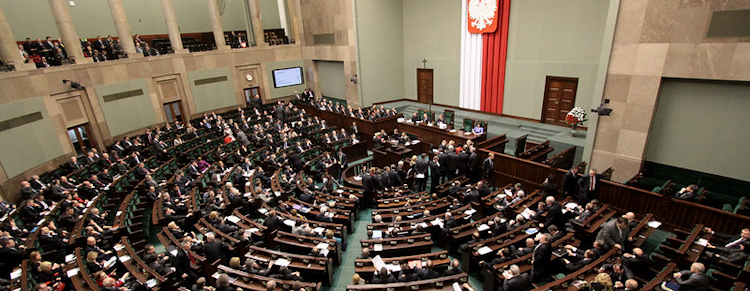
Featured Image: The Polish Sejm by Polish MFA cc-by-nd-2011 via flickr; w750 …

Council Power

Council Power

I wrote to one of Lewisham’s Councillors on the results of the Democracy Review and pointed them at things I have written and published, on Mayor’s and power in the council.

  1. https://davelevy.info/lewishams-democracy-it-could-be-better/ … what i thought was needed
  2. https://davelevy.info/what-is-to-be-done-with-lewisham-council/ … summarising what I said, i.e. my submission
  3. https://davelevy.info/wp-content/uploads/2019/01/Lewisham-Democracy-Review-DFL-V1_1.pdf … my evidence, in which I recommend a series of reforms to improve the accountability and transparency of the Mayor, Council and senior officials including a recall mechanism, term limits and much improved monitoring of personnel, decisions and programmes.
  4. https://davelevy.info/abolishing-executive-mayors/ also hosts the LGIU paper which talks about returning to the Committee System.

And here are my notes about what they said; https://davelevy.info/wiki/lewisham-councils-democracy-review/ which includes comments on power & communication.

For completeness, https://davelevy.info/dictatorship/ my manifesto for abolition of the Mayor. …

Lewisham’s Democracy, it could be better

Lewisham’s Democracy, it could be better

Writing up what I think for Lewisham’s Democracy Review is proving harder than I thought, the source material i.e. Lewisham’s Constitution [www] is very long(483 pages), it’s .pdf, can’t easily be indexed or highlighted, so item No. 1. is to increase the transparency of the rules so citizens can understand how decisions are made.

This is a very Un-British way of doing things and all our instincts are wrong. Every decision is reserved for the Mayor who must present a number of plans to full council. the decisions are then taken in the context of the agreed plans which only require ⅓ voting in favour. The Mayor delegates all their executive functions to the Cabinet as a collective but also to the council’s principal paid officers. The backbench Councillor’s Scrutiny Committees can only delay these decisions. There, apart from criminal sanction, is no way to recall the Mayor. The Mayor does not hold office due to their ability to command a majority, they do not need to get many decisions agreed by Council. This is not just a first-amongst-equals “Leader” with a different mandate, it’s an alien form of government, lifted from the US & France and designed to reduce the accountability of the decisions from people and their political parties.

My first proposal would be that the Council agree to ask the people of Lewisham to abolish the Mayor and return to a collective committee led Council. It might seem to be less democratic but a committee led council has to maintain its mandate throughout it’s term of office, a Mayor led council supported by a just ⅓ of the Councillors can ignore civic society and wait for the next election.

The other ideas I need to develop,  and we’ll see how much detail I can research, would cover Recall, maybe requiring a more than 50% vote of the Council, Term Limits, something about an Ombudsman & Compliance Committee and independence, having the Cabinet appointed by the Council, the move to a Green Paper/White Paper process for decision making, improved citizen communication, the web site is shite, smaller wards and some thing on the need to use the powers in the Localism Act to get the changes in law that some of these things would require. …

On Mayors, again

The March meeting of Lewisham Deptford’s General Committee passed the following motion about the Mayoralty.

This CLP Notes:

1. That Lewisham is one of a small number of Local Authorities to have a directly
elected Mayor.
2. From conception the directly elected mayor model has never been endorsed by a
majority of the Lewisham electorate. Indeed, at the original referendum to move to
the model only 6% of the actual electorate voted positively for the change to a
directly elected mayor. Yet the system was imposed.
3. Dissatisfaction with the mayor and cabinet model has continued to grow with popular
unrest against the model being magnified by the perceived lack of local councilor
influence over recent Mayor and Cabinet decisions especially in relation to Forest Hill
School and The Millwall fiasco.
4. The forth coming local elections will again be found under this filing model

This CLP resolves:

1. To campaign for a labour victory in the forthcoming local elections.
2. To adopt as this CLP’s position; opposition to Lewisham local government elections
being run under the current model post 2018.
3. To lobby for the inclusion in the 2018 Lewisham local government election manifesto a
commitment to return to the traditional model for local government for future elections.

It’s supporters on the whole want to see a more collective leadership, it’s opponents argue that democracy is better served by allowing the electorate (and the Party) to choose the council’s leader. My problem with this argument is that short of imprisonment a Mayor cannot be removed, …

At the GC again

Reporting on the Lewisham Deptford General Committee is still not happening so here is a report from me, about what happened yesterday. We had a guest speaker on trans rights and then considered phase 1 of the democracy review, which was about CLPs and the membership. For more see below/overleaf …. …

Trade Unionists speak

The local Trades Council asked those seeking to be  Labour’s Candidate for Mayor to answer a short set of questions; they present the replies in this document, “Judge for yourselves who will be the Mayor we need!”. They asked questions on Cuts, Education, the Living Wage (in the Town Hall and procurement portfolio), employment rights, housing, training and council/union relations.

Richard Abendorff, a member of the Trades Council and the Labour Party, writes,

There are clear dividing lines, Paul Bell opposes cuts, opposes privatisation, promises to in-source services, opposes privatisation via academies, supports Union rights, will prohibit zero contracts, he will re-establish the town hall trade union negotiating structures and put the Chair of the Trade Union side on the Cabinet.

He also plans to abolish the Mayoralty. His plans are based on concrete promises, not based on aspiration. If not a first choice for Trade Unionists, he must be a second choice.

 …

BackBell

The Labour Party’s Lewisham Mayor selections ballots have been issued, by post and email. Ballot papers for eligible Labour Party members in Lewisham to vote for who our candidate for Mayor will be will reach you over the next few days.

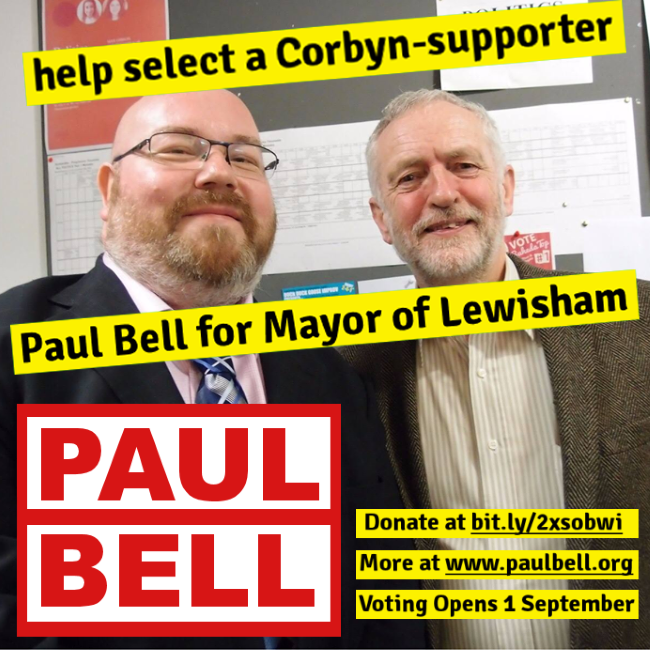
It’s crucial that to get out the strongest possible vote to help the Corbyn-supporting candidate, Paul Bell, win.

Paul is the only candidate

  • Who voted for Jeremy Corbyn either time and consistently supported his leadership
  • Who is committed to fighting to abolish the undemocratic mayoral system which has caused so many problems in Lewisham
  • Who has plans to rebuild the council’s relationship with workers and trade unions, stop academisation, stop privatisation and ‘insource’ services, build many hundreds of council homes and launch a fight against cuts and austerity.

Unsurprisingly, all five candidates are talking left – but it’s necessary to look beyond warm words to politics and policies.

Paul’s full manifesto is published here, on his web site and visible via this http://bit.ly/PB4M-Manifesto SURL. …

Paul Bell & Schools

Paul Bell, one of the people seeking to be Labour’s candidate for Lewisham Mayor has announced his education policy and promises.

He promises,

  • I will as Mayor oppose new academies and free schools, maintaining Council control of schools wherever possible
  • I will as Mayor protect teachers’ jobs and maintain smaller class sizes
  • I will as Mayor secure affordable childcare for working families
  • I will as Mayor ensure every local child has the chance to go to a school a reasonable distance from home
  • I will as Mayor bring Lewisham ‘young people’ service back in-house for the benefit of the community
  • I will as Mayor introduce a Lewisham Fair Workload Charter, to improve conditions for teachers.

  …

Dictatorship?

In reply to a Momentum tweet, which points at  Paul Bell’s Labour Mayoral facebook page, and highlights his commitment to be the last Mayor of Lewisham. [ See also  here…], Councillor Joe Dromey, a Lewisham Council cabinet member posts on twitter, supporting Executive Mayors

I say,

  1. As a matter of record, Labour members seem to only get to choose a mayoral candidate once every 20 years or so.
  2. A Mayor’s exclusive and entrenched powers of initiative and patronage are anti-democratic, weaken collective decision making and are sink for corruption. (In Lewisham we’ve been lucky).
  3. A Mayor cannot be recalled, a Leader of a Group can be.
  4. A Mayor’s decision requires a ⅔ majority to overrule them
  5. A Mayor’s powers of initiative and patronage juvenilises the majority backbench councillors, opposition councillors and ultimately even cabinet members.
  6. Labour Councillors are accountable to the Party every four years, Mayors are not, perhaps the Councillors should have more say.
  7. Labour Group’s internal processes are not good enough to hold a rogue executive mayor to account.
  8. The greater accountability of councillors to their Party and electorate, together with collective decision making should deliver better government. For instance, if the Lewisham Cabinet had asked the Labour Group about whether to issue the Millwall CPO, it wouldn’t have happened.
  9. Executive Mayors have always been established in the interests of incumbent leaderships. They are about party power, not citizenship empowerment.
  10. I’d add that support for the current system would come better from people other than candidates, cabinet members and councillors.
 …