Shane – my thoughts

Shane – my thoughts

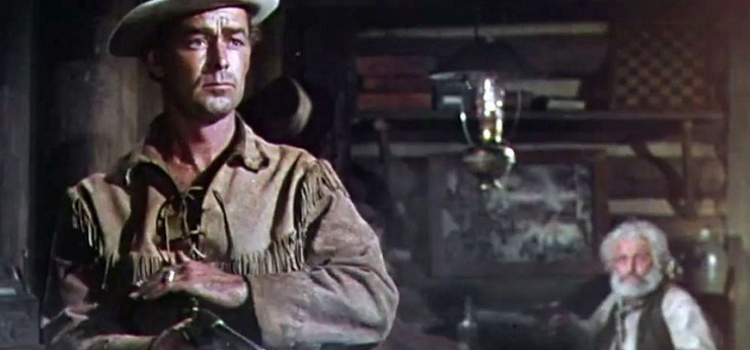
I just seen the film again and must reread the book. I am surprised at some of the positive reviews, as I consider the film disappointing, certainly so when compared to the book. At the centre of my hesitancy is two things, the portrayal of Shane by Alan Ladd and the acting competence of Brandon de Wilde who plays Joey, the family’s son and the protagonist of the book, if not the film. Much of my problem with Alan Ladd is physical, he’s too clean, and does not appear dangerous enough, and certainly not at first sight.

I feel that Shane’s past, his reputation, and his desire to leave it behind is also underplayed, partly because some of it is exposed in poorly acted, at least on one side, conversations with Joey. The sexual/romantic tension between Marion and Shane is also, in my view, underplayed, possibly because of its time, and what they could then show in the movies.

It all comes right in the end, the honourable stranger, kills the homesteader’s nemesis and their hired gun, moves on, and the nuclear family, we assume lives happily ever after and the town becomes a peaceful law-abiding community, foretold by Chris’s epiphany which is more clearly stated in the book where he becomes the Starret family’s hired hand. I think that this is more hopeful and closer to the author’s intent than alternatives explored in Barham’s recent review; the story is told by Joey and I think the pessimistic outcomes suggested in that review, are not part of the story Schaeffer wrote.

The imagery of Fistful of Dollars seems more appropriate, but the story is Kurosawa’s and comes from Japan. It’s not quite right, the themes of a man trying to leave a dark past behind him and build a better future, is better reflected in the Outlaw Josie Wales, the story of a war tired warrior trying to create a family home and eventually leave his violence behind him. In this case, he survives the confrontation with the biased law chasing him, in Shane we are unclear, but Shane has to move on.

In the article, I look at the film as part of America’s attempt to reinvent its frontier history with the help of others, who do the heavy lifting and examine the excised anti-native American racism; the [American] civil war slurs used to provoke one of the homesteaders into a gun fight have replaced the insult that the farmer had native American blood from the book and, in the film, Shane uses the same albeit reversed slurs. In the book, this is not what happens,

“What you want Wilson, and what you get are two different things you’re killing days are done. Wilson had it now. You could see him grasp the meaning. This quiet man was pushing him just as he had pushed Ernie Wright. As he measured Shane, it was not to his liking. Something that was not fear but a kind of wondering and baffled reluctance showed in his face. And then there is no escape, for that gentle voice was pegging him to the immediate and implacable moment. “I’m waiting, Wilson. Do I have to crowd you into slapping leather?”

Perhaps, it’s another proof point for not watching a movie of a book you love.

To see what else I say in this article, and see a picture of the cover of my book, use the “Read More” button …


Maths at 18

Maths at 18

Sunak has proposed that Maths should be taught to 18. I think this ambition i.e. of better equipping people to understand data and draw conclusions needs redesign earlier in the curriculum and would be informed by a study in the UK’s failure to adopt the Baccalaureate. Some say that they’ll need more [and better paid] teachers, which they seem unwilling to fund. I think this is just revisiting failed reforms of the last half century. I seem to remember some nonsense in the 70’s about scientists in the Civil Service, and after a bit of looking around came upon this review of the Fulton Report; it made little difference.

A common question has been how much have I used my A level and 1st year graduate statistics education. The answer is a bit. Linear & Quadratic correlation has been useful a couple of times, queuing theory at least once, and I had to mug up some hypothesis testing for that one project I did using 6 sigma. More than most maybe. Although at least once, my then manager’s own poor statistical education led to him putting it in the bin, because he didn’t have the confidence to sell the results.

Simon Pegg on twitter is more succinct and sweary in his defence of the need for arts.

When doing the 6-sigma project I discovered that many of the distribution tables needed to perform the statistical tests were encapsulated in costly software. I amused myself by bringing in my uni. text book, which had the distributions printed but which was older than many of my colleagues. They had remained useful, the tables that is, and I still have the book on my book shelf.


For my foreign audience, in the UK, students from 16-18 study 3-5 subjects often reducing their subjects studied at the end of the 1st year. There isn’t really room to push Maths into that time table if a student has made otherwise sensible contiguous choices. This is supported imposed by the Universities who claim that early specialisation leads to our graduates being better qualified at the end of the first degree. I suspect that most US university academics would disagree, For my British readers, the early specialisation, at 16, is unusual, with other countries using other curriculum design techniques to provide a broad 16-18 education. Also the fact of a Prime Minster in the 21st Century educated at University in Greek and Latin must have been a source of amusement to the French graduates of the Ecole National d’Administration, an amusement enlarged by calling it Greats!

All this on the day when Starmer flags his second thoughts on Labour’s promise of abolishing student tuition fees.  …

Polling Leads over time

Labour’s current lead in the polls is suggesting that there will be a Labour landslide at the next election but I made a chart of the polling history of Westminster election intentions since 1984. This is an attempt to put this in historical context.

The history of UK Polling data for Westminster elections; from 1984

As of today Labour would seem at elections to underperform its polling results. Some say this is down to low turnout.

I was interested answering two questions, the first is that no Party with such a large polling lead has ever lost the following election. This would seem to be false. Johnson threw away a huge lead and while it took Blair over two parliaments, his lead fell from a max of 39% to -14%. Only Blair and Johnson have had leads over 20%. Only Major, Brown and Sunak have increased their party’s polling lead. The other question is about whether the allegation that Corbyn was substantially less popular than Labour deserved.

I have made an Open-Hi-Lo-Close chart of the PM’s leads and added Corbyn. To truly understand if Corbyn was worse than others, I’d have to show the other Labour leaders.

To remind us how to read these charts, if the entry is black, then the lead fell, the opening value is the top of the box, and the close value the bottom. If the box is white, then the value increased and the open value is the bottom of the box, and the final lead the top of the box. The lines above and below the box illustrate the high and low values, which in the case of Truss and Sunak are the same as the open/close values. Blair’s high number above the opening value was achieved on day one, and illustrates the difference between the poll and the general election vote. (I wish I could add red and blue colours to the chart, but it’s a restriction on the tool.) I’d say Corbyn while not good, was not appalling at least that’s what the number’s say, although he had become an issue by 2019.

It seems that Redfield and Wilton have also produced a chart, but only for the last 18 months. These numbers come from my interpretation of politico.eu’s poll tracker, using the Guardian ICM numbers from 1984 to 2016. My spreadsheet is here. …

On Labour Conference representation for CLPs

On Labour Conference representation for CLPs

At Conference 2022, the rules on CLP representation was changed and this will impact representation at regional conferences too.

This is Rule, C3.I.1.B which now says, (non-italics is the new text, strikethrough is deleted,)

Delegates duly appointed by CLPs to the number of one delegate for the first 749 individual members in the constituency or part thereof paying their membership dues as of 31 December in the previous year, and one further delegate for every additional 250 individual members in the constituency or part thereof. No CLP shall be represented by more than 6 delegates in any given year. CLPs must also have paid any outstanding insurance premiums and other levies due before their delegation shall be accepted. To increase the representation of women at Party conference, at least every second delegate from a CLP shall be a woman; where only one delegate is appointed this must be a woman at least in every other year. In a year where a CLP is required to send a female delegate, following a male delegate in the preceding year, but is unable to find one, they will not be entitled to send a man as delegate. In the following year, permission may be granted to send a male delegate if they demonstrate to the conference arrangements committee that they have made every effort to seek a woman delegate.

Labour Rules C3.I.1.B

Paragraph C, the next rule says, bold is my emphasis.

Where the individual women’s membership in a constituency is 100 or more, an additional woman delegate may be appointed. Where the individual Young Labour membership in a constituency is 30 or more an additional delegate under the age of 27 may be appointed.

Labour Rules C3.I.1.C

I say, the woman and youth delegates are additional, so the maximum delegation size is 8, , which a CLP become entitled to at 2000 members, if they have 100 women and 30 young people. Also note that the representation rule is mathematically one delegate per 250 members.

This, “at least every second delegate from a CLP shall be a woman” is nonsense, the number of women to be elected depends on whether the number to be elected is odd, or not, and whether the first delegate elected is a woman or not.

Source: CAC 1/2022

You might like to see, Labour Conference: Delegate &-member power which looks at how representative the hand vote is, and Delegates to Conference, which explores the meaning of the conference representation rule in terms of gender quotas, both articles on my wiki. …

On WOTCs permissive licences

On WOTCs permissive licences

Earlier this year, Wizards of the Coast, the owners of Dungeons & Dragons, bought D&D Beyond, the premiere and largest web store for the rules of D&D and they are now trialling a new version of the rules called One D&D; they are also planning to release a virtual table top solution and have a new movie in production. Also recently at a Hasbro earnings call, one of their executives stated that D&D was now a lifestyle brand and was under-monetised. This has created a sense of fear amongst 3rd party creators that WOTC will revise their intellectual property sharing agreements to the detriment of themselves and non-Dungeon Master players who have been identified as under spenders. Depending on where you look, this has created a lot of noise; I think there’s a lot of fear being generated, and it interests me to consider the issues in the context of the software industry practice. I think that software industry grew the open source models and the interaction by games vendors such as Wizards with software continues to inform good & bad practice, There's more overleaf ...

New Britain, new Britcon

New Britain, new Britcon

Gordon Brown’s Commission on the constitution of the UK has finished its report. Much of the press focus on the proposal to abolish/reform the House of Lords but it is much more comprehensive than that. I originally wondered if in its way it is as ambitious as the Chilean constitution that failed to win approval in 2022. On reading it fully I conclude that it is not. They do however, propose a new constitution, with entrenched individual rights, of health, education and housing and a duty of the state to ensure no-one is poor. For all their controversy in this country, these rights are commonplace around the world. I summarise the report, commenting on parliamentary sovereignty, the devolution settlements, money and cleaning up Westminster, and make a comment on their civil service reform processes. There's more overleaf. ...

Not so fast!

Not so fast!

The High Court has ruled that the Government’s plan to send refugees to Rwanda with a one-way ticket, is legal. Suella Braverman is claiming this as a victory but there is a sting in the tail of the ruling, which I have not yet read in full. The decision is reported by the BBC who quote Braverman as vowing to continue and Yvette Cooper who called the policy "unworkable, extortionate and deeply damaging", but not immoral nor criticising the hostile environment; she leaves it to Alison Thewliss, the SNP's home affairs spokesperson. PCS & Care4Calais plan to appeal, so we’ll see and of course there remains the ECtHR injunction to consider. Although the desire to manipulate international law with respect to immigration (and labour) law is bi-partisan. There's more overleaf ...

Oi! Boundary Commission, “No!”

Oi! Boundary Commission, “No!”

I have today made a submission to the Boundary Commission to rename the Constituency as “Deptford” and not “Lewisham North and Deptford”. I said, “Deptford has a proud maritime history to be remembered by the Convoy’s Wharf heritage projects. The recent and planned house building, moves the population centre of gravity towards Deptford as does the proposed loss of Hither Green and Crofton Park. Transport links within the constituency are predominately East/West to the West End, City and Kent. No one uses the name Lewisham North to describe the area, or any area.” I suggested that my second choice would be Deptford and Brockley. …