Chilling Effect

Chilling Effect

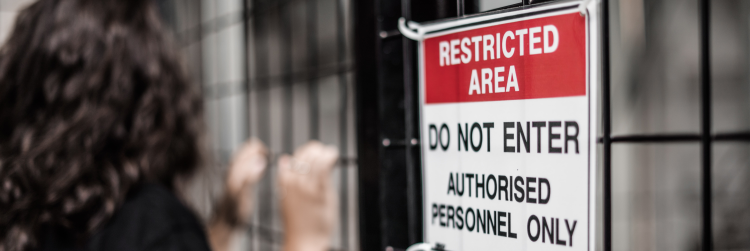
Lauren Townsend, a Labour Milton Keynes councillor and cabinet member has been blocked from standing as a Labour MP for her own seat. This was allegedly done for showing support for an opposition party by ‘liking’ a tweet from Nicola Sturgeon on her -ive covid test. Aydin Dikerdem found that candidates who have been approved for the selection have also liked tweets from other party members. As he said, this should be a permitted act of free speech. The decision to bar Lauren is biased, probably improper, potentially based on unlawfully and unfairly obtained data and designed to create a chilling effect. She had been nominated by several unions which should guarantee her a place on the long list, how long will they put up with this?

 …

We want our star back

We want our star back

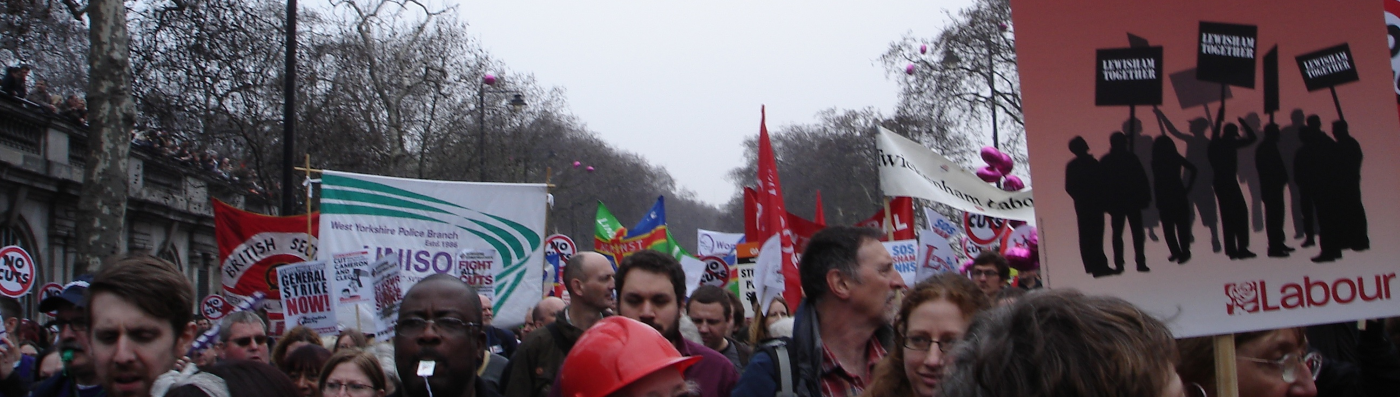
The Rejoin EU movement held a national march today, the Evening Standard reported that it was well attended by 15,000 people, and @femi_sorry who took a film of the march and posted it on twitter at 12 times speed, so not as large as others.


I’d love to thank the interpretive dancers performing to ‘ode to joy’, the car and van drivers that supported us, and the one builder who told us to “fuck off”. …

Brexit’s over, it’s just about the mopping up now

Brexit’s over, it’s just about the mopping up now

Phil, of a different Bias, has released a new video, spurred by his observation that the Brexiteers have retreated from “Take back Control” to “Save the Pound” because if we were to rejoin, they think we’d have to join the Euro. This probably isn’t the case. Phil points out that Sweden has agreed to join up and did so in 2002, but hasn’t yet done so and has no plans to do so. This article looks at the issues of economic policy governance, the opt-outs, trade friction and immigration. It concludes with the proposal that, "The Truss Government was an ERG Govt, it’s fall marks the end of Brexit..", although we are unlikely be allowed back in until we can offer a substantial and believably long-term majority in support of re-joining the EU/ There is more overleaf ...

Where’s prudence gone?

Where’s prudence gone?

While reading Simmon Hannah’s “A party with socialists in it”, I made a note to talk about Corbynism and Modern  Monetary Theory. I am writing an omnibus, review of that book, but think that a further note on MMT and its role in Corbynism, and the insights and weaknesses it brings to today's crisis might be appropriate. In 2015, Corbyn flirted with MMT but by 2017, McDonnel, Meadway and Wren Lewis had won control of the Party’s economic agenda. The rest of this article looks at the bond market disruptions, FX and the balance of trade, the threat to pension funds, and the extent to which MMT has some useful insights. For more, check out overleaf behind the "Read More" button. ...

Adversarial Justice, maybe not all its cracked up to be.

Adversarial Justice, maybe not all its cracked up to be.

I am working my way slowly through “Stories of the Law“, by the Secret Barrister and came across this,

Such as whether adversarial criminal justice is all it is cracked up to be. Whether to much – truth, dignity – is sacrificed on its alter. Whether a system that does not have as its stated aim the pursuit of truth, but instead rewards the best game player in a winner-takes- ll contest, can really be said to deliver justice in a sense understood by anyone outside of legal circles. And whether, if we have abandoned –  or never even prized – truth as a guiding principle of our trials, we’re doing the gross injury to Enlightenment principles with the result that all of us – defendant , victim and society – are wronged.

The Secret Barrister

I wrote this too soon. In the following paragraph, SB, makes the argument that inquisitorial systems have one fundamental weakness

Such cases demonstrate the fallacy of assuming the state is able to neutrally seek truth as opposed to aligning on its own theory and embarking on ex post facto buttressing of that narrative. And this is a criticism often levelled inquisitorial systems by those who work within: not withstanding their oxymoronic designation as ‘neutral’ prosecutors, the prosecutor and the police may bow to natural inclinations to take a partisan position against the suspect and construct a case against him.

The flaw runs deeper than the motivations of individual investigators, however: inquisitorialism is compromised by the inherent susceptibility of the state machinery to political influence not at the level of high conspiracy, but the subtle pressures the government bring to bear on the administration of criminal justice. The ubiquitous ministerial intuition that cost savings can be made without public outcry by shearing the justice budget, cutting a few corners here and there,  has been demonstrated at length. You do not need to be modelling a tin foil hat to recognise the politicians incrementally dispense with systemic safeguards, increasing the incidence of wrongful convictions, to bank transitory credit for being ‘tough on crime’; often as a reflex to media campaigns to improve conviction rates for particular offences.

The Secret Barrister

Featured image : Richter benutzt dunkelbraun-goldenen Hammer vor weißem Hintergrund CC 2.0 Marco Vetch 2018 BY …

Do victims of a cyberbreach need to prove harm?

Do victims of a cyberbreach need to prove harm?

I have just posted to my linked in blog, on the reference from the Austrian courts as to whether victims of a data breach need to prove harm for compensation.

The Advocate General is not so sure, although on my CIPP(E) course the instructor was clear; a breach of rights is a harm.

I look at the GDPR, the DPA 2018, which confirms that in the UK, ‘“non-material damage” includes distress.’.

I conclude by noting that, “My experience in tracking the citizen’s panels of the Conference on the Future of Europe (CoFoE) is that Europe’s citizen’s, the children and grand children of facist and stalinist societies are looking for greater enforcement, not less.” Politicians in the EU are under pressure to go in the other direction.  …

Reeves and Immigration

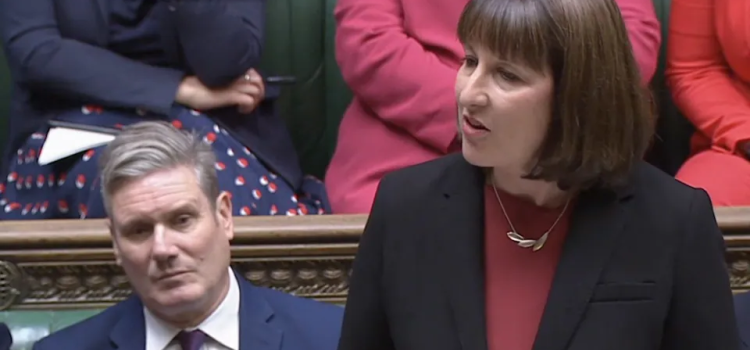
There I am sitting in my living room, considering that maybe Starmer and Reeves domestic policy promises weren’t so bad, playing with my phone when a clip from Sky News comes on with Rachel Reeves, saying that the problem with the Tory immigration policy is there aren’t enough deportations. This is the moral sink that competing on competence takes you. Labour’s Conference Policy at lab19 and lab21 is clear and based on an anti-racist, internationally legally compliant, rights based, compassionate, and humane approach. We must do better than this.  …

Crisis, what crisis!

Crisis, what crisis!

Some aspects of this are hard to understand, here's my attempt. The UK has been in a balance of trade deficit for decades. For most countries it is the main factor in determining foreign exchange rate between sterling (GBP) and other currencies. In the case of the UK, there is significant additional incoming flows buying sterling quoted stocks, bonds and gilts. Sterling has been falling ever since Brexit, in my mind as a result of a drop in confidence due to Brexit and the growing relevance of the balance of payments deficit; the fear of inflation has added to that recently. This article looks at the history of bond prices and interest rates and warns that increasing interest rates may cause mortgage defaults. I conclude, "A triple whammy of inflation, pension losses, and mortgage payment increases, suddenly the UK seems a lot poorer than it was. " The full article and diagrams can be seen overleaf ...