I have today updated my feedly OPML file mirror on this site. You can use this to import my list into another reader but there are over 400 feeds, and some of them are no longer live. Perhaps I should weed it. … …
Feeds
- my blog (RSS/XML) …
- my blog (RDF) …
- my wiki …
- My feedly feeds [OPML], not always up to date, last updated 9th Feb 2019
- an index of my linkedin posts
- my mingle as feeds, in ATOM, RSS & OPML
…
Hurrah for Feedly
I have been playing with feedly as replacement for google reader. I am rather taken with it. It’s a browser plugin and an app. on many mobiles.

As with other replacements, I have reorganised my feed tags/categories to create better groups. I have dropped a bunch of feeds that I wasn’t reading or were broken. Its “Today” feature allows me to keep up with the news. It’s availability on the phone helps with this, because I don’t have to open a laptop, I can read my news without getting a seat on the train. Feedly encourages me to treat news as a ‘river’ and so my reader is not cluttered with loads of stuff that I might want some day which I am learning to like. It lacks the social features that google reader had at it’s best but they’d walked away from them. I have made some suggestions at their user voice site. I am impressed. I hope they adopt some of the ideas that I have suggested or supported. A twitter client would be good, but I can live without it.
My wiki project page is here…. …
Fixing my Feeds
Just done some tidying up on the blog and web site and my syndication strategies. …
Stern, Management and taking Solaris as a feed
The meeting today was opened by Hal Stern (Sun Services CTO). He repeated & re-inforced several themes about utility and annuity or subscription services but interesting highlighted several things. Firstly he argued for an enlightened, liberating management style to harness talent, “Think XP, not waterfall” because waterfall involves management saying no or re-work it a lot and “does not scale”.
He also in a discussion about mapping AIM onto “Customise, Standardise, Utilise” raised the goal of offering Solaris as a service based subscription. The language I’ve been using is to make Solaris a real-time feed, enabling Sun’s customers to take advantage of the newest, most reliable and best as it becomes available. …
Backwardness of Glamour
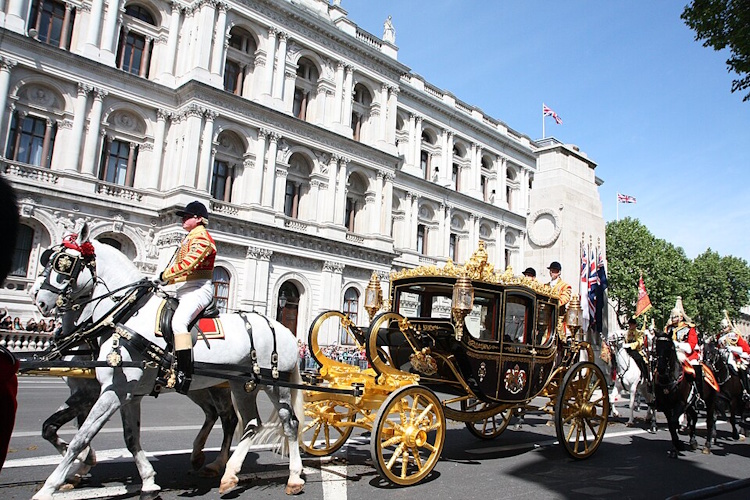
Sometimes one’s feeds actually throw up some golden nuggets. I came across this facebook video reel from Andi Shehu. It’s not very long, but packs a lot in. He argues that much of the support for the Brexit vote was based upon nostalgia for an empire that had already been dismantled and one that today’s voters cannot possibly remember and that that this political nostalgia is fuelled by outdated Victorian traditions at the core of British government, maybe even from pre-Victorian times and that true improvement requires democratic reform. The reel led me to look at some earlier theorists who first articulated these ideas and suggesting that the British state never adopted democracy and remained the instrument of old wealth based on land.
In many ways what came after 1945 was much better and much more democratic and served the mass of the population better than its predecessor. The UK built houses, formed the NHS and developed its manufacturing capability to provide jobs wealth and income to the bulk of the population. People’s memory of the poverty of the Great Depression led them to build a comprehensive welfare state guaranteeing social security and a limited freedom from poverty. This was dismantled by reactionary conservative movements, and the engine of the economy moved back towards finance and the City of London, institutions that have no patriotism and yield no investment in the wellbeing of the British people. These changes were not the fault of Brussels, but the project designers needed a scapegoat as the factories, steel works & mines were closed, and relative poverty, ably illustrated by the work of P. Danny Dorling, ensued.
Shehu then argues that much of the nostalgia is focused on the pomp and ideology of the British State. He quotes Tom Nairn’s ideas about the “glamour of backwardness” where the “mother of parliaments” & the pomp of the monarchy become to be seen as desirable and sources of pride. There are many recent examples of this constitutional exceptionalism, but one egregious example was Andrea Leadsom’s criticism of the European Union as having five presidents that no one could name; at least they’re not hereditary monarchs and the European Parliament is wholly elected by proportional representation. The conclusion is that the British state is no longer fit to run a 21st century society and that it remains a tool of control of the economy and its people in the interests of an economic elite, which in the UK . looks very much like the old, 18th century one.
I recommend you look at the Facebook reel as he is much more economic in words than I am.
However, watching the video reminded me of the conclusions, or maybe the premise of “Capitalism divided?” by Stuart Ingram who sought to examine why the British state did not act as “the executive committee of the bourgeoisie”; I found the book fascinating, and I’ve promised myself to review it on this blog.
At the centre of his argument, is the proposition that the funding of the original industrial revolution was based upon the wealth of the landed aristocracy. The British economy became a commercial economy and the centre of world trade finance; the British state was optimised to defend the power of landed wealth and gave birth to the development of a mercantile economy not a manufacturing one and so it never served the capitalist class. It’s for these reasons that the post 45 reforms were required and the victory of the People’s War gave the working class the confidence to build a “land fit for heroes”.
My two takeaways from the video and my brief limited reading since then, is that democratic reform is a critical part or attempting to build a society free of poverty where people can fulfil themselves in the world of work and avoid alienation and appropriation. Proportional representation, devolution and subsidiarity and the abolition of the monarchy are not side issues to economic fairness. The second takeaway reinforces the idea that the British economy’s continued reliance on global finance is a weakness in delivering for the mass of people in the UK.
See also
- The reel author, Andi Shehu has a substack blog.
- Shehu mentions Tom Nairn, here is an anthology page at the London review of books.
- The two key works from Nairn are, Breaking-up Britain and a review of The Enchanted Glass: Britain and its Monarchy.
Emergency Motions
There were a large number of Emergency Motions tabled. The key rules are that it relates to an event occurring after the closing date for motions which is the end of January.
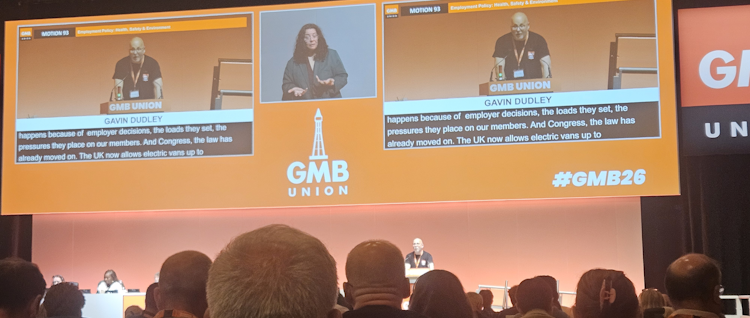
In this blog post, I identify what I consider the important emergency motions, two because they are important statements of policy and one because it managed o raise an issue nearly 50 years old. This is an important issue to me as I sought to get an Emergency Motion tabled on the basis of an event two months old and was told that it wasn’t an emergency.
EM6 dealt with the scandal of the forced adoptions for single mothers that occurred in between 1949 and the eighties. The issue had become live due to a Parliamentary Education Select Committee where the Government had raised the issue of an apology. The debate is on the feed, and I have posted the motion to this blog.
The Union debated the issue of Trans-rights in the light of the updated EHRC guidance. The text of the motion is posted on this blog, perhaps its central piece, is
The new guidance is discriminatory, unworkable and effectively excludes trans, non binary and gender diverse people from swathes of public life including working life the Lords. The law must be changed.
The motion notes that the law not only oppresses trans people but also places a duty on managers and workers that may breach their free speech rights. It also noted that the advice becomes law after a scrutiny period and called for action to oppose its passage in Parliament. The debate is on the video feed.
On the 9th June, riots broke out in Northern Ireland where the victims/targets were immigrants. Further protests occurred in Glasgow, Scotland and Southampton. At Congress, one of the delegates present made a fabulous and well received speech expressing the Union’s intolerance of racial hatred and solidarity with the communities effected. (I am looking for the video feed URL). We also debated an Emergency Motion, the text of which is on this blog. A critical quote is,
We say no to racism, we say no to violence incited by those who do not live in or care a one bit for our communities.
Due to the high number of EM’s neither the agenda document nor the time tables were amended, and at the time of posting there was no single document containing the emergency motions. I hope to take better notes next year if fortunate enough to be elected a delegate. I have obtained a copy of the emergency motions. …
Imprisonment for Public Protection at GMB 26
My branch proposed M262, on IMPRISONMENT FOR PUBLIC PROTECTION.
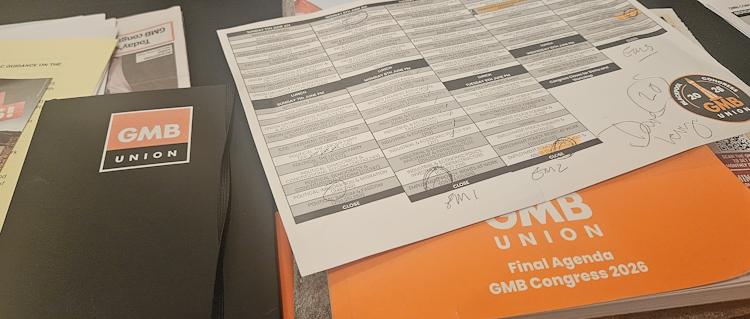
The motion says,
Imprisonment for public protection (IPP) sentences were introduced in 2005 and abolished in 2012. The application of this law was not backdated, so thousands are still behind bars indefinitely. Those released live with the threat of a return to indefinite incarceration for misdemeanour offences or more concerning if a relapse in their mental health proves a perceived risk to the public.
Without adequate access to rehabilitation and in the latter case denial of care provision in the most appropriate place (hospital than prison), The European Court of human rights ruled in 2012 that this practice violated of human rights under Article 5. It is time this practice decried by the United Nations as “inhumane” was ended.
We call upon the Government to:
1. Prioritise the review, and re-sentencing of all prisoners currently under an IPP, noting that around 70% have served 10 years more than the sentencing tariff.
2. Take all reasonable steps to ensure that prisoners under an IPP have access to adequate support and appropriate healthcare provision to reduce their risk to the public allowing safe release.
3. Allow urgent re-sentencing and risk assessment of those for whom the continuation of the IPP sentence has been deemed by a medical professional to be a specific barrier to the delivery of effective health care provision and recovery.
X58 LONDON CENTRAL GENERAL BRANCH, LONDON REGION
My moving and the seconding speech are on the video feed. …
Use of Twitter/X
I seconded a motion on the use of Twitter/X, the motion criticised the seeming scofflaw approach by twitter/x and called for protection for workers who wished to avoid it and called for the GMB to further restrict its use of the platform and to also call for employers to withdraw also. The article, posts the words of the motion, my speech and links to the video. It also noted that it was opposed. For the complete article, use the "Read More" button.

John Healey at GMB26
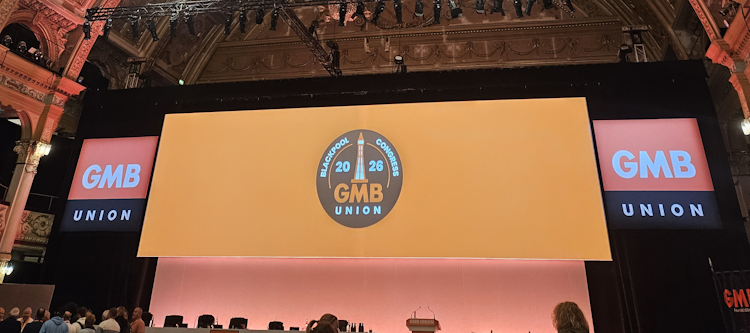
Congress was addressed by John Healey MP, the Secretary oi State for Defence, I looked for the text of the speech on Labour and the gov.uk site, but could not find it. It was however reported in the Morning Star and at the BBC, also Google AI perspectives says,
“John Healey MP used his speech at the GMB Union Congress in June 2026 to announce plans to unashamedly prioritize British companies and jobs in future defence spending.
This speech, like the whole conference was published on the GMB video feed. Possibly the key push within the new plans is that by prioritising British firms, they claim the money works twice, firstly by buying weapons to secure the UK, but secondly by investing in UK industries and workers. There are some who argue that defence investment is a dead investment as there is no, or little, investment multiplier effect, but they can’t argue that there is no multiplier effect from spend on labour costs. Actually the idea that defence industry investment has no civil multiplier effect seems to be extraordinarily weak.
Healey name checked the defence factories that the GMB organises and of course, defended the need for Trident, and rather strangely, declared the desire to see the Union Jack on top of every weapon. (Very Dr. Strangelove). This strange patriotism avoids talking about the UK’s dependence on US arms industry and the current unreliability of the United States as a provider; it also may make co-operation with Europe and the EU member states more difficult as the UK’s failure to join the EU SAFE programme, and the continued conversations about the EU’s industrial accelerator Act, aka the “Made in Europe” proposals shows.
What this hubris also fails to address is that developing some of these weapons is now beyond the UK alone, we need allies and that today involves a choice.
I had written a piece on defence, and defence sovereignty earlier in the year.
Two days later, Healey and his No 2, Al Cairns resigned from Government, I posted a video of their resignation statements in my blog, …