Again I want your support.

Again I want your support.

AEIP is running its election for its national committee. I am standing again, I hope to continue the work I have been doing in ensuring that the truth about Brexit is known. This is what I said on their candidate statement pamphlet. What i said last year is still relevant. Please vote for me if a member, the ballot links are in your mailbox.

I got on ... thank you

My short statement is overleaf ...

A note on Data Protection Officers

A note on Data Protection Officers

Data Protection Officers roles were revised by GDPR and the member state implementations. Here is a reminder for those that need it.

Article 37 states that a processor or controller requires a DPO if it is a public authority, if it requires regular sys systematic monitoring of data subjects on a large scale or if it processes special data.

A DPO may work for multiple companies, but Article 38 requires the DPO to be adequately resourced and supported.

The DPO must be appointed on the basis of professional qualities and, in particular, expert knowledge of data protection law and practices and the ability to fulfil the tasks specified in the GDPR Article 39.

Article 38 states that the DPO must be involved in in all issues which relate to the protection of personal data, be properly resourced to perform their duties and to maintain their professional expertise, not receive instructions on the conduct of their duties, not be dismissed for doing their job, and report to the highest levels of management.

The tasks of the role are defined in Article 39, the job is to advise the highest levels of management on their obligations, to monitor compliance including the assignment of responsibilities,  training and operations’ audits, to assist and monitor the data privacy impact assessments, to cooperate and act as a contact point for the supervisory body, in the UK, the ICO.

I have used the EU text as the source of my summary and is reproduced overleaf/below ...

This post was originally posted at linkedin.

Don’t start from here

Don’t start from here

Paul Mason comments on the crisis in the Ukraine and outlines Russia’s goals and some counter strategies. He argues that one of Putin’s Russia’s goals is to diminish the EU as a world class power. This will be why he is demanding that NATO withdraw troops from the ex-Warsaw pact countries and that the EU non-member states are prohibited from joining NATO. This would include Sweden , Finland together with the Baltic states and Romania & Bulgaria.

It’s a strange serendipity that the Queen Elizabeth has returned from the far east today as it symbolises everything wrong with the UK’s defence strategy (Medium | my blog) where we have an ill equipped and tiny Army. It’s unlikely that aircraft carrier could survive in the Baltic or Black Sea. It’s a weapon of prestige and can do little to help during an escalating crisis on the EU/Russian border. Our defence strategy is based on a flawed threat analysis. A post Brexit global Britain is weak and has little influence; before Brexit the UK military could only operate in alliance and now it’s just turned away from the EU and  both Trump and even Biden are undermining NATO as an effective defensive alliance for Europe.

Furthermore, the UK is a victim of Russia’s “Hybrid Warfare”. Its funding and cyber support of the Brexit Campaign and latterly the Tories not to mention Boris Johnson’s receipt of oligarch’s bunga bunga hospitality.  The closest the Govt has come to considering this threat is the delayed and unfinished Russia report from Parliament’s Intelligence Services Committee. The Tory Govt has refused to follow up.

We shouldn’t have stepped away from Europe because NATO maybe past its sell-by date; the obvious desire to avoid sanctions against Russian UK based assets leads the Govt. to unbelievable sabre rattling. It will make us look very stupid.


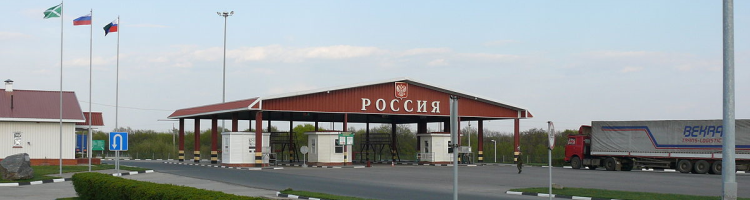
The featured images is, Nekhoteevka customs on Russia-Ukraine border. by Дар Ветер from wikimedia, CC 2020 BY-SA v3. …

The 7 Principles

The  7 Principles

When evaluating Data Protection laws and enforcement appetite, one sometimes needs to refer to the 7 principles. These were agreed by the OECD in 1980 and I summarise them below.

  • Notice, Data subjects should be given notice when their data is being collected.
  • Purpose, Data should only be used for the purpose stated
  • Consent, Data should not be disclosed without the data subject’s consent
  • Security, Collected data should be kept secure from potential abuses
  • Disclosure, Data subjects should be informed as to who is collecting their data
  • Access, Data subjects should be allowed to access their data and make corrections to any inaccurate data.
  • Accountability, Data subjects should have a method available to them to hold data collectors accountable to the above principles.

Europe’s privacy laws are constructed by building legislative infrastructure based on treaties and then the creation of law. This diagram below shows the time line of European infrastructure (above the line) and law (below the line), it was made in a year or so ago and thus does not have the UK’s departure from the EU, nor the assignment of “Adequacy” by the Commission.

While much focus today is on the EU’s GDPR, the principles that underpin it, are more broadly accepted than that law, and in some areas, the GDPR maybe found wanting.

This blog post originally appeared on my LinkedIn blog. …

Never rains …

Never rains …

A short note on Labour’s cyberbreach. Sienna Rogers at Labour List reports on the 3rd party victim of Labour’s cyber breach. The software is I believe provided by blackbaud, who usually provide this as software-as-service, and have been previously attacked, but Rogers states the system is run by Tangent which I believe to be a trading name for Tangent Marketing Services. This article in the Guardian (HTML/ .PDF ) reports (2007) on Labour’s award of the contract and identify Michael Green as the supplier CEO, although his wikipedia page suggest he’s moved on; he us still registered as a Director at Companies House, although the last set of annual accounts state he has resigned. Labour’s General Secretary at the time was Peter Watt whom wikipedia quote the BBC as saying he resigned “following the revelation that a property developer made donations to the party via three associates”. Tangent also appointed an ex-Party Director of Communications, Paul Simpson (HTML / .PDF) as it’s account manager for the Labour Party in 2009, although he left 4 years later.

This story adds to the questions that need to be answered, one of which is why the software and its run time contract has been in place for so long? Has it it been market tested, are the terms and conditions still appropriate?

When the leak was first reported, I wrote a piece on IT Vendor Management (also on my blog) and posed some question. I also wrote a short piece on Cyber-security and the NIST Cyber-security framework. In the first of these articles I described what a decent vendor management policy looks like, and how the use of international standards on IT security, (ISO 27001), and governance (COBIT) would help, as would having a National Executive Committee properly equipped, trained and interested.  …

Sptitzen Kandidaten, the rule of law and the EU’s CoFoE

Sptitzen Kandidaten, the rule of law and the EU’s CoFoE

Yesterday France assumed the Presidency of the European Union, as planned, in time to move forward the final recommendations of the “Conference on the Future of Europe”. In mid December, 39 recommendations were made from the Democracy and the Rule of Law panel. Most surprisingly, they do not recommend changing the means by which the President of the Commission is elected/chosen and yet, they propose the establishment or repetition of the Citizens’ Assembly approach adopted by the Conference.

In the rest of this blog article, over leaf, I look at how the EU got here, and comment on some surprising and positive recommendations and the one surprising absence. ...

England’s founders

England’s founders

Andrew Adonis, on Twitter, has challenged us to name three people as founders of England. I thought that’s a good game. Who would I choose?

What is England? I think it needs to be seen as defined by its Parliament, its capitalist economy and its social wage, the remaining jewel of which is the NHS. So I nominate the Immortal 7, Sir Robert Peel, and Aneurin Bevan.

The Immortal Seven are seven members of the House of Lords who invited William of Orange to England to ensure a protestant succession. Modern historians may argue about the extent this established Parliament as the supreme authority but it is generally considered the act that ended the English Civil Wars and started us down the road to our current constitution.

Sir Robert Peel not only founded the Tory Party but the Joint Stock Companies Act was also passed under his stewardship, I toyed with Marx as an observer of Capitalism and Brunel as the innovator/entrepreneur, except he wasn’t, but capitalism is about capital mobility and capital markets and so that Act which enabled these two things to happen.

Our benefit system is in tatters, Beveridge and Keynes will be turning in their graves, but the NHS remains, and it seems we have to associate Bevan with it. Bevan is of course Welsh.

At least one commentator on the twitter thread makes the point that analysing history through the lives of single people is not wise.

Left by the wayside are Henry VIII, Oliver Cromwell & Horatio Nelson …

Sound the alarm

Sound the alarm

I have just started the Secret Barrister, in the forward, they say,

When you have sat in as many decrepit court cells or tired, coffee stained witness suites as I have, looking into the eyes of someone whose most basic sense of what is ‘fair’ and what is right has been entirely crushed by their exposure to the criminal justice system, you can either slink into jaundiced defeatism or sound the alarm.

The Secret Barrister

And while I have not sat in courts, or witness suites, I (as an accompanying rep) too have met many who are shocked at the lack of fairness amongst our employers, and in our law.  …

A Frost free xmas

A Frost free xmas

Lord Frost, the Brexit Minister has resigned from Govt. He couldn’t square the circle of cakeism! Boris was walking away from a Northern Ireland & CJEU showdown with the EU and further compromises were/are needed; Johnson needs all his political capital to be half sensible on Covid 19. Frost took the opportunity to argue its about macroeconomics and vision, but we all know he’d made the job impossible and like his brexitloon predecessors he was costing the Govt more than he was bring to it on the one metric that counts, Popularity. He’ll lose about £31,000 in pay, but keep the right to claim about £67,000 as a member of the House of Lords as an attendance allowance.

Have I got news for you comments,

 …