After lunch, Gary Smith presented the Annual Report. In previous years, I have entittled the article, “His Master’s voice”. I should note that he has been re-elected unopposed for a second term as GS.
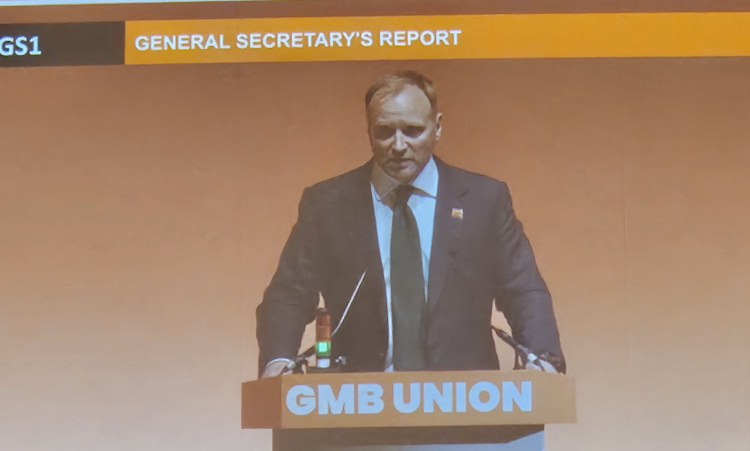
In his speech, also on video, he toured around the regions highlighting what he saw as important campaigns, one of which is the Midland Region “Save our Ceramics” campaign. [I am curious if they understand its role in future computing architectures, I asked google, “how important is ceramics to future computing” and while the AI perspective was quite interesting, I was not impressed with the sources.] Gary mentions in passing the government response documented at government steps in to back long term resilience of UK’s chemicals and ceramics industries as an indicator of success of the ceramics campaign.
On politics, he almost expresses disappointment in the Labour Government but says that he doesn’t believe in washing the dirty linen in public, but that he has made it clear that they have been “too slow, too timid, and to open to business lobbying”.
He looks at the Greens and criticises them for jeopardising jobs in defence and energy, concluding this part of the speech with the statement, “Hands of our Jobs”.
I feel, that the Union’s soporific support for Starmer is a blind alley that makes it difficult to campaign politically and the backward position on energy and defence is also difficult. We should be looking at organising in the renewables sector, arguing for an industrial policy that invests in renewable manufacturing although its possibly too late to build batteries and windmills in the UK; we used to but the Tories supported by us presumably, let them go and I suspect that Brexit did not help. On defence, I support Ukraine, but no one is talking about effective capability and Gary has taken us to a position where we support Trident before an effective army.
Unlike with his criticisms of the Greens, Gary starts the attack on reform with the phrase that he hears the pain, but argues that Reform are not and will not be the answer. His most powerful rejection of the politics of Reform is in his summary, where he repeats that the central value of the GMB is solidarity irrespective of race or religion, or I should add birthplace.
Before that summary, he looked at some macro-economic issues. He’s right that energy prices are too high but pessimistic that decarbonisation won’t bring good jobs, however I agree that the “Stop the War” claim of welfare not warfare, echoed in reverse by the defence establishment is a false choice. See On-defence-sovereignty on my blog for a longer statement of my comments on defence.