There is a vacancy for the position of Secretary of Lewisham Deptford CLP. I have been nominated by my Branch and plan to stand. If you are a delegate to he CLP’s Geneneral Committee, then this is why I think you should vote for me. My speech and a video we made, are below/overleaf … …
Vote Labour again
Welcome to the Brexit merry-go-round!
I have been reading the news as have you all. Labour’s promised vote seems to be plummeting, in London in 2017, we got 61% and in the Mayoral election, Sadiq Kahn got 41% of first preferences. Polls are suggesting that Labour is on about 24% in London, although they could be wrong.
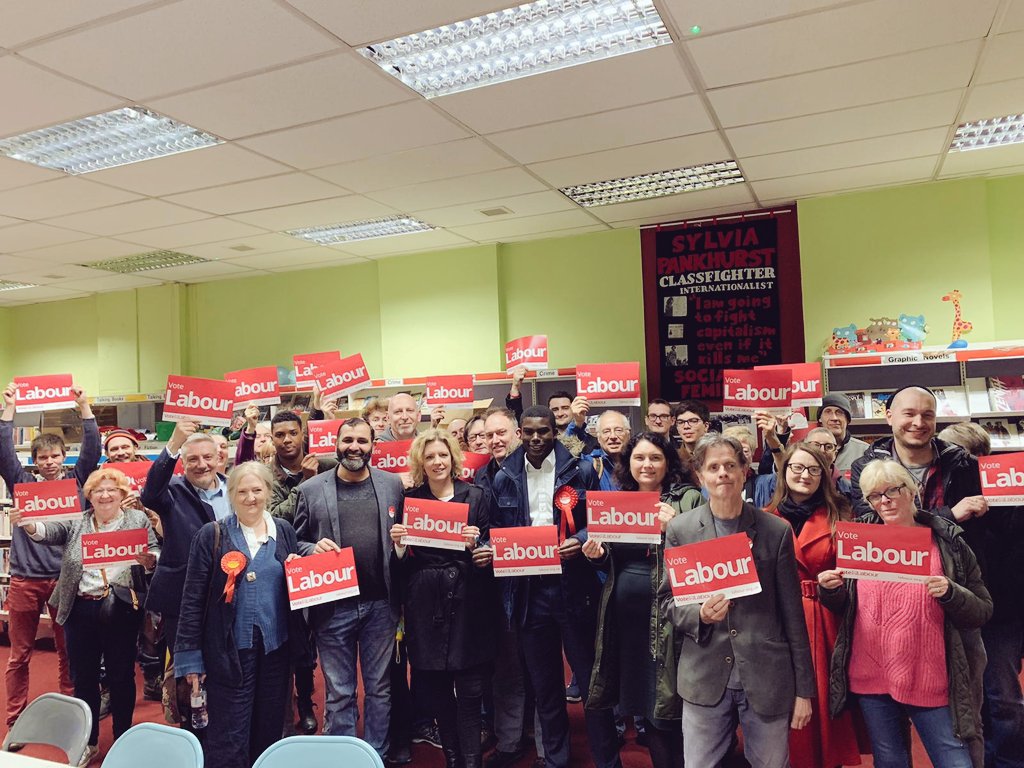
Labour supporters should vote Labour.
If you are a Remainer, and we win, these MEPs will sit for 5 years holding a Commission accountable.
Labour’s MEPs will be the Party of European Socialists and will pursue the objects of the PES Manifesto, which is largely influenced by Labour’s agenda of anti-austerity economics and social solidarity. Labour MEPs will vote for the Socialist candidate for the position of President of the Commission.
In London our candidates are good people. Claude Moraes has an exemplary record as European Legislator acting as Rapporteur (i.e. author) for the GDPR which redefined the right of Privacy in Europe. He has been Chair of the Civil Liberties committee, Seb Dance is probably best know for the he’s lying stunt but has been campaigning on environmental rights, Katy Clark used to be an MP and was a strong civil rights campaigner and Laura Parker is an articulate socialist who would strengthen Labour’s parliamentary team; she has been part of the team that has led Momentum to its “remain” supporting decision.
We talk of beating Farage; this is not just important in the UK for our own political health but the number of MEPs in the European Parliament matters. Historically Farage has sat independently with allies but apart from the Fascist parties from France & Hungary. These far-right parties are likely to be joined by the Alternative for Deutschland and the Italian hard right. The idea of an alliance of the political right of such size is frightening and all democrats should do their best to oppose these people. i.e. coming first or second matters in the UK.
The alternative for many seems to be the LibDems. If elected, they will sit with the ALDE group led by Guy Verhofstadt, who has been the European Parliament’s Brexit co-ordinator; he has given up partly because he feels that ALDE will be more powerful without a strong Labour delegation. The British LibDems are no longer part of a British progressive alliance and ALDE cannot be trusted to fight the far-right.
…
Labour and the Surveillance State
I am planning to get a motion on the Justice and the Surveillance State to LP Conference, I asked for help in this article on this blog, and I believe the final words for CLPD are very similar to my version 2. Here they are,
Investigatory Powers to be subject to Human Rights Law
Conference notes the absence from the NPF Report 2018 of the surveillance society.
Conference notes the continual use of surveillance powers in the private and public sectors authorised by law, or government programme including:
- Investigatory Powers Act 2016,
- Immigration Act 2014
- Counter-Terrorism and Security Act 2015
- Digital Economy Acts 2017/2010,
- Data Protection Act 2018
Conference notes that the IPA 2016 and DEA 2010 were both interdicted by the CJEU as contrary to Human Rights Law and/or the EU acquis.
The intrusive programmes include Prevent and ‘get it right from a genuine site’.
Conference believes that freedom of expression and the right to privacy are universal human rights, that the current surveillance and investigatory powers regime is in breach of these rights.
Conference resolves that a Labour Government will ensure that private and public surveillance technologies and systems will conform to laws that meet the requirements of the European Convention on Human Rights, including a need to prove reasonable suspicion before collecting evidence and the right to a fair trial with the principle of innocent until proved guilty.
Conference calls on the Labour Party to draw up a Human Rights based policy for the regulation of British Law Enforcement authorities and their investigatory powers. This to include the abolition of Prevent, the repeal of the 2014 Immigration Act and the repeal of the immigration data exception established by the DPA 2018.
Conference instructs the relevant Policy Commission to launch a consultation on Surveillance and Justice to report to Conference 2020.
If you can get it to Conference that would be very helpful.
I have put the words in a word document, Motion on Investigatory Powers for Lab19., or in a .pdf if you prefer, Motion on Investigatory Powers for Lab19. …
Labour’s road to here

There has been much a-wailing and gnashing of teeth as the Labour Party NEC decides what Labour’s Euro manifesto should say; they have reiterated Conference ’18 policy, to oppose a Tory Brexit by all means including a Referendum.
I was asked elsewhere when we established and then stepped away from the six tests; The six tests were confirmed at Conference 18 although the phrase “respect the referendum” which was inserted to the 2017 Manifesto presumably through the Clause V meeting, has not been approved. I have over time tracked the development of Labour’s Brexit policy as set out by Conference. The first is about #lab16 which says we’ll stay if terms set by the Tories are unacceptable and states that we’ll accept any mandate including a vote in Parliament. I cover the the #lab17 stitchup but while it’s weaker, it’s still fundamentally about no worse than in, (read the comment for the bad news), and I record the words of #lab18, last year, which opposes a tory brexit by all means, prioritises jobs, the economy and the Northern Ireland border. I also talked about the abandonment of the six tests, in this article, called “Consenus” and the low profile insertion of the Common Arrest Warrant as a requirement. …
You might be able to vote for me
Yesterday, I applied to be one of Labour’s candidates for election as an MEP in London.
In London, we need to remain aware of London’s vote to Remain in the EU and the criticality of getting the citizenship terms in the withdrawal agreement right to meet the needs of resident EU citizens and their families. I support Labour’s policy of Remaining if the departure terms are inadequate.
I voted Remain, and have since then argued that Leaver’s should negotiate the terms of exit they think are right and then ask us again if that is what we meant. I believe that Remaining in the EU is better for the people of this country than leaving on May’s terms (or on no terms). I have argued elsewhere in this blog that leaving the EU is either Catastrophic or Pointless. I oppose austerity, racism and climate change. I am a socialist and I voted for Jeremy Corbyn as Leader in 2015 and 2016, and Dianne Abbot in 2010.
I am aware that under Labour’s rules, I am unlikely to get a place on the slate that would lead to me being elected, but I am passionate in my desire to make the case for Labour in this election. Should I be elected, I would hope to be part of a Labour Group that argues against austerity and look to work particularly with the SPD to move Labour’s allies in Europe towards an economy that work “for the many and not the few”.

Our manifesto needs to address the short-term issues of whether we quit the EU or Remain, racism & immigration policy and also the longer-term issues of investment, austerity and climate change.
My professional and trade union experience are a great basis for being an MEP, which is one of the most demanding public offices that Labour seeks election to. My IT industry knowledge is applicable to many areas of EU competence as society seeks to build a democratic regulatory environment to live with the datenkraken.
From 2008 to 2009, I served on NESSI, the EU’s investment incubator for the EU’s R&D grants for internet and computing. (If elected and should we remain, I would hope to help business, education institutes and local authorities improve their bidding capability for this money.) I became one of the authors of the EU’s software industry strategy. This public service reminded me of the good that public policy can do.
I am currently a Branch President in the GMB. The bulk of my work is personal case work and acting as an accompanying rep. I am a trained workplace rep and am experienced in negotiating and have knowledge of employment law. This also requires high levels of empathy and the ability to listen. In the ’80s, I was part of a leadership of work place branch I organised strike action as part of national pay campaigns and other solidarity action with the Civil Service trade unionists derecognised at GCHQ and with the Miners.
My working time in the Civil Service taught me about how to manage and participate in the policy to execution cycle, a critical skill in public policy and service delivery.
I have an Economics degree and am a member of the Royal Economics Society.
I have lived and/or worked in London nearly all my life. I have been a member of five London CLPs over that time, both North and South of the River and in both inner and outer London. I have been a member and activist in four Unions (CPSA, SCPS, APEX & GMB), and remain an active Trade Unionist. All of this has allowed me to meet and learn from the diverse populations across London.
I am just an ordinary working person, I have worked all my life and since 1986 in the private sector, I have known the fear of unemployment and been unemployed. I have experienced the struggle to get my kids well educated and into secure work; I have been a lifelong user of the NHS.
I can represent ordinary Londoners because I am one.
ooOOOoo
Short Link: https://wp.me/p9J8FV-1MF …
On Investigatory Powers, yet again
Time for another go on getting some decent policy against the surveillance state and against privatised investigatory powers. Here’s my first draft.
Investigatory Powers to be subject to Human Rights Law
Conference notes that the Investigatory Powers Act 2016 legalised the UK intelligence services to collect telecommunication usage data on all UK residents, now ruled as contrary to human rights law.
Conference notes the Immigration Act 2014 and Counter-Terrorism and Security Act 2015 requires numerous private & public sector organisations to collect personal data about their customers, users or charges.
Conference notes that all immigration enforcement data has been exempted from the Data Protection Act 2018.
Conference notes that the Counter-Terrorism and Security Act 2015 places surveillance duties on specified authorities including educational & healthcare institutions.
Conference notes the complete absence from the NPF report 2018 on the surveillance society and the illegal investigatory powers regime introduced by the Tories in 2016.
Conference believes that freedom of expression & thought and the right to privacy are universal human rights and the current surveillance and investigatory powers regime is in breach of these rights.
Conference resolves that a Labour Government will ensure that private and public surveillance technologies and systems will conform to laws that meet the requirements of the European Convention on Human Rights, including a need to prove reasonable suspicion before collecting evidence.
Conference calls on the Labour Party to draw up a Human Rights based policy for the regulation of British Law Enforcement authorities and their investigatory powers. This to include the abolition of Prevent, the repeal of the 2014 Immigration Act and the placing of UK Borders under the auspices of the Data Protection Act.
I’d like to work something about “getitrightfromagenuinesite” in, since that’s allegedly voluntary and yet still surveillance and I should try and work something in on black listing and the public and private sector surveillance of Trade Unions, but the above …
Delete all … insert
I was asked where the “rule” that an amendment cannot be destructive came from. I have to say, that I don’t know but I haven’t read Citrine, so I googled it and came across, “The vest pocket Chairman” by Heathwood and Horseman hosted by libcom.org. They quote Citrine as saying,
Amendment. An amendment should be a proposal seeking to improve a motion—not merely to improve the wording but to propose a better course of action. Amendments should not be negative nor merely destructive.
Lord Citrine, in his A B C of Chairmanship,* divides amendments into five categories. These are :-
(a) Those adding words to the original motion.
(b) Those deleting words from the motion.
(c) Those deleting words and substituting others.
(d) Those deleting most of the motion and substituting a counter-proposal.
(e) Those which amend an earlier amendment.The rules for moving and discussing an amendment are the same as those for moving and discussing a motion, except that, as a rule, the mover of an amendment has no right of reply to the discussion.
An amendment must be relevant to the terms of the original motion, and must not be frivolous. An amendment should offer a concrete alternative proposal to that contained in the motion.
An amendment should not negative the motion. Anyone wishing to do that can do so simply by voting against the motion.
I have also found the following words,
Direct Negative. An amendment which proposes the direct opposite of a motion is a “Direct Negative” and should not be accepted. The proper course for movers of a direct negative is to oppose the motion.
and
Negative Motion. A motion in the negative cannot be accepted. All motions must be positive.
This article permits omnibus motions.
ooOOOoo
I have uploaded the document here … as my blog seems more long lived that many other web resources. …
What now for Labour?
From Composite 1, #lab16
…. believes that unless the final settlement proves to be acceptable then the option of retaining EU membership should be retained. The final settlement should therefore be subject to approval, through Parliament and potentially through a general election, or a referendum.
This is Labour’s Conference Policy .. frankly I’d take any means of remaining now that we know the only terms available are unacceptable but I believe a lot of people would be very unhappy if Parliament instructed the Government to Revoke the A50 notice without a popular vote despite the fact that this Parliament’s mandate is more recent than the Referendum. …
London Labour 2019

It seems that London Labour’s Regional Conference credentials are on the way and I have been sent the following booklets. …
Three things about TIG
A couple of thoughts on the new “The INdependent Group of England” (TINGE).
The word Independent has a specific meaning under electoral law and there are no barriers to its use; if they seek to use such a name in a general election they will find the space crowded and there will be restrictions on what they can do.
Much has been made of the argument, “they stood on Labour’s manifesto”, it’s unlikely that the Labour defectors did; there was an ‘shadow’ election address which despite it being blessed by Southside, didn’t mention the manifesto or even the Labour Party.
“The Independent Group” doesn’t say the same as “Social Democratic Party”, Owen Jones looks at the political foundations of the latter and compares it, unfavourably, to today. The vacancy of their ideology and policy portfolio is illustrated in Chris Leslie’s interview in the New Statesman. The arrogance and the politics make it hard to remain disappointed. …