Trefor Davies of trefor.net commissioned and published an article by me on the state of the politics of digital and its likely impact on the General Election. In the article I classify the issues around citizenship and economics. Obviously the manifesto has not been published and so prediction of its content is not easy. Regular readers will know that I am a supporter of both the Open Rights Group and Privacy International. I have also served on NESSI, the EU’s internet/I.T. R&D project incubator. I am hopeful on the issues of citizenship, unsure on copyright and intellectual property laws and expect a good offer on digital government. …
The EU D.P. Regulations falls at the hurdle

Glynn Moody, of course, at TechDirt, syndicates the EDRi scoop about the final stages of the new EU Data Protection Regulation exposing the National Governments’ role in weakening the current legislation which have completed their 1st & 2nd stages. The EDRI have published a document called “Broken Badly” which contains their critique of the Council’s behaviour and positions because they weaken the rules around consent (both authorisation and purpose), corporate sanctions, duty to notify breaches, and the problematic one stop shop for jurisdiction. Correspondence to Chris Grayling I suppose. …
On the economics of copyright

When looking at the furore surrounding Julia Reda’s report to the European Parliament’s JURI committee, I am coming to the conclusion that those of us who argue for a fairer, more pro-consumer copyright settlement have won the economic arguments. The massive focus on the tiny change in duration reinforces this. All arguments I have had recently with proponents of the current settlement have rapidly moved from public good arguments to the issue of equity in investment, and the moral failure to compensate creators for their speculative investment. …
Digital Question Time

I went up to Blackfriars to techUK’s offices to listen to their Digital Question time. They had arranged for Vaizey, Onawurah and Huppert to speak. I covered the event using storify, which I moved here, after storify terminated their service.
I originally said on this blog that they covered privacy, access and inclusion, start-ups, brexit (briefly) and government IT. Computer Weekly have hosted a video here…, if you want the complete story. The Guardian ran a story, “Vaizey calls for tech firms to ‘meet politicians halfway’ over encryption” and sub-titled, “Debate needs …
The customer is, and shall be king
I have posted an article on my linkedin blog, which looks at the future of banking technology particularly as it applies to their technical debt in the data centre. It argues that customer intimacy is key. I say,
…So the incumbent players have to re-modernise their systems, build fit for purpose customer relationship management systems i.e. KYC and cope with the business disruption that new software driven competitors are developing, on top of which margins in retail financial services are very low.
Is I.T. a utility?

The power companies are starting to enable homes to act as power sources as well as consumers. People can sell back any surplus. In the UK, about ⅓ of the power generated is lost during the distribution. The UK consumed[1] 647 Terawatts (1012) in 2013. This implies that 219 Terawatts are generated and lost p.a. with a market value[2] of £20bn. The loss is dependent on the distance travelled and so one policy response would be to build community micro- or meso-generators. On the whole older power stations are …
Lumia
Yesterday, I have mainly been playing with my new Lumia 2520 tablet. …
Britain’s over reaching content filters

The UK’s Web site blocking rears its ugly head again. I was pointed at Der Spiegel who reports that Three and Vodafone are blocking the Chaos Computing Club‘s domain. The Chaos Computer Club is a grass roots technology association most well known outside Germany were it is based for its annual Congress held in Hamburg. Equally well known for not being a porn site. The Spiegel article is in German and I translated it using Google translate. I have hosted a copy here, and you can see google’s rendering here. The remainder of the article looks at over-blocking, including IT security resources as obscene, and the market share of the various UK carriers. …
Coming Privacy Law
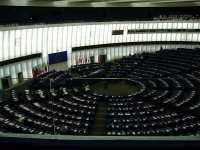
Yesterday, attended a session convened by the BCS North London branch, called “Data Privacy – How Private is IT?” The presentation was given by two PWC staff members in two parts, the first was a forward looking review at the proposed EU Data Protection Regulation by Kyrisia Sturgeon and the second part a scenario based exploration of good data protection practice led by Pragasen Morgan. To me the coming key changes in the law are that all companies will need to have a qualified data protection officer, and it implements a right to be forgotten, or more accurately a right to be unindexed. …
Professionally published again

I have finally been published on my employer’s web site blog. The article, Conflicting Data Requirements: Privacy versus Transparency looks at the countervailing tendencies by governments legislating for citizen privacy and tax transparency. The article concludes with a series of technical challenges to meet the needs of both political initiatives. The article was syndicated on the Tabb Forum, and you can read that here. The article was originally provoked by a Gartner Press Release which suggests that location and the need for specific jurisdictional compliance will reduce as costs and … …