
At Orgcon 17

I am just back from orgcon17, and here are my notes; this was a two day conference, with many sessions on issues of concern to digital liberty campaigners on regulation of the use personal data. It took place over two days, consisting of lectures & panels and workshops. On the first day, at Friends House, where we had the use of the amazing central meeting room it looked at the coming legislation on investigatory powers, the use of the law to make political advances (it’s slow & uncertain), an interview with Caroline Criada Perez, the campaigner who got the first woman on British bank notes and a women’s statue in Parliament Sq.. It looked at e-voting systems in Taiwan where the government used a consensus building software product to engage the population in traffic management solutions design. Jamie Bartlett spoke about privacy vs. security. There was a session on Digital Liberty & regulation in Nigeria. There was also a session on the privacy vulnerability to the coming “age verification for porn users” regulations. Much of these lectures are available on the ORG’s Video channel.

The second day consisted mainly of workshops focused on campaigning. There was a workshop that reviewed the technical architecture of the investigatory powers bill (as they then were i.e. the architecture and legislative stage). There was a workshop in using the Freedom of Information Laws to enhance campaigning, and also about the likely campaigning tools to be offered by the coming General Data Protection Regulation (GDPR) i.e. enhanced subject access requests, the right to be forgotten, of remediation and to object and stop processing.

There were sessions on building local Open Rights Group groups, how to perform IT security effectively for campaigners and a review of the ORG’s Blocked tool.

I chaired a session on building a Charter of Digital Rights, with Richard Barbrook and Mara Leverkuhn. Richard announced his initiative to put some more detail behind the Jeremy Corbyn’s Digital Manifesto which they created to support his 2016 Leadership Campaign. I documented/advertised this session on my blog https://davelevy.info/digital-liberties/

ooOOOoo

The relevance of this conference to CISSP certification is in the Regulation & Compliance domain. One of the critical to IT organisations is failing to keep up with laws and regulations. The ORG focuses on the law as it relates to privacy, censorship & intellectual property. Businesses need to keep these laws in mind when designing their risk taxonomy and control catalogue.

This was written in Oct 2018, nearly 12 months after the event; I did it to claim CISSP CPD Credits. I have as normal, for me, in these circumstances backdated the article to the time of occurrence. …
Affiliates

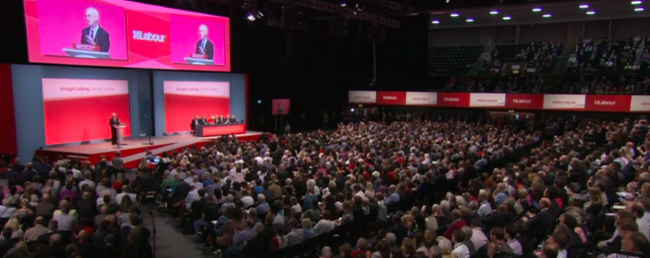
On affiliates in the Labour Party,

Ch 7.IX.C New affiliations accepted at least 60 days prior to the AGM in the current year shall have all rights associated with attendance at the AGM

my emphasis, because we are missing the documentation

App 7.1X.3 an organisation during the year in which it is affiliated or a Party unit during the year in which it is established shall be entitled to appoint delegates to attend and participate in meetings of the General Meeting subsequent to the annual meeting, the number of delegates being calculated on the basis of the affiliation fee or membership fees paid in the said year. …

Digital Liberties

I am just about to set of for ORGcon 2017. It’s a two day conference and I am chairing a panel tomorrow at 15:00

How to make a People’s Charter of Digital Liberties

Help Labour to make a People’s Charter of Digital Liberties


A small panel discussion led by Richard Barbrook, on how Parliament and the people could build a People’s Charter of Digital Liberties. The panel will be chaired by Dave Levy, a Labour Party member of the ORG Supporters Council, the second panellist will be Mara Leverkuhn, a Labour Party digital rights activist.

In his 2016 leadership campaign, Jeremy Corbyn’s Digital Democracy Manifesto promised that Labour would introduce a People’s Charter of Digital Liberties when elected to power.

This panel and discussion is designed to focus on how this digital bill of rights could be developed, how one might use the networked society’s tools to synthesis opinion, crowd source the clauses of the Charter and make an actionable development plan. The panel will be small, and maximum time will be given for attendee contributions. …

Labour’s Democracy Review

Labour’s Democracy Review

Labour List reports the initialisation of the Labour Party’s “Democracy Review, together with some snide comments about its pace, suggesting that it is designed to  cement Corbyn’s leadership and succession rather than ensure it reports to the membership in time to debate the changes before conference.  They also publish the document passed at the OrgSub, also available as a mirror from this site.

The review will work in three phases, liberation organisation and autonomy, organisation & structure.

The first phase, about the Liberation Groups is planned to end by 12th Jan. One of the drivers for this is almost certainly the need to have new systems in place when the NEC Youth Rep is to be elected, and the need to rerun the election for the BAME representative on the NEC. From my conversations though I know that our BAME members have more to say.

The paper says there will be a hub, presumably a wiki at which members, CLPs and affiliates will be able to access the consultation questions and respond, there will also be an email address, (presumably for those without a browser) which is less satisfactory as any contributions become secret. The paranoid amongst us, assume that by not having a closed membership open wiki, where members can set the agenda, they are building a means of control. …

Labour’s Democracy Review

Labour List reports the initialisation of the Labour Party’s “Democracy Review, together with some snide comments about its pace, suggesting that it is designed to  cement Corbyn’s leadership.  and succession rather than ensure it reports to the membership in time to debate the changes before conference.  I say more on my other blog, but have uploaded the PID as a mirror from this site. …

Fall of Fallon

Michael Fallon has resigned as Secretary of State for Defence as part of the fallout from the #metoo campaign. The Guardian covers his resignation and MoD achievements in an article, entitled, “Fallon: the image-conscious minister felled by indiscretions“. While they talk about why he resigned,

I am more interested in their statement that his pursuit of Trident and the Aircraft Carriers, in opposition to the senior military have left the UK defence capability weaker than ever.

They also look at the hypocrisy and lies told about UK interventions in Syria and the Yemen. In their final paragraphs, they say

….. he said he had fallen below the high standards required of the services. But he was never a member of the armed forces. The standards he was required to uphold were those of a parliamentarian.

It may not be over for him yet!

  …

In Writing

More rules shit! Chapter 7.IX.6

Any notice required to be given under these rules shall be in writing which may include electronic communication. Notices to be sent to affiliated organisations and Party units shall be addressed to the secretary thereof.

Correspondence must be between Secretary positions. …

Scope Creep

At LP Conference, Moshé Machover published an article in the Labour Party Marxists freesheet for which he was expelled under Rule 2.I.4.B. The rule is a disgrace, but the expulsion letter also accused Machover of anti-semitic speech. This would have been a scope creep permitting the expulsion of an anti-Zionist for his views, without public evidence, without a hearing and without an appeal. This is almost certainly the motivation for the expulsion, to avoid a Chapter 6 process.

Machover has been reinstated. He is now, rightly, waiting for an apology.  Expulsion/exclusion would have been a disgrace, as it is for all those expulsions under this rule. …

One long year

I am documenting my CPD’s and reviewing the contents of my LinkedIn blog and came across this, “The GDPR will become British law”, published last year where I predicted that the GDPR would be grandfathered into British Law via the proposed “Great Repeal Bill”.

What a difference a year and a general election makes.

I did not predict that since the GDPR has member state derogations and that the Government would bring a Data Protection Bill to Parliament. The fact they’ve lost their majority and are now frightened of loosing votes in Parliament is another motivation for sticking a big complex bill into the time table; iit burns time and one would hope that it can be uncontroversial so there’s no chance of loosing a vote, and even if they do, who cares, apart from people like me.

This could of course be a complete waste of time as it’s the courts which will decide what the law means and if we should leave then the issues raised here … will apply. …