Voting Systems Theory and STV

Voting Systems Theory and STV

It is important to understand that a bunch of clever people have thought hard about voting systems; we don’t have to invent this. I remember that our management in Sun Professional Services tried to imbue us with the mantra, “Innovate, Don’t Reinvent” and others have declared that the process of innovation is standing on the shoulders of giants. Voting system qualities known as criteria have been defined. There may be some as yet undiscovered criteria, but it would be best if we debate the pro’s and con’s using an agreed categorisation and science.

One has to be brilliant to be both in a minority and right, and most of us are not that brilliant.

Wikipedia, on their article, Comparison of Electoral Systems, says this,

Attitudes towards systems are highly influenced by the systems’ impact on groups that one supports or opposes, which can make the objective comparison of electoral systems difficult. … To compare methods fairly and independently of political ideologies, voting theorists use voting method criteria, which define potentially desirable properties of voting methods mathematically.

Wikipedia – Comparison of Electoral Systems

One thing we should note is that not all criteria can be applied to all systems, the key differences are between single winner systems, and multiple winner systems and then between list based and non-list based systems.

While some consider and seek to judge instant run off elections, sometimes referred to as the Alternate Vote as a special case of STV i.e. an STV with only one winner, the fact that there is only one winner makes it a separate and quite different system. This is shown by the fact that it passes and fails different voting criteria. Also, in AV elections, there is no transfer of a surplus votes and the minority i.e. the wasted voted can be as high as 50% – 1. This is better than simple plurality systems where the losing proportion can easily be quite high majorities. It seems to me that one critical goal of democratic voting systems should be to ensure that the “wasted” or losing votes are as small as possible.

Some criteria only apply to singe winner elections, and while it’s hard to game an STV election, it is not impossible. Games can be played by candidate/parties or by voters. STV’s problems come from the fact that surpluses and eliminations occur in an order and thus transfers are impacted by this ordering.

The Wikipedia article tests STV against 7 voting systems criteria and fails it on five. Some of the criteria seem to be remarkably similar and, it seems to me, all relate to honesty and motivation in voting behaviour and how the voting system reflects this honesty. STV fails the Monotonicity Criterion as there are cases where you can support your preferred candidate by down ranking them. It fails the Consistency criterion, probably by design and I am not sure it’s all that desirable, but this is about sub-set aggregation which can’t be done in STV. It also fails the Participation criterioan, that your voice is always stronger if you vote, and “No favourite betrayal”, where you have no incentive to vote for anyone other than your favourite.

It’s certainly not perfect but we should learn from thinkers that have gone before us.  …

Fatal Weaknesses

Fatal Weaknesses

This is part II of my commentary on the Labour Leak, it looks at the missteps and failures to control the bureaucracy from 2015 to 2019 and looks at the structural faults, the need for a robust segregation of duties, how Labour has changed its rules to make expulsion of alleged antisemites or troublemaker’s easier and how McNicol’s eventual departure allowed both damage to be continued and a cover-up to become deeply embedded within the Party.

Labour’s policy consultation

Labour’s policy consultation

The Labour Party has extended its national policy consultation and so policy proposals, comments and votes can be made at https://www.policyforum.labour.org.uk/. In order to vote you must have a “my labour” login and login to the policy site. If not a member, you need to register at the site itself.

I have written proposals on the economy, a post-Brexit trade & co-operation deal, employee protection, and the surveillance society & police powers. I have supported proposals on free  movement/immigration, and anti-union laws, It’d be great if if you could vote them up,

I would be grateful to be pointed at great proposals on social care, social security and education.

Other’s may find this & this on a Post-Brexit deal, inspired by Labour Movement for Europe worth voting up. …

What cost equality?

What cost equality?

51.5% of Labour MP’s are women and 20% of Labour MP’s are BAME.

But what about the class background of MP’s?

29% of MP’s went to private school (7% of the population did), 14% of Labour MP’s went to private school.

25% of MP’s went to Oxbridge (0.5% of the population did)

50% of MP’s went to the Russell Group of Universities, 24 ‘top’ universities (11% of the population did).

In 1979, 15% of MP’s came from ‘blue-collar’ backgrounds. In 2019, 3% did!

 …

Point of Order

Point of Order

An apology. I was led to believe that Labour’s NCC had been restricted to appeals on procedural grounds only; on a more serious reading of the rules, it would seem this is not so. Appeals can be lodged on the grounds that the NEC exceeded it powers by taking a decision other than one authorised by rules. This includes the constraint below,

There is sufficient evidence in documentary or other recorded form to reasonably conclude that the charge is proven and justify the sanction proposed;

Labour’s Rules 2020 C6.I.b.iii (P.24)

So an appeal can be lodged on the grounds that the evidence does not reasonably support the determined sanction.

Point of Order, Chair! The speaker is talking bollocks. …

Closing the Stable Door II

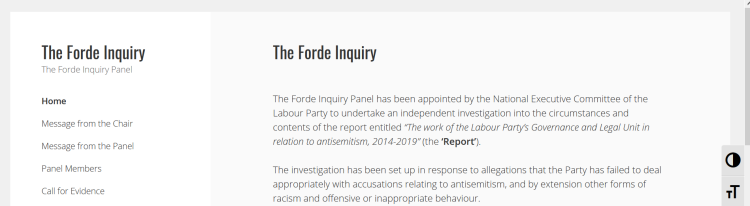
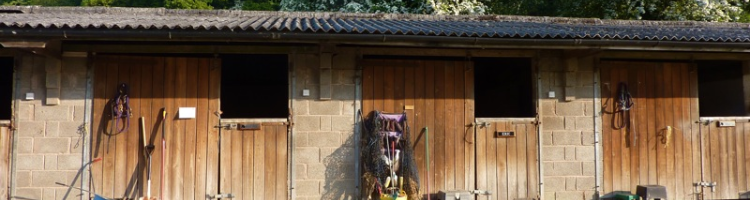
Tye Labour Party’s inquiry, now known as the “Forde Inquiry” after its independent chair, Dr Martin Forde, into the leaking of its investigation into the activities of its complaints team and senior management has published a call for evidence. It’s web site is at fordeinquiry,org and the call for evidence page is here and behind the image.

I plan to make a submission based on Unanswered Questions, also Closing the Stable Door and a third one based on the various acts in breach of the member’s charter, the rules and the law which impacted me personally.  …

Mushroom Therapy

I have just bookmarked Crispin Flintoff’s video made for Stand up for Labour, as part of his campaign to get the Party to spend more on the CLPs by means of remission of a higher proportion of the membership subs.

From 29:30 Dave from Milton Keynes, kicks off a discussion about the management and reporting of the Party’s finances. Two NEC members, Gurinder Singh and Jon Lansman comment on the exclusion of the NEC from the management of money. It’s really quite shocking. …

Labour Leak – Closing the Stable Door

Labour Leak – Closing the Stable Door

This blog article is one of several albeit the first published on the labourleak. It focuses on fixing the problems identified and implied in the #labourleak in a holistic way. It looks at the controls, briefly on why they failed, how the private sector manages, the question of Union collusion, IT standards & controls, the disciplinary process, the NEC and if genuine professionalism can possibly improve the quality and honesty of the decisions taken by the Labour Party; it concludes by proposing that the rules be changed to place a duty on all role holders to conform to the Nolan Principles, and that whistle blowers have better protection, but on the way recommends that the Labour Party use a series of external certifications, ask the Auditors to to inspect that payments and receipts are handled according to the Party's financial control rules, increase the professionalism of the staff and NEC committees, all of this to guarantee to its members and staff that good practice and not arbitrary actions are the guiding principles of judgement and decision.

About site navigation and search

About site navigation and search

I have tweaked the navigation features on this blog, I have added a category filter at the bottom of all pages and note that for those of you for whom the feedburner subscriptions don’t work, you can use visual ping to set up a visualping,io alert. The tag cloud is still in place and augmented by a 3D version of it. The footnote section of this site also documents the rss/xml feeds as does the feeds page for the site, and the categories page documents the category names. For anything else there remains the search widget.

 …