How much has the EU changed since Jan 20, the day the UK left. As ever, notes and links although I originally drifted a bit into the old opt-outs. I added some links about those programmes we have joined since 2020, and the glacial speed of the ‘reset’. I added [dynamic] links to my blog and wiki.
2026
I asked Google, “”; it replied,

Since January 2020, the European Union has undergone a fundamental transformation, shifting away from a focus on internal consolidation toward crisis management, aggressive technological regulation, and economic sovereignty.
The major changes implemented by the EU fall into five core areas:
1. Structural and Geopolitical Shifts
- The Exit of the United Kingdom: On January 31, 2020, the UK officially left the European Union. The transition period ended on December 31, 2020, altering the EU’s internal trade dynamics and establishing the new EU-UK Trade and Cooperation Agreement. [1, 2]
- Foreign Policy and Defense: Following the 2022 invasion of Ukraine, the EU shifted away from pure economic cooperation toward unified defense and aggressive global sanctions. The block established a formal European Defense Union framework to ramp up joint military manufacturing and security preparedness. [1, 2]
- Accelerated Enlargement: Accession negotiations were launched or stepped up for countries like Albania and North Macedonia (2020), alongside fast-tracked candidate statuses for Ukraine, Moldova, and Georgia. [1, 2]
2. Radical Shift in Fiscal Policy
- Joint Sovereign Debt issuance: In response to the pandemic, the EU broke historical precedents by introducing the NextGenerationEU recovery plan. [1]
- The Recovery and Resilience Facility (RRF): This landmark initiative allowed the EU to collectively borrow €750 billion on the international markets to fund green and digital transitions across member states. The common debt marks a massive shift toward central fiscal integration and will be repaid collectively until 2058. [1]
3. Aggressive Technological and AI Regulation
The EU shifted from using regional “directives” to enacting sweeping, directly applicable EU Regulations to assert global dominance over digital technology. [1]
- The AI Act: The world’s first comprehensive legal framework for artificial intelligence, establishing a four-tier risk classification system that restricts high-risk applications. [1]
- Digital Markets Act (DMA) & Digital Services Act (DSA): Landmark rules that heavily regulate big tech “gatekeepers,” forcing interoperability, curbing targeted advertising, and holding online platforms accountable for content moderation.
- Cyber Resilience Act (CRA): Legislation implementing mandatory “security-by-design” rules and strict, rapid incident-reporting timelines for all connected digital products. [1]
4. The European Green Deal and Climate Architecture
The EU codified its goal to become climate-neutral by 2050 into binding law, rolling out concrete market mechanisms: [1]
- Carbon Border Adjustment Mechanism (CBAM): A major international trade change that imposes a carbon tariff on carbon-intensive imports (like steel, cement, and electricity) entering the EU market. [1]
- Ecodesign for Sustainable Products (ESPR) & Digital Product Passports: New frameworks mandating that physical goods sold in the EU have a Digital Product Passport detailing their material lifecycle, environmental footprint, and circular economy capabilities. [1]
5. Migration and Border Control
- The Pact on Migration and Asylum: Following years of gridlock, the EU passed a comprehensive overhaul of its asylum system. The changes introduced faster border screening procedures, accelerated deportations for failed applicants, and a mandatory solidarity mechanism forcing member states to either accept relocated asylum seekers or financially contribute to those that do.
Summary of Regulatory Evolution
| Metric / Focus | Pre-2020 Approach | Post-2020 Reality |
|---|---|---|
| Funding Mechanism | Member state contributions only | Joint European market borrowing (€750B) |
| Tech Compliance | Fragmented local laws | Directly enforceable EU Regulations (AI Act, DMA) |
| Trade Barriers | Free-trade focus | Carbon tariffs on imports (CBAM) |
| Defense Policy | Decentralized national focus | Unified European Defense Union initiatives |
ooOOOoo
In September, UK in a Changing Europe, published their 17th divergence tracker, it covers the period April-September 2026. It identifies seven cases of alignment (where UK and EU align their rules or processes) and three cases of convergence (where UK and EU rules or processes move closer to one another, without formal alignment). There are six cases of ‘active’ divergence (where the UK changes its rules in ways which the EU does not mirror) and 22 cases of passive divergence (where the EU changes its rules in ways which the UK does not mirror). Personally I think there’s some over counting, but this is a useful service/publication.
2025
Over the summer and autumn of 2025, UK in a changing Europe published three articles, on divergence, and progress in negotiating further changes after the May 25 Summit.
- UK-EU relations alignment by stealth/ in July 2025, after the summit. They describe it as stealth, I describe it as one agency at a time.
- UK-EU divergence tracker q4 2024-Q2 2025, their report landing page. They believe that we have rejoined 21 programmes.
And on the reset negotiations,
- The UK-EU reset six months after the summit where are we, a very mechanical description of the processes, I say, overoptimistic on mood, probably spot-on on money although it ignores the eight infringements.
To their list, we can add Erasmus+, announced on the 16th Dec, the student exchange scheme, and the Commons vote in favour of joining the customs union, on 9th Dec 2025.
2023
Anton Spisak, considers the changes or at least hints about it, I hope he keeps his promise to write something, although he seems to be one of the pessimists, probably because he still wants some of the opt-outs. My first take on the opt-outs is in an article entitled, Brexit’s over, it’s just about the mopping-up now, and a second go in “Mercantilist acquiescence-is not enough“, in which I argue giving up on the opt-outs is an important step in proving our willingness for a proper relationship.
Niall O’Conghaile also writes trenchantly on twitter, making I think similar points. I am not sure if he’s saying it’s unlikely we’ll rejoin, or we won;t until we recognise the interests of the new EU and its member states.
Here’s Richard Corbett, at an AEIP meeting, he’s more optimistic,
The EU have a page, describing the legislative changes since the UK left. I might do an analysis.
This on digital wallets for documents is worrying.

by Dave on October 25, 2026 at 6:11 pm
10½ years on from the Referendum, things are both obvious and changing. I am writing an article, here are my notes and links. Links
RejoinEU, a debate in Parliament
by Dave on October 13, 2026 at 3:36 pm
There was a petition sponsored debate in the House of Commons on “Rejoining the EU” on 12th Oct. There is a video feed from parliament TV. Otherwise here are my notes. … Notes & Links The speeches provoked me to look up some things, The debate referenced a statement by the Prime Minister, earlier in…

Maastricht Convergence Criteria
by Dave on May 24, 2026 at 1:52 pm
Despite claiming to be an expert, I had not heard of the Maastricht Convergence Criteria which define a readiness to join the Euro. I asked google gemini to summarise its role. These include Price stability, Sound public finances, to ensure they are sustainable, Exchange-rate stability, to demonstrate that a Member State can manage its economy…
And on my blog
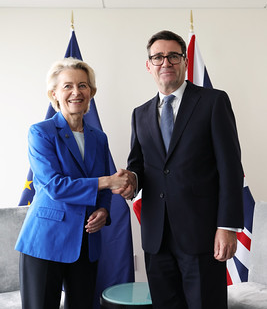
What’s happening to Labour with respect to the EU?
by Dave on October 7, 2026 at 11:25 am
What happened at Labour Party conference and what will happen next on the subject of relations with the European Union? Burnham’s speech to Labour Conference has changed the debate in the country and the Party. The quote on the
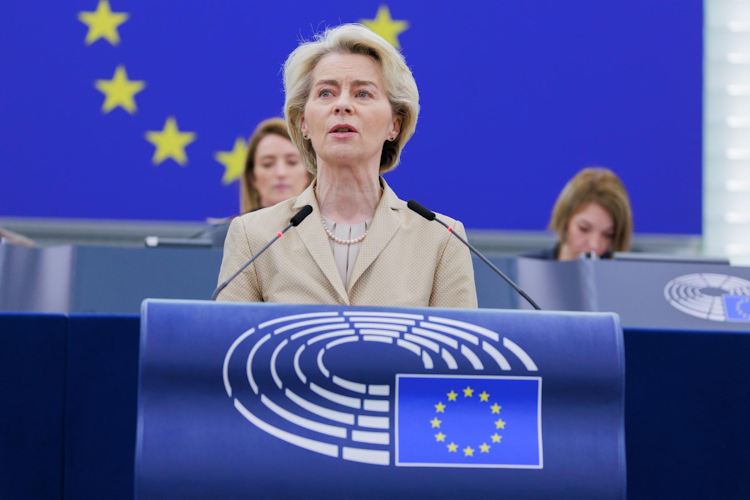
The EU, the State of the Union and associate membership
by Dave on September 17, 2026 at 1:28 pm
Yesterday, Ursula van der Lyon delivered the annual state of the union speech from the Commission to the European Parliament. The headline reporting by much of the press and the pro rejoin commentariat it’s that she offered Canada access to

by Dave on July 23, 2026 at 3:27 pm
The European Movement write to Andy Burnham on his arrival at Downing St.. They call for the Government and Labour Party to, They now have a petition to support their demands, I have signed it, it would be great if

by Dave on July 15, 2026 at 2:48 pm
Niall Ó Conghaille and Mike Galsworthy discuss the Euro and its role in the rejoin process. This is what I think. While I agree, that for the UK to rejoin the European Union it is necessary for them to agree,

Could the UK pass the Copenhagen criteria?
by Dave on April 28, 2026 at 10:23 am
As Labour turns a corner and begins to address if it should seek to lead the country into a closer relationship with the European Union, I found a thread on bluesky which questions if the UK is sufficiently democratic, and

Is Labour about to ‘press reset’ again
by Dave on April 24, 2026 at 2:46 pm
I reviewed “Pressing Reset” , the recent Fabian pamphlet on the state of play within the mainstream of the Parliamentary Labour Party on relations with the EU. This was published on the Chartist Magazine’s website. I conclude that the Parliamentary
I updated this page, primarily to record “UK in a changing Europe”‘s documents about the level of convergence/divergence.
I asked google ai perspecitves to checkpint the divergences and noted the recent publication of UKICE’s Divergence Tracker.